Photo checklist
How to photograph a plant for identification
A shot list by plant type, the camera habits that make details readable, and what to re-shoot when the first answer looks wrong.
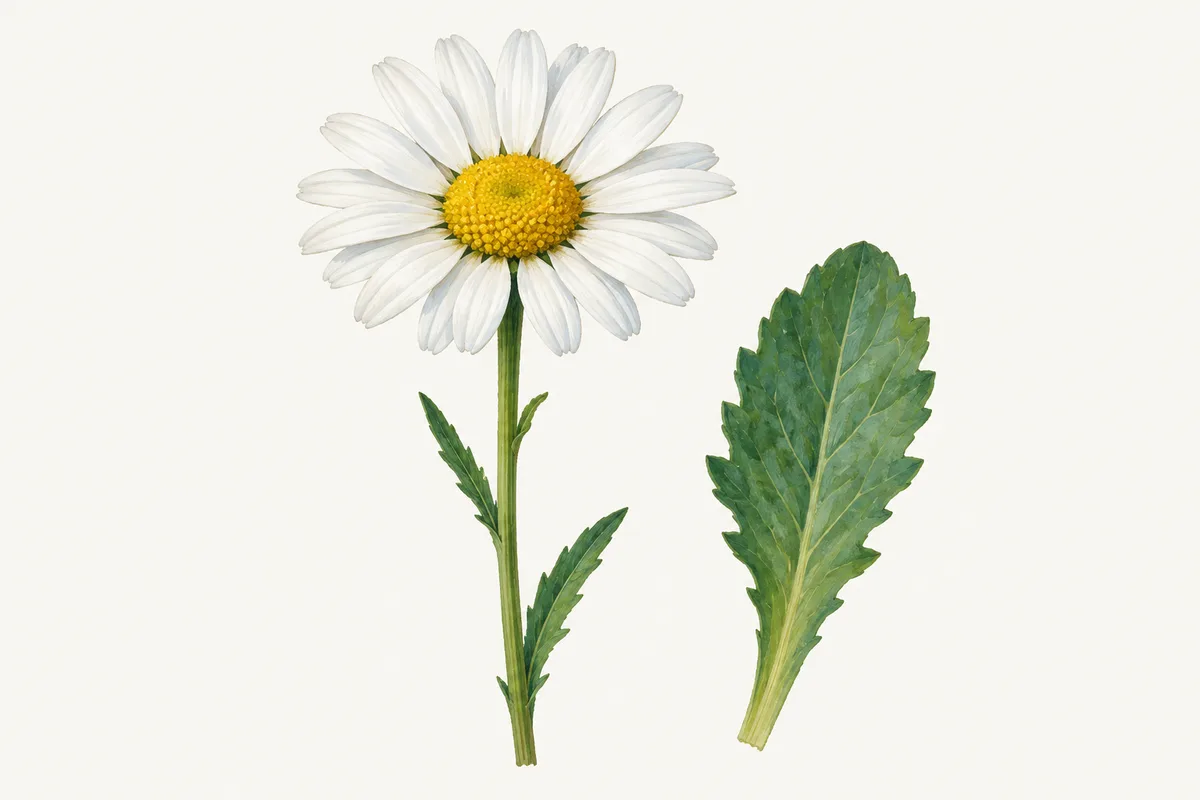
In short
To photograph a plant for identification, take one subject per photo and several photos: an open flower from the front and the side, the top and the underside of a leaf, the point where leaves join the stem, any fruit or seed, and the whole plant with a coin or ruler for scale. Move closer instead of zooming, tap to focus, and avoid harsh sun and deep shade.
- Flower photos beat leaf photos: in one test of six apps, first suggestions were right 55% of the time from flowers and 43% from leaves.
- Fill the frame with one part of one plant; a hand or a sheet of paper behind it helps the camera focus.
- Grasses are named from the seedhead and the leaf collar, so photograph both.
- When an answer looks wrong, re-shoot the flower first, then the leaf, then the whole plant.
A plant photo works for identification when it shows the parts a botanist would check, one at a time, sharp enough to count petals and see hairs. That means several close-ups, not one wide snapshot. This page is the shot list: what to photograph for each kind of plant, how to make the camera show the detail, and what to re-shoot when the first answer looks wrong. What to look for in those photos, and in what order, is in how to identify a plant.
The core shot list (any plant)
Extension botanists who identify plants from photos ask for the same set. New Mexico State University's guide Plant Identification and Submission in a Digital World lists it in order of usefulness:
- The whole plant, showing its structure and size, with a coin, keys or a ruler in the frame for scale.
- The flower in bloom, from the top and from the side.
- Fruit, seeds, pods or cones.
- The upper and lower surfaces of a leaf.
- The point where leaves join the stem.
- The stem: its shape, pattern and texture.
- Roots connected to the stem, for small herbs, if you can.
- Anything unusual: thorns, spines, winged stems.
NMSU adds that a live, mature, complete plant (with flowers or seedheads and whole leaves) is the easiest to identify; immature or incomplete plants can still be photographed, but they are harder to name. E-Flora BC, run by the University of British Columbia's herbarium and geography department, asks for the same habit shot and close-ups of flower parts and leaf undersides, and recommends against sending flower shots alone.
One subject per photo. Fill most of the frame with a single part of a single plant. A photo of a flower bed with three species in it gives an app or an expert nothing clear to work from.
If you only take one photo, make it the flower. In a 2023 PLOS ONE study, Campbell, Peacock and Bacon tested six apps on 38 herbaceous species and found first suggestions correct 55% of the time from flower photos against 43% from leaf photos, a significant difference. The guide to plant app accuracy covers the other published tests.
Camera habits that make details readable
The checks NMSU suggests before you leave the plant are the best summary: are the petals sharp and easy to count, are the tiny hairs on leaves and stems in focus, and does the photo show what you see with your own eyes? To get there:
- Light. Rutgers Cooperative Extension's photo submission guidelines say to avoid glaring sunlight and deep shade, and to shoot with the light behind you. Bright overcast light is ideal outdoors; indoors, move the plant near a window rather than using the flash, which flattens texture.
- Focus. Hold the phone still and tap the screen on the part you are photographing. Take several frames and keep the sharpest.
- Distance, not zoom. Rutgers advises against the zoom feature: move closer instead. Stop when the part fills most of the frame and the camera still focuses.
- Background. If the camera keeps focusing on the background, put your hand or a blank sheet of paper behind the leaf or flower (Rutgers). NMSU suggests a white or light blue card for close-ups.
- Scale. A coin, a pen, keys or a ruler next to the leaf or flower. E-Flora BC notes that size is sometimes a key character in itself.
- Resolution. Shoot at the camera's full resolution, so the expert or app can zoom into the file afterward.
- Review on site. Check the photos before you walk away, while you can still re-take them.
Note the site too: indoors or out, sun or shade, wet or dry ground, lawn, bed or woodland, and the month. E-Flora BC asks for a habitat shot or a written description of the site.
Shots by plant type
| Plant type | Must-have shots | Why |
|---|---|---|
| Houseplant | Whole plant from the side, leaf top and underside, leaf stalk where it joins the stem, any aerial roots, the pot label if there is one | Houseplants rarely flower indoors, so leaves and habit carry the identification |
| Flowering plant | Flower from the front and the side, a cluster or flower head in full, leaf top and underside, whole plant | Petal count, shape and the parts behind the petals separate close relatives |
| Shrub | Whole shrub with a person or object for scale, one branch tip with several leaves showing their arrangement, flowers or fruit, bark on an older stem | Habit and leaf arrangement narrow shrubs before flowers do |
| Weed seedling | The seedling from directly above, its first leaves and newest leaves, a side view of the stem, a coin for scale; then the same plant again a few weeks later | Seedlings lack adult features; a second set of photos when it grows on often settles it |
| Succulent | The rosette or stem from directly above, a side view, the leaf edge and tip close up, spines or hairs close up, any flower | Leaf edges, tips and spine clusters separate succulents that look alike from a distance |
| Grass | The seedhead, the leaf collar with the blade pulled back from the stem, the base of the plant, the whole clump | Mowing removes seedheads, so the collar region is often the only clue |
Two of these need more care.
Grasses. The University of Kentucky's Turfgrasses of Kentucky explains why lawn grasses are hard: the seedhead is very useful, but mowing removes it. The next best clue is the ligule, which you find by pulling a mature leaf away from the stem and looking where the blade leaves the sheath: a small membrane, a fringe of hairs, or nothing. Photograph that spot close up, and the collar and any ear-like auricles beside it. If a seedhead does appear, photograph it against a plain background. For broadleaf weeds in turf, see how to identify weeds in a lawn.
Succulents. Many look alike as rosettes, so the overhead shot alone is rarely enough. Add the side view, the leaf edge, and a close-up of the spines or hairs. The succulent identification guide lists the features that separate the common groups.
When the first answer looks wrong
A wrong-looking answer usually means the photo didn't show the part that separates the plant from its look-alikes. Re-shoot in this order:
- The flower, if there is one: closer, sharper, front and side, with the petals easy to count.
- The leaf: top and underside, in even light, with the leaf joint on the stem in a second photo.
- The whole plant, with something for scale, so the habit and size are clear.
Check each new answer against the plant: does the leaf arrangement match, does the petal count match? If two photos of the same part give two names, the plant may be a seedling, a cultivar, or a close relative that photos can't separate. Then a local extension office or a botanical garden is the next step (in the UK, compare candidates in the RHS plant database), and the same photo set is exactly what an extension botanist will ask for.
Using the photos with an app
Plant Identifier, our iPhone app, identifies from one photo per identification, taken with its camera or picked from your library, so choose the photo that shows the most distinctive part (usually the flower). Its camera has tap to focus, flash and zoom presets, and a photo-tips sheet. Plant Identifier sends the photo to a cloud AI model, so it needs an internet connection. It shows a single name, with no confidence score and no list of similar species, which makes your other photos useful: if the name doesn't fit the leaf or the stem, identify again with a different photo, or ask in the follow-up chat how that species differs from the plant you see. Treat any app's answer as a lead to check, never as a reason to eat or handle a plant.
What a photo can't settle
- A perfect photo of a seedling, or of a plant out of season with no flowers or fruit, may still not show the features that separate close relatives.
- Hairs, scent, sap and the feel of a leaf don't show in a photo, and some groups need a hand lens or a physical sample.
- Garden cultivars and hybrids can look unlike the wild species, and no photo gives you the cultivar name.
Questions people ask
What is the best part of a plant to photograph for identification?
An open flower, if there is one. In a 2023 test of six apps on 38 herbaceous species, first suggestions were correct 55% of the time from flower photos against 43% from leaf photos. Add a leaf top and underside and the whole plant, because a flower alone can leave close relatives unseparated.
Should I use zoom when photographing a plant?
Avoid digital zoom. Rutgers Cooperative Extension advises moving closer to the plant instead, so the detail stays sharp. Fill most of the frame with the part you are photographing, tap the screen on that part to focus, and check that the result is sharp before you leave.
How many photos should I take of a plant?
Take more than you need and keep the best. A good set is the whole plant with scale, the flower from the front and side, a leaf top and underside, the leaf joint on the stem, and any fruit or seed. Many apps, ours included, identify from one photo at a time, so start with the strongest.
Why does my plant app give a different answer each time?
Usually because each photo shows different parts, in different light, at different sharpness. Photograph the same part the same way and the answers converge. If they still disagree, the plant may be a seedling, a cultivar or a close relative that a photo can't separate.
Sources
- Plant Identification and Submission in a Digital World (Guide H-185) — New Mexico State University Cooperative Extension Service (Spackman and Beck)
- Guidelines for Photo Submission — Rutgers Cooperative Extension of Burlington County
- E-Flora BC Photography Tips — E-Flora BC, UBC Department of Geography and UBC Herbarium
- Turfgrasses of Kentucky (AGR-216) — University of Kentucky Cooperative Extension Service
- A repeatable scoring system for assessing Smartphone applications ability to identify herbaceous plants — PLOS ONE (Campbell, Peacock and Bacon, 2023)
Keep reading
- Field guideHow to identify a plant, step by step
- EvidenceHow accurate are plant identification apps? What the studies found
- Field guideSucculent identification: how to identify succulents by shape, leaf and sap
- Lawn and gardenHow to identify weeds in your lawn
- Compared by Plant Identifier's makersThe best plant identification apps, by situation