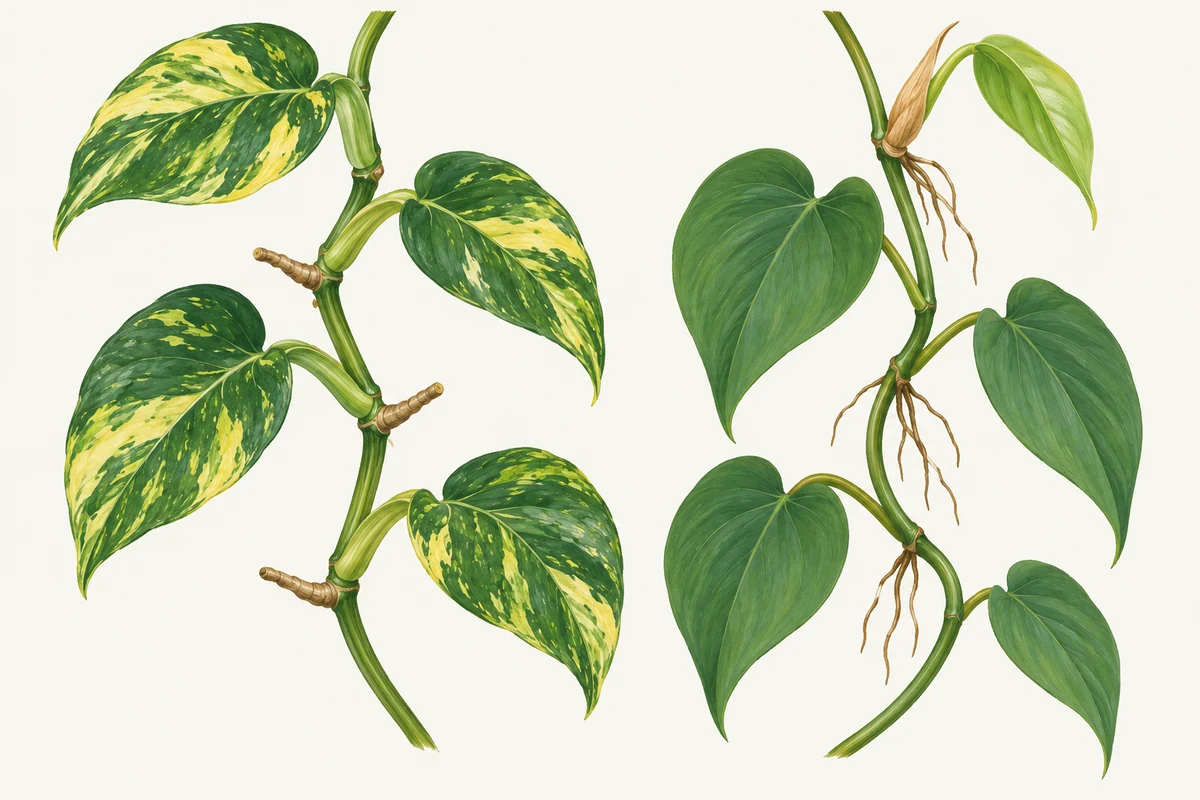
Common plants and how to identify them
One page per plant or plant group, built around the field marks that separate it from its look-alikes, with its sources listed.
Not sure which houseplant you have? Answer a few questions in the houseplant identification key
Houseplants
Monstera, pothos, snake plant and the other plants people keep indoors.
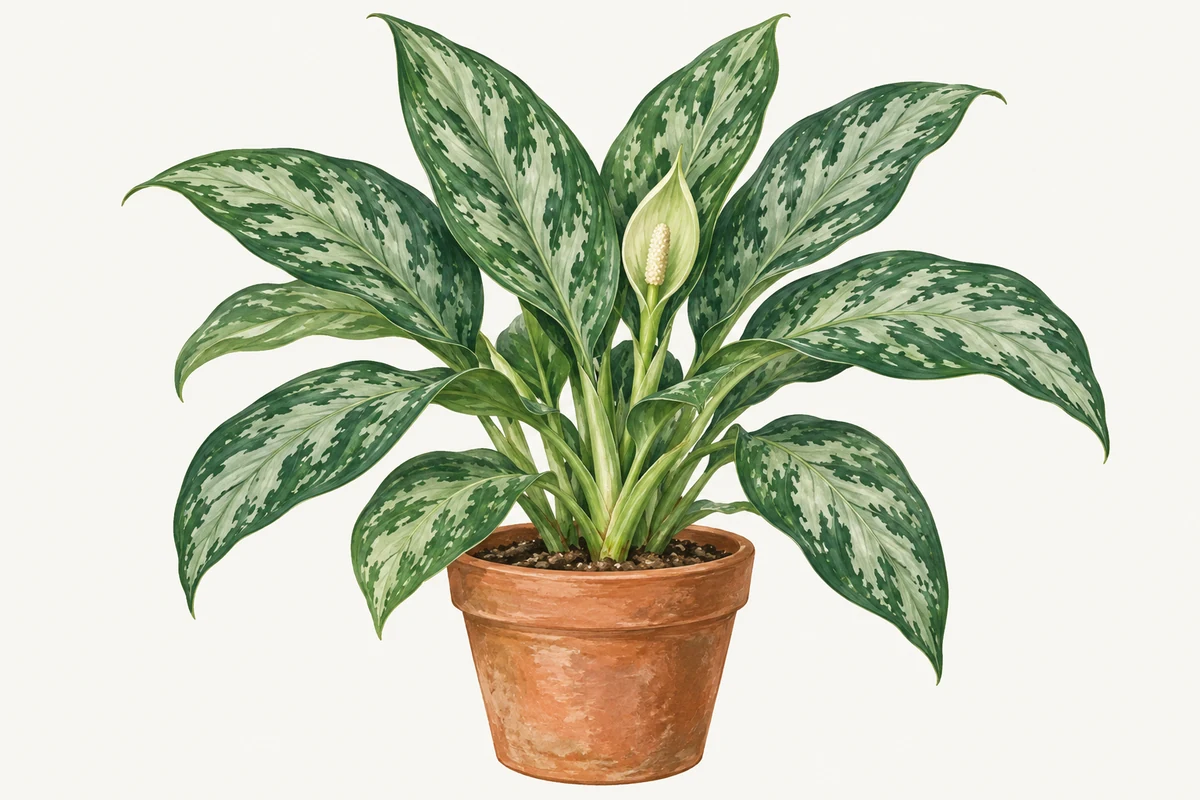 Houseplant profileAglaonema (Chinese evergreen): how to identify itAglaonemaIdentify an aglaonema by its lance-shaped, often silver or pink leaves with 5 to 8 main veins, and tell it from dumb cane and the peace lily.
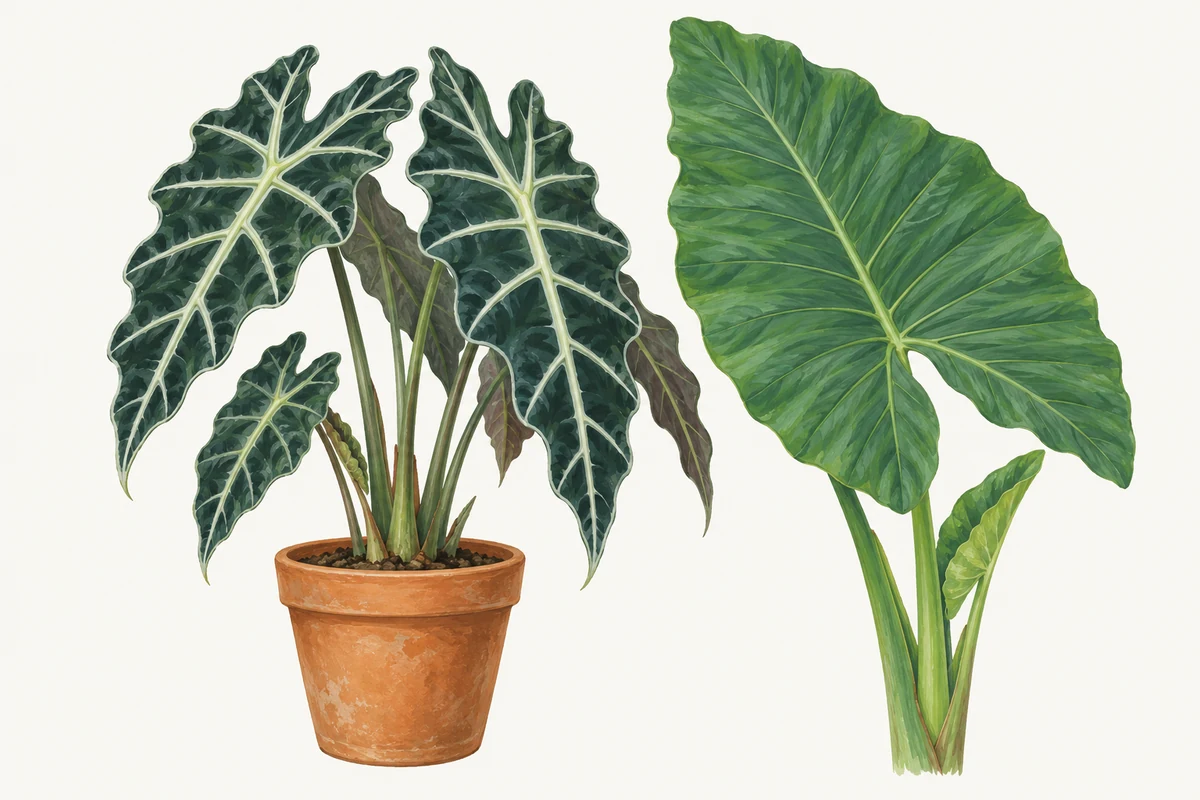 Houseplant profileAlocasia elephant ear: how to identify itAlocasia (A. × mortfontanensis, syn. A. × amazonica; A. macrorrhizos)Identify an Alocasia elephant ear by its upright arrow-shaped leaves joined at the notch, and tell it from Colocasia and Xanthosoma with one leaf check.
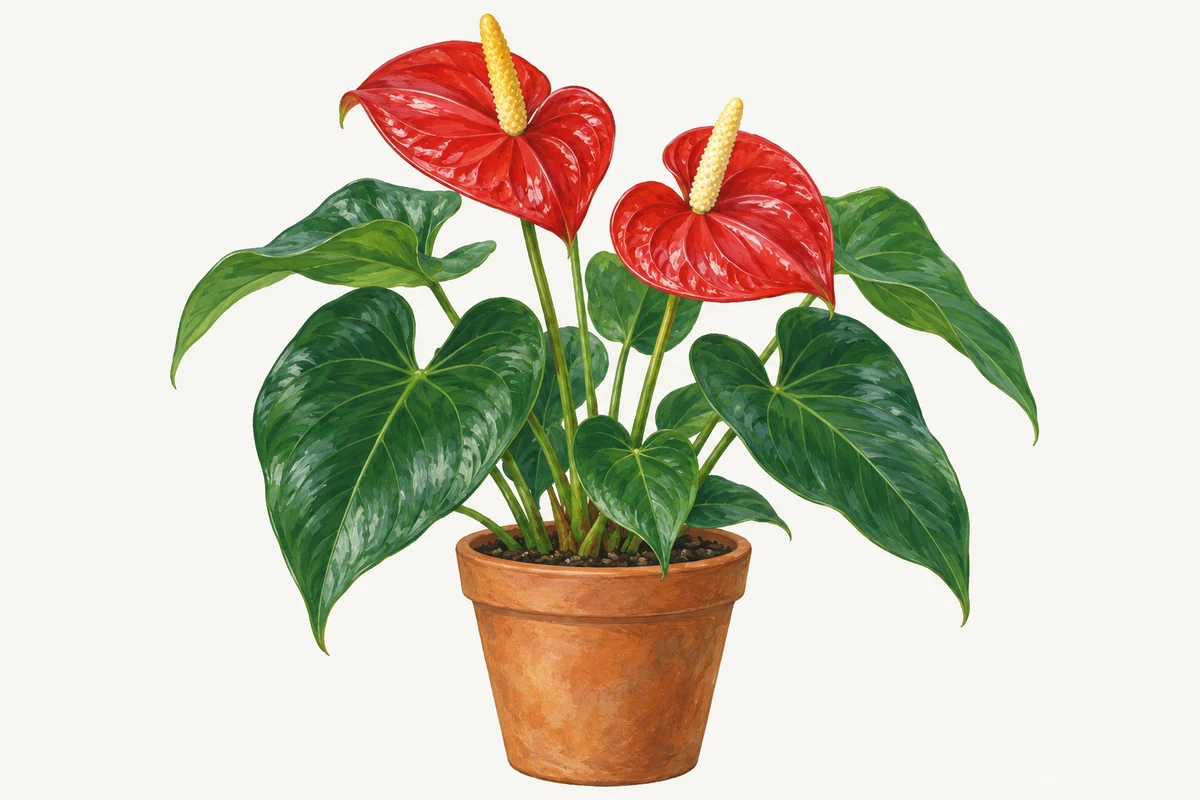 Houseplant profileAnthurium (flamingo flower): how to identify itAnthurium andraeanumIdentify an anthurium by its waxy, heart-shaped spathe held flat behind a straight spadix, and tell it from peace lily and calla lily.
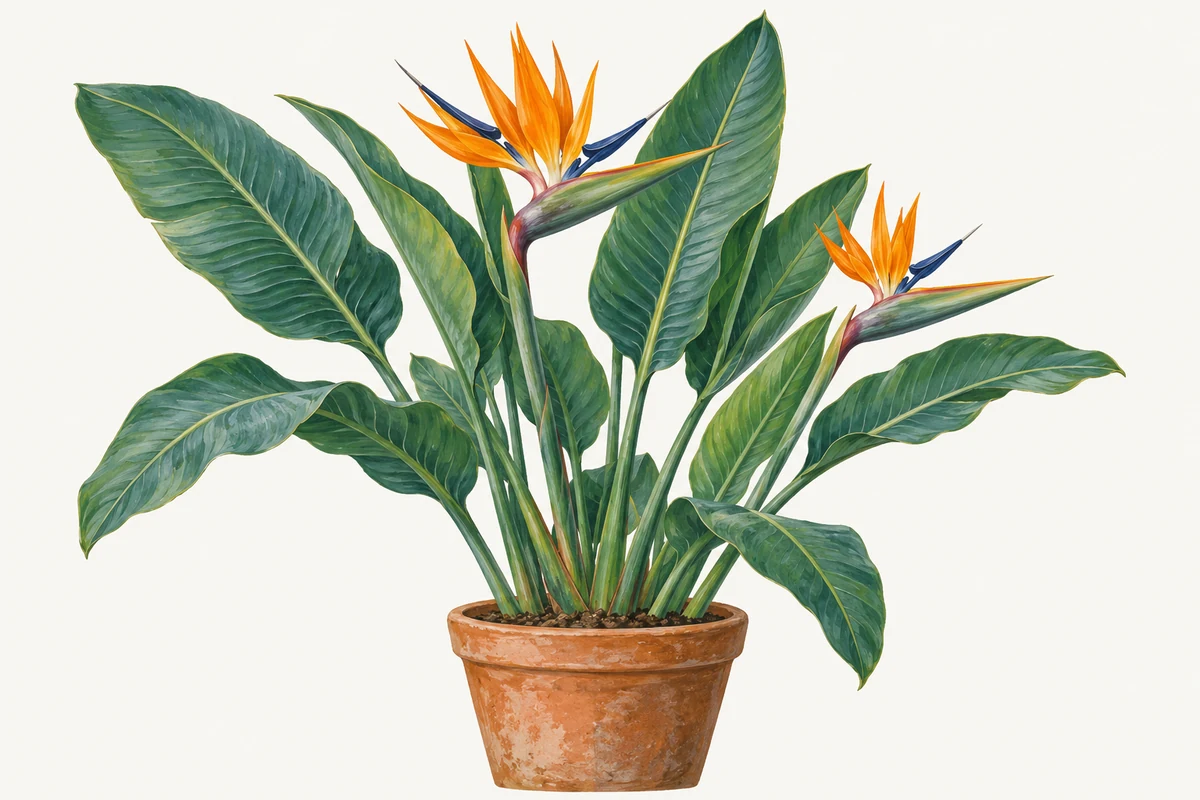 Houseplant profileBird of paradise (Strelitzia): how to identify itStrelitzia reginae, Strelitzia nicolaiIdentify a bird of paradise by its banana-like leaves and beaked flower, tell orange S. reginae from white S. nicolai, and avoid a common name mix-up.
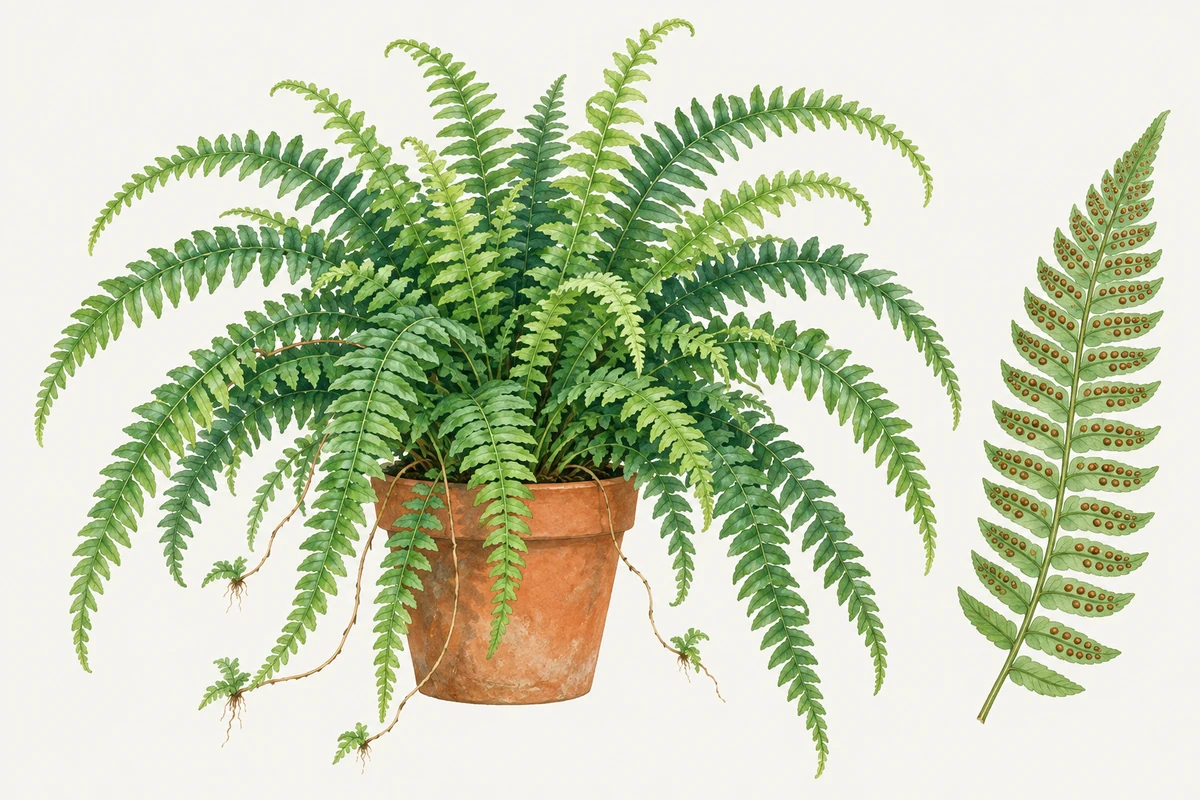 Plant profileBoston fern (Nephrolepis exaltata): how to identify itNephrolepis exaltata 'Bostoniensis'Identify a Boston fern by its arching, once-divided fronds, eared leaflets and runners, and tell it from tuberous sword fern and Christmas fern.
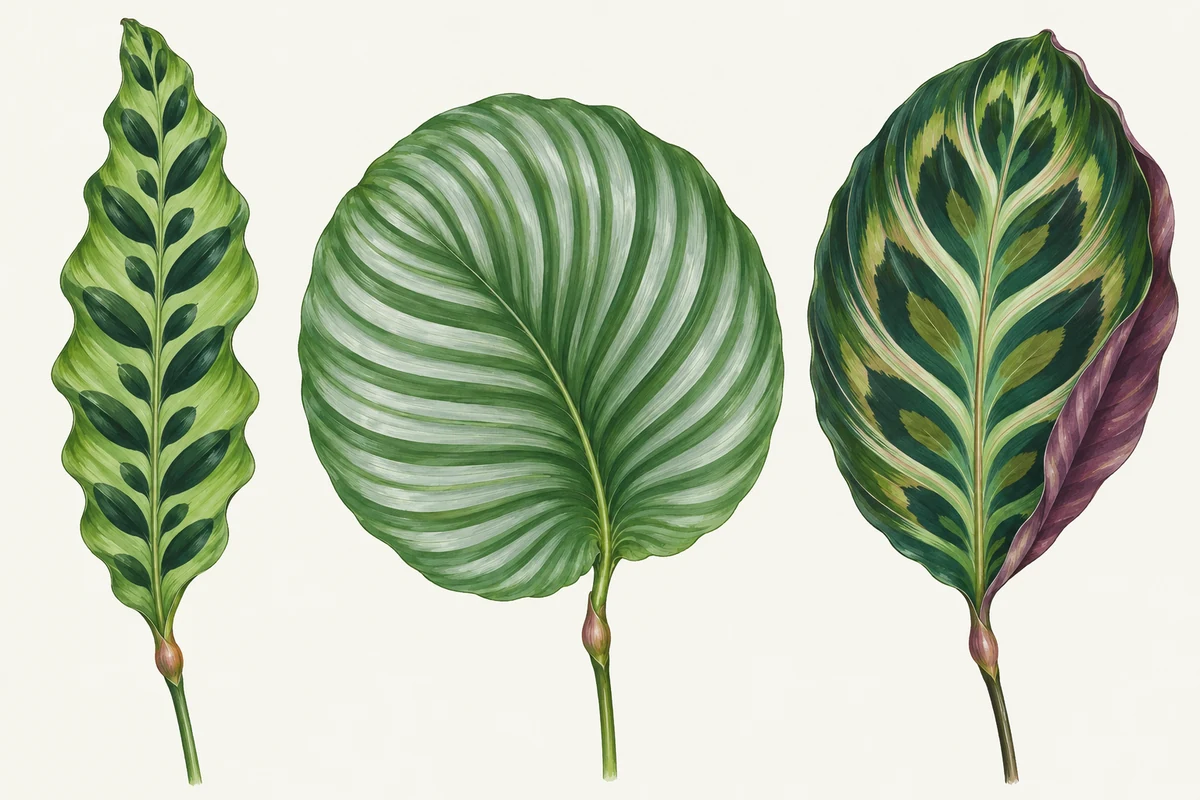 Houseplant profileCalathea (Goeppertia): how to identify itGoeppertia (formerly Calathea)Identify a calathea by its patterned leaves on long stalks, purple undersides and night folding, and tell it from prayer plant and stromanthe.
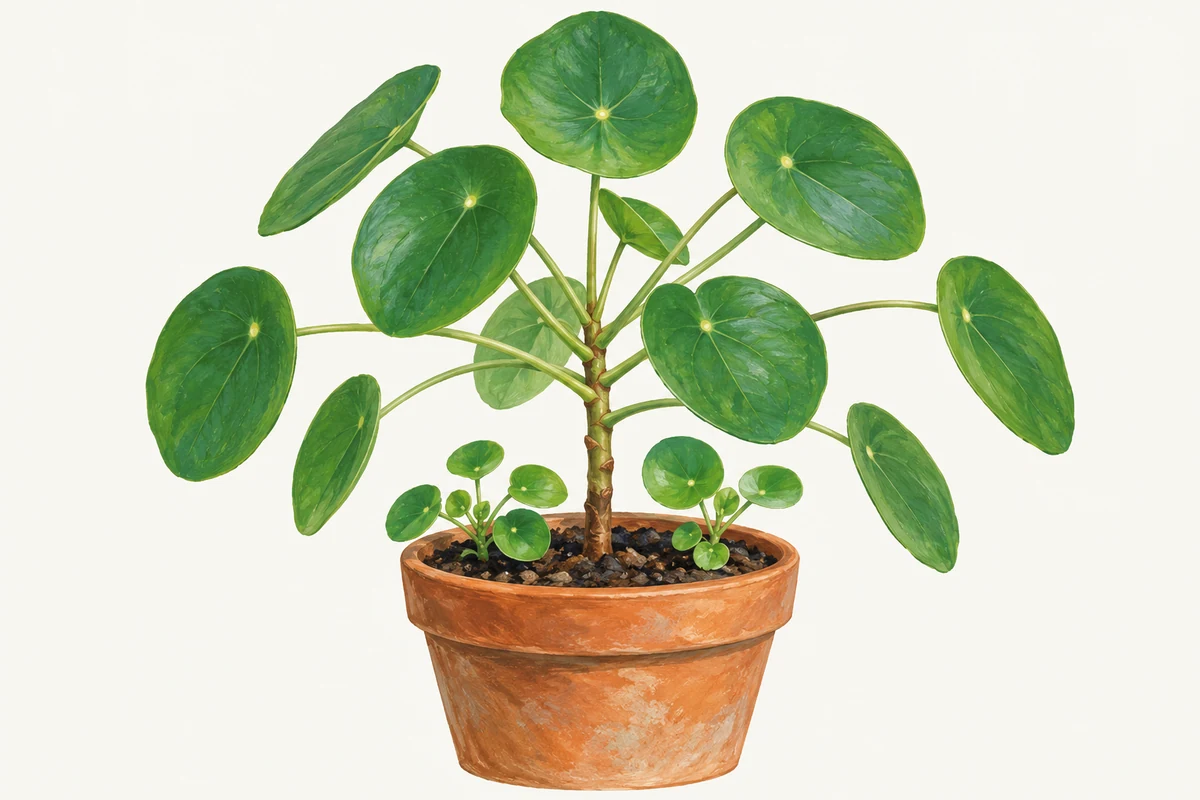 Houseplant profileChinese money plant (Pilea peperomioides): how to identify itPilea peperomioidesIdentify a Chinese money plant by its round, glossy leaves with the stalk joined at the center, and tell it from raindrop peperomia and pennywort.
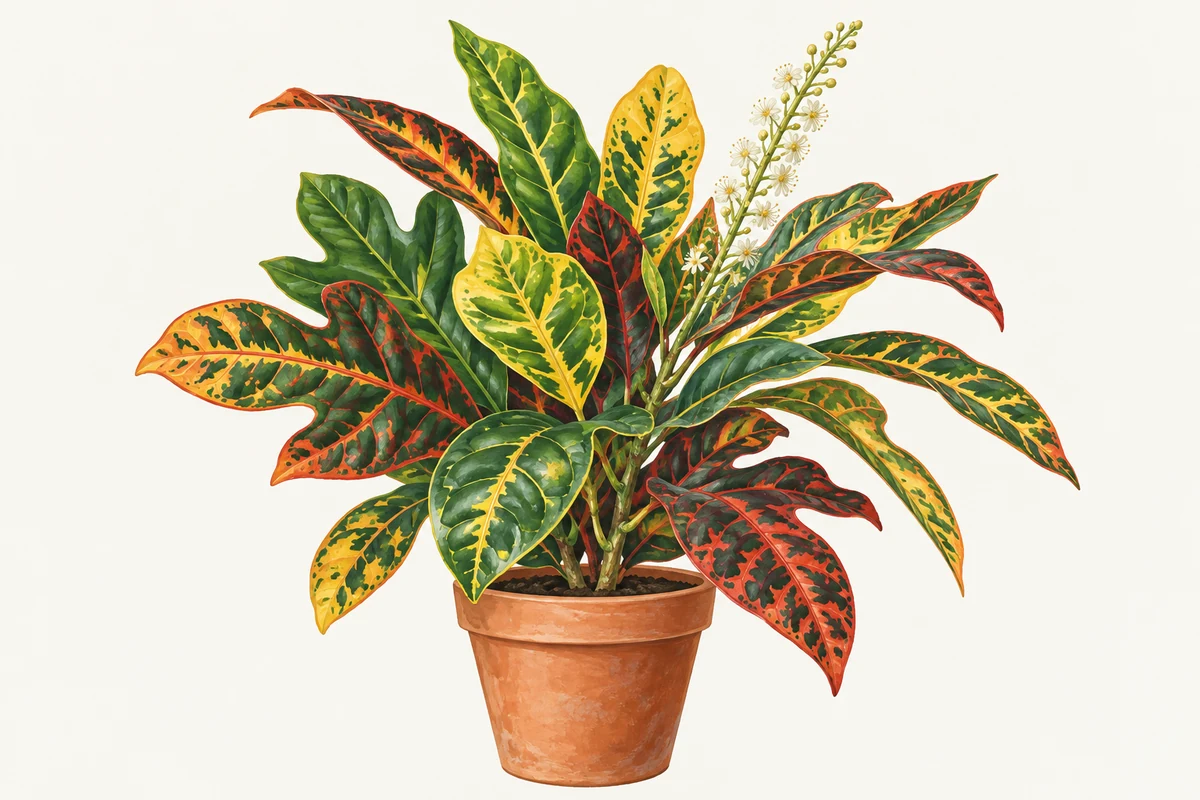 Houseplant profileCroton (Codiaeum variegatum): how to identify itCodiaeum variegatumIdentify a croton by its thick, glossy, multicolored leaves, alternate on a woody stem with irritating sap, and tell it from ti plant and coleus.
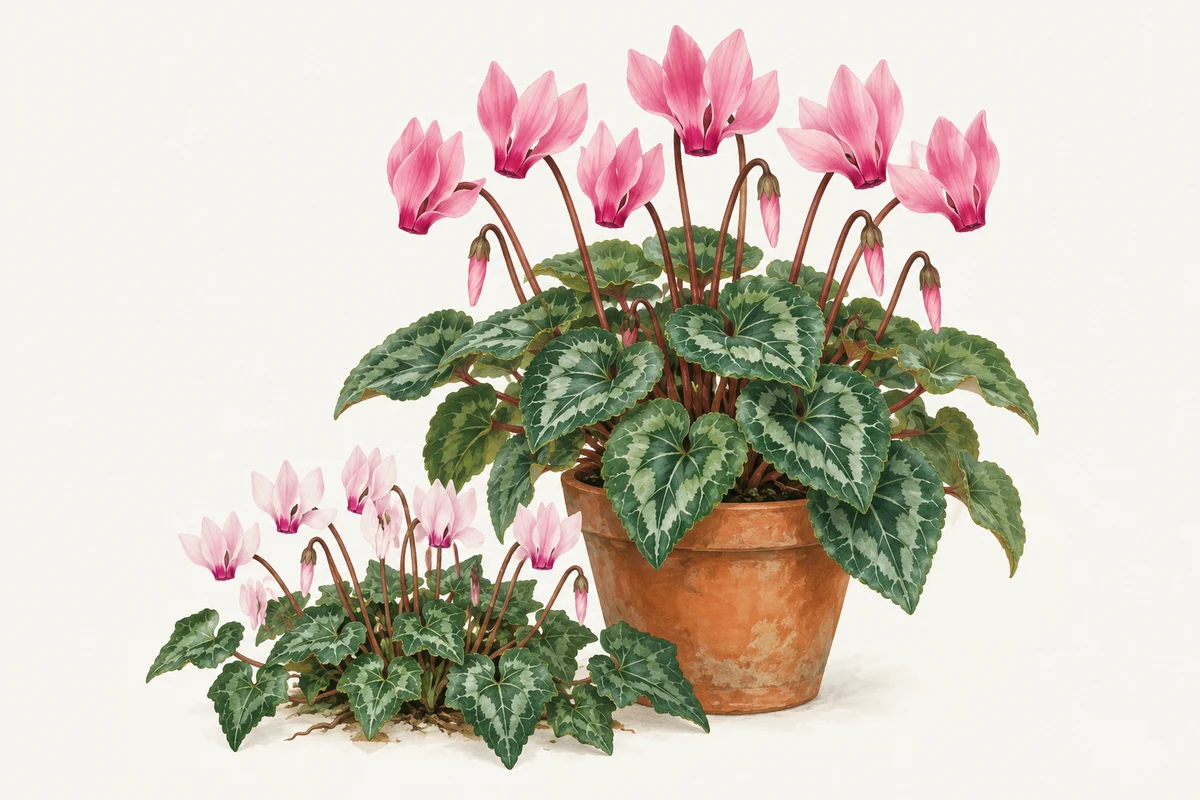 Houseplant profileCyclamen plant: how to identify florist's and hardy cyclamenCyclamen persicumIdentify a cyclamen plant by its silver-marbled, heart-shaped leaves, one swept-back flower per stalk and a round tuber. Listed toxic by the ASPCA.
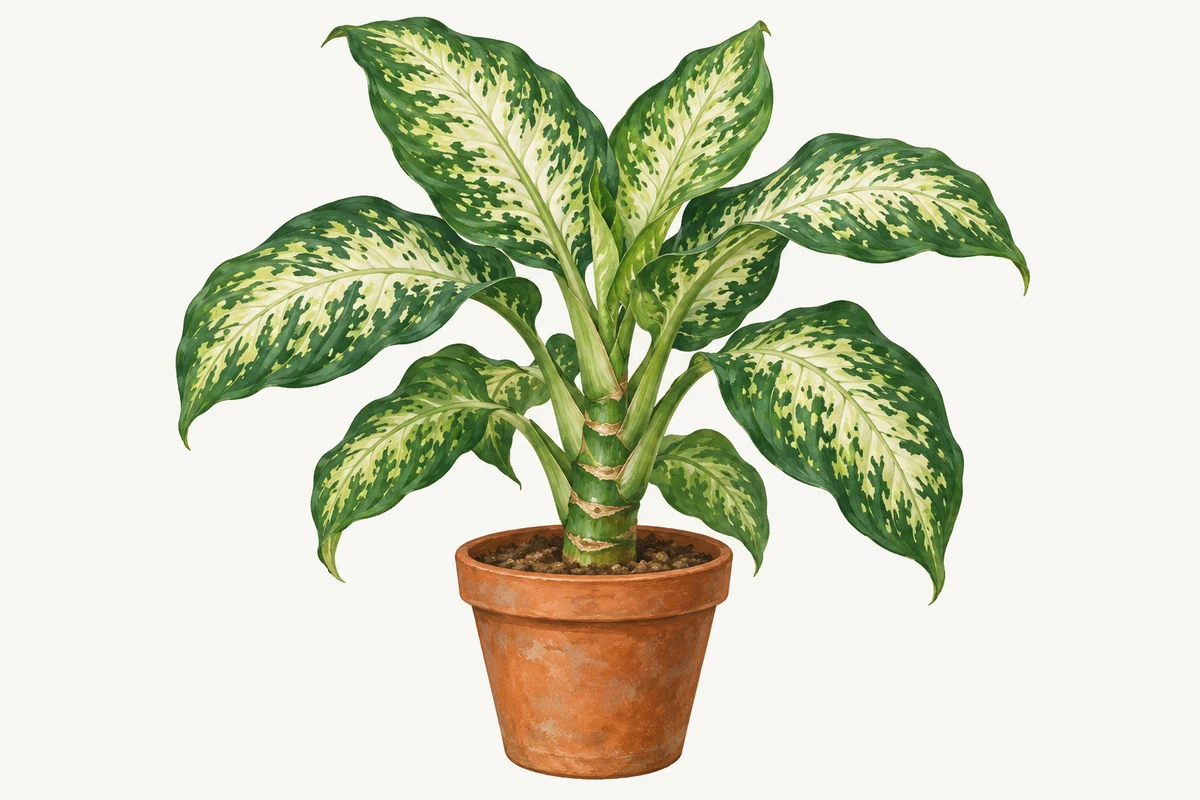 Houseplant profileDieffenbachia (Dieffenbachia seguine): how to identify itDieffenbachia seguineIdentify dieffenbachia (dumb cane) by its thick cane, large blotched leaves with 20 or more side veins, and tell it from Chinese evergreen and peace lily.
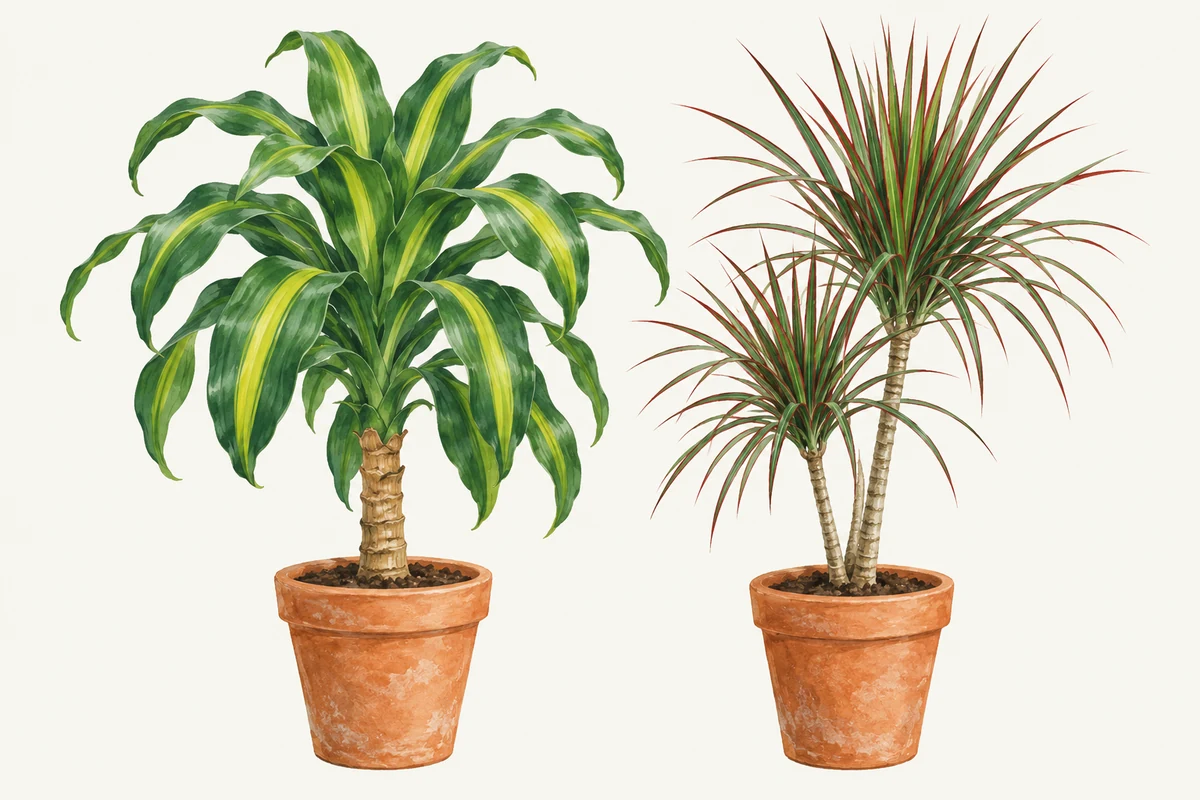 Houseplant profileDracaena: how to identify corn plant, dragon tree and their relativesDracaenaWhat plant is dracaena? Identify corn plant and dragon tree by their stalkless, strap-like leaves and cane stems, and tell them from ti plant and yucca.
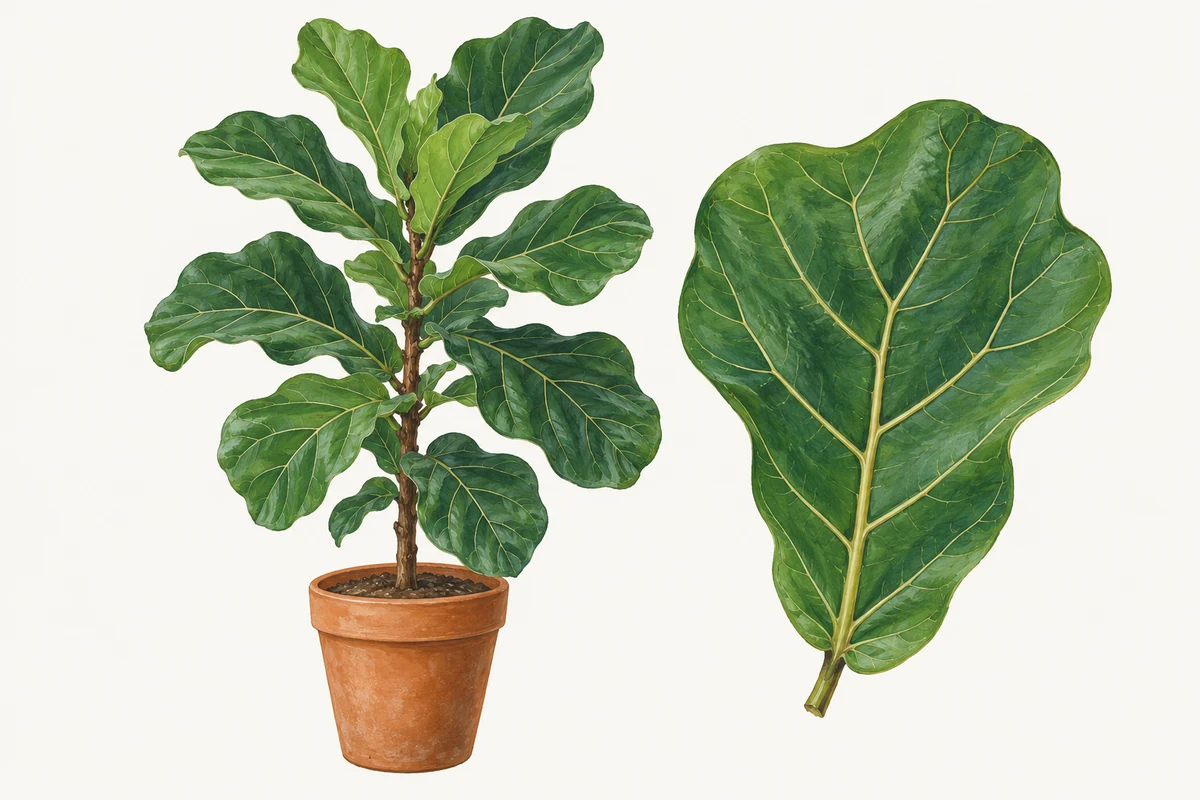 Houseplant profileFiddle leaf fig (Ficus lyrata): how to identify itFicus lyrataIdentify a fiddle leaf fig by its dull, puckered, violin-shaped leaves up to 18 inches long, and tell it from rubber plant, 'Audrey' and banana leaf fig.
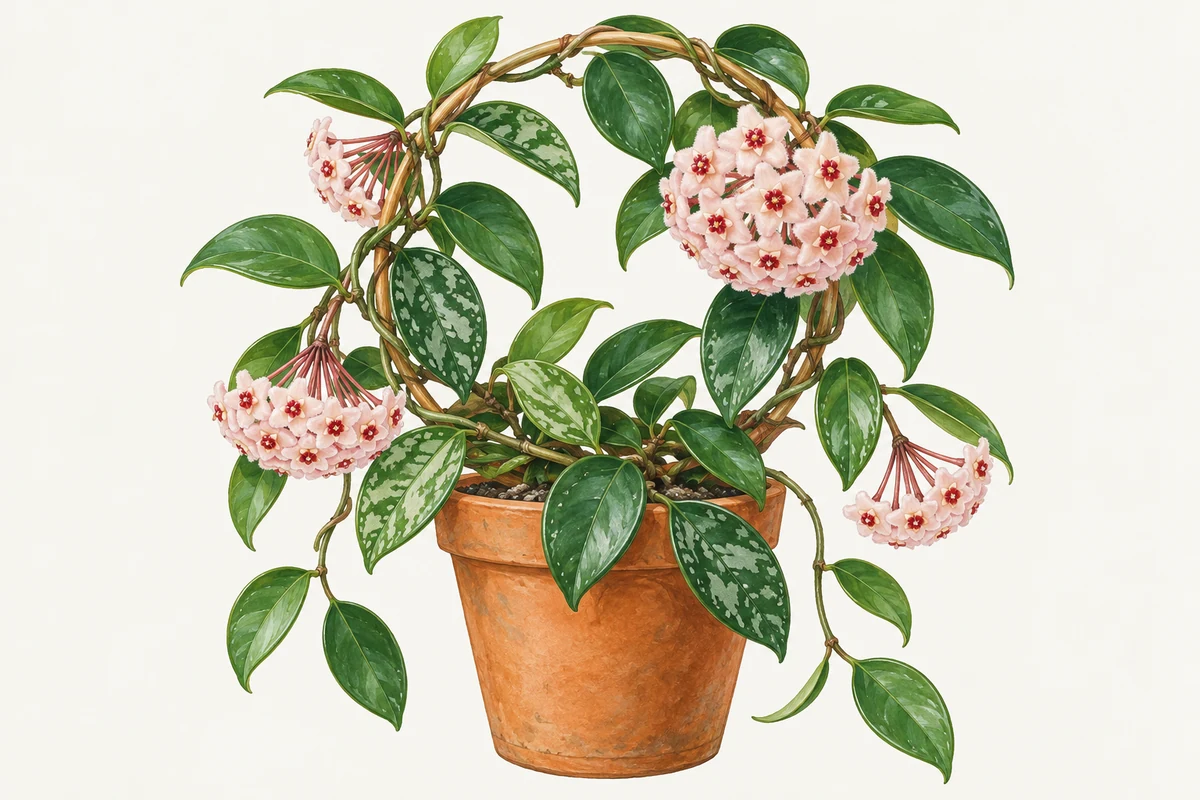 Houseplant profileHoya (wax plant): how to identify itHoya spp.Identify a hoya plant by its thick, waxy opposite leaves on twining vines and its clusters of star-shaped flowers, and tell it from pothos and jade plant.
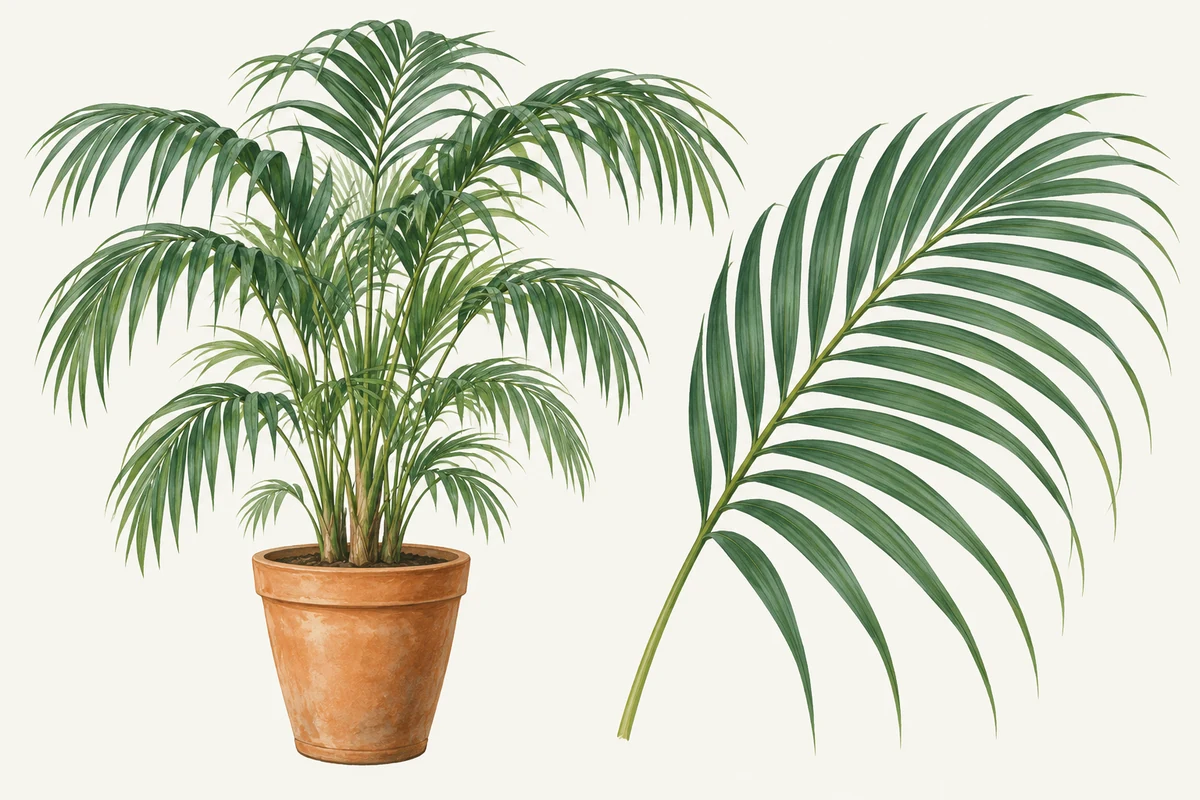 Houseplant profileKentia palm (Howea forsteriana): how to identify itHowea forsterianaIdentify a kentia palm by its single ringed stems and long, arching fronds of drooping leaflets, and tell it from parlor, areca and lady palms.
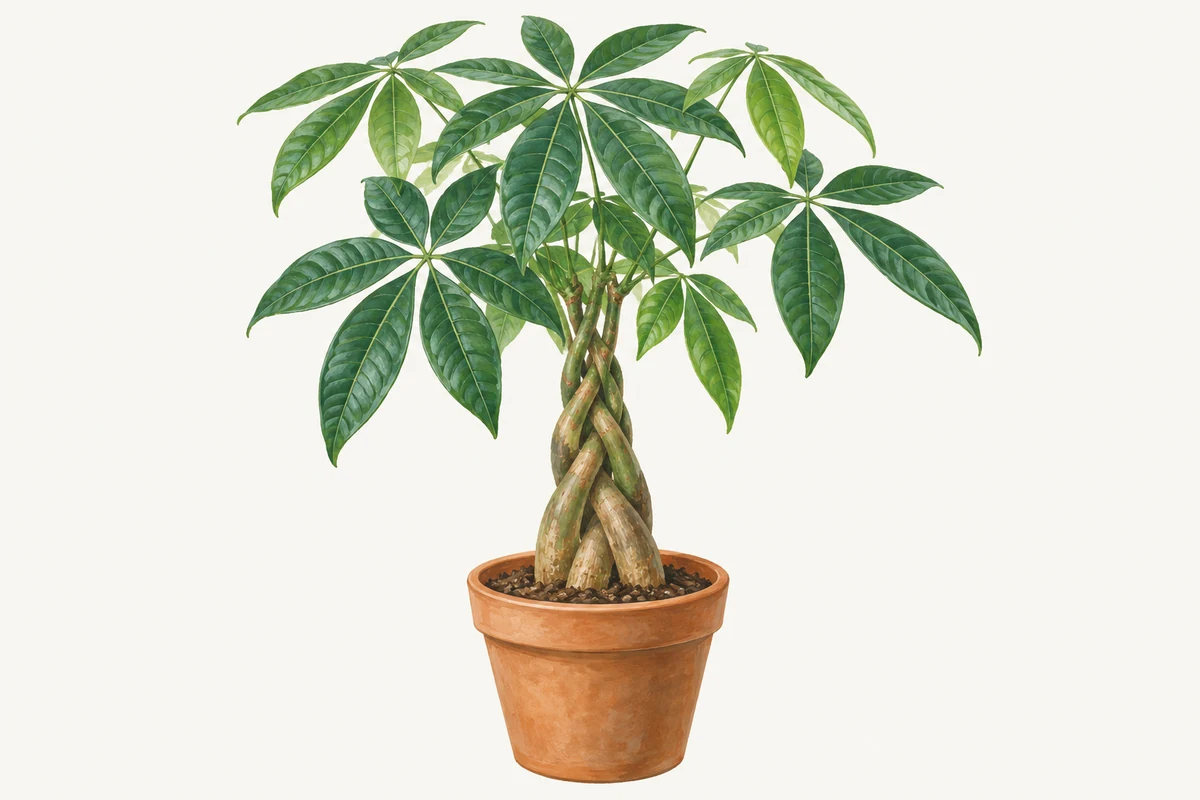 Houseplant profileMoney tree (Pachira aquatica): how to identify itPachira aquaticaIdentify a money tree by its braided trunks and hand-shaped leaves of 5 to 9 glossy leaflets, and tell it from dwarf umbrella tree and the jade plant.
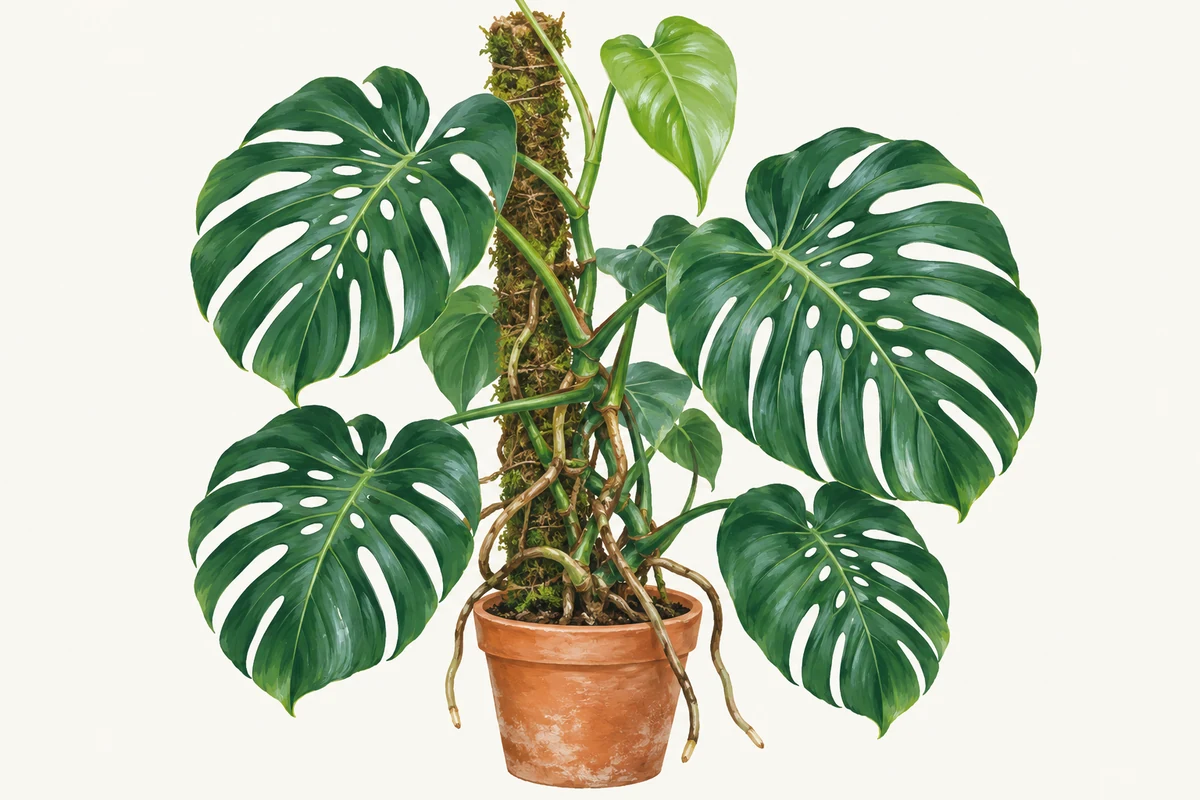 Houseplant profileMonstera deliciosa (Swiss cheese plant): how to identify itMonstera deliciosaIdentify Monstera deliciosa by its holed, split leaves, the joint under each blade and its cord-like aerial roots, and tell it from mini monstera.
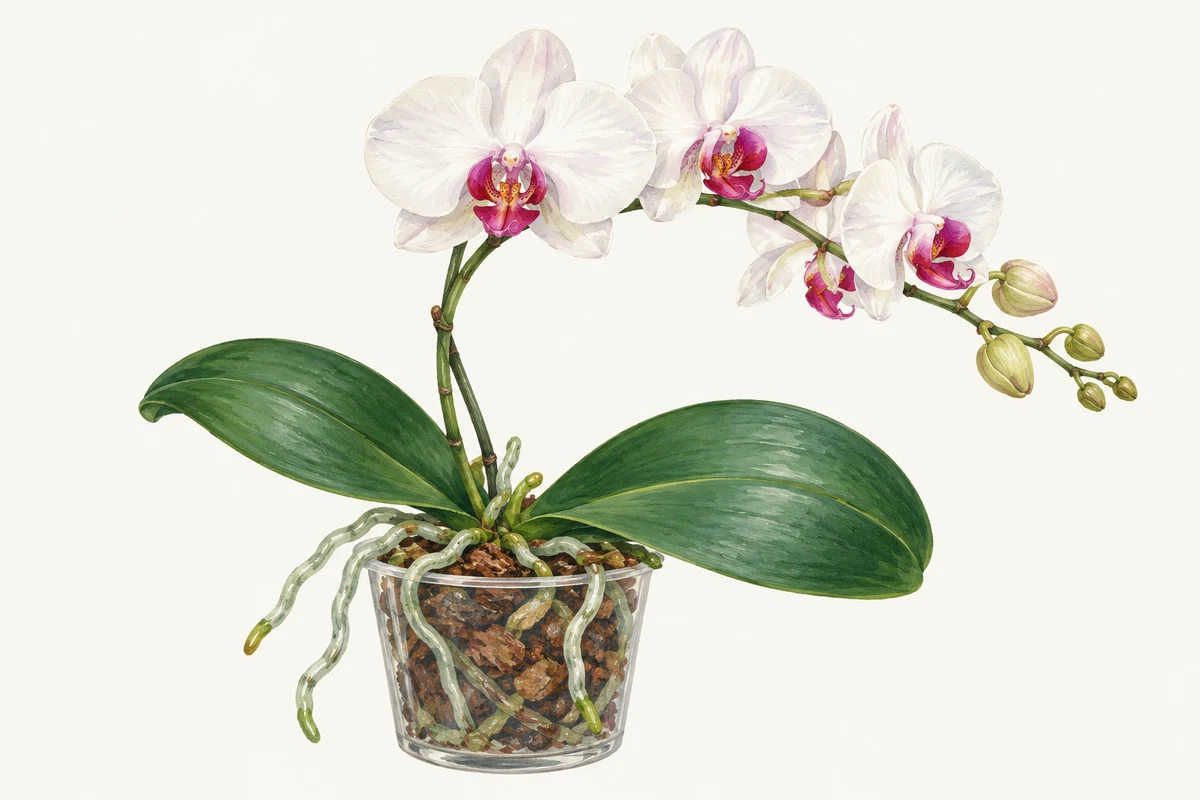 Plant profileMoth orchid (Phalaenopsis): how to identify itPhalaenopsis (genus; most plants sold are hybrids)Identify a moth orchid by its leathery leaves, silvery aerial roots and flat flowers with a lip and column, and tell it from Dendrobium and Cattleya.
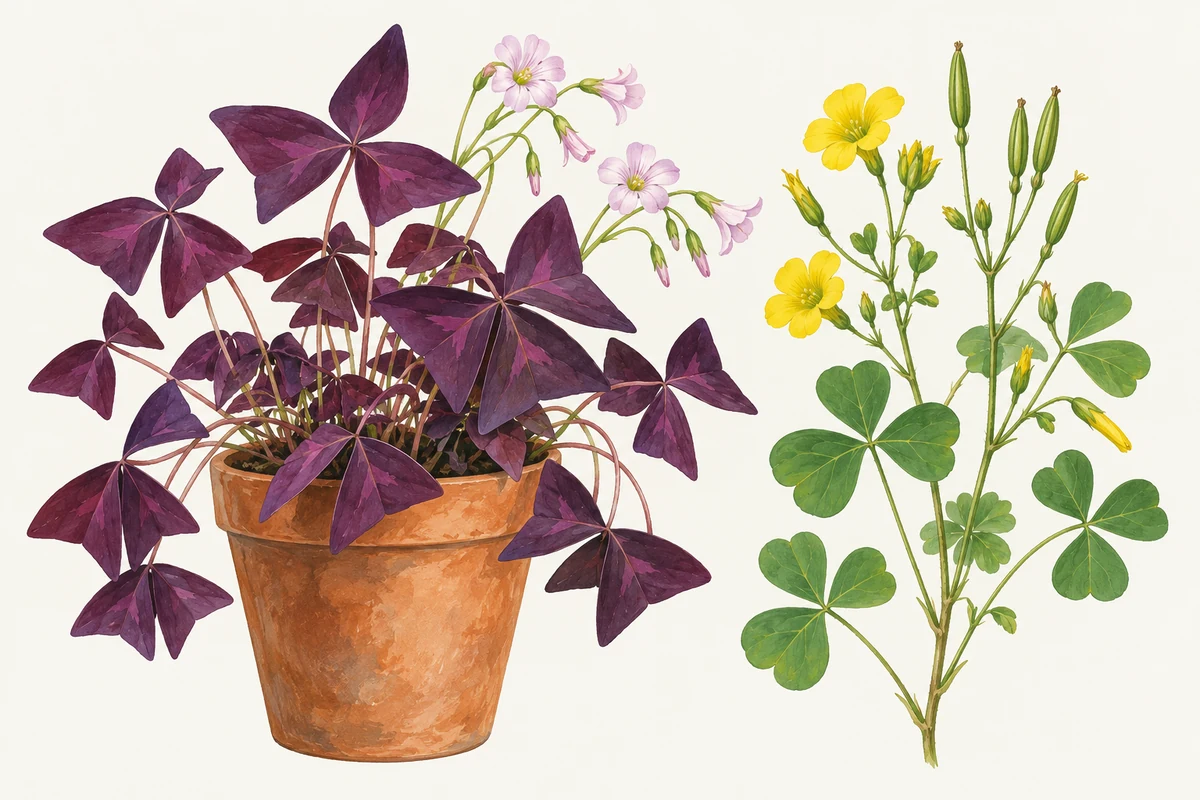 Houseplant profileOxalis (purple shamrock and woodsorrel): how to identify itOxalis triangularisIdentify an oxalis plant by its three heart-shaped or triangular leaflets that fold at night and its five-petaled flowers, and tell it from white clover.
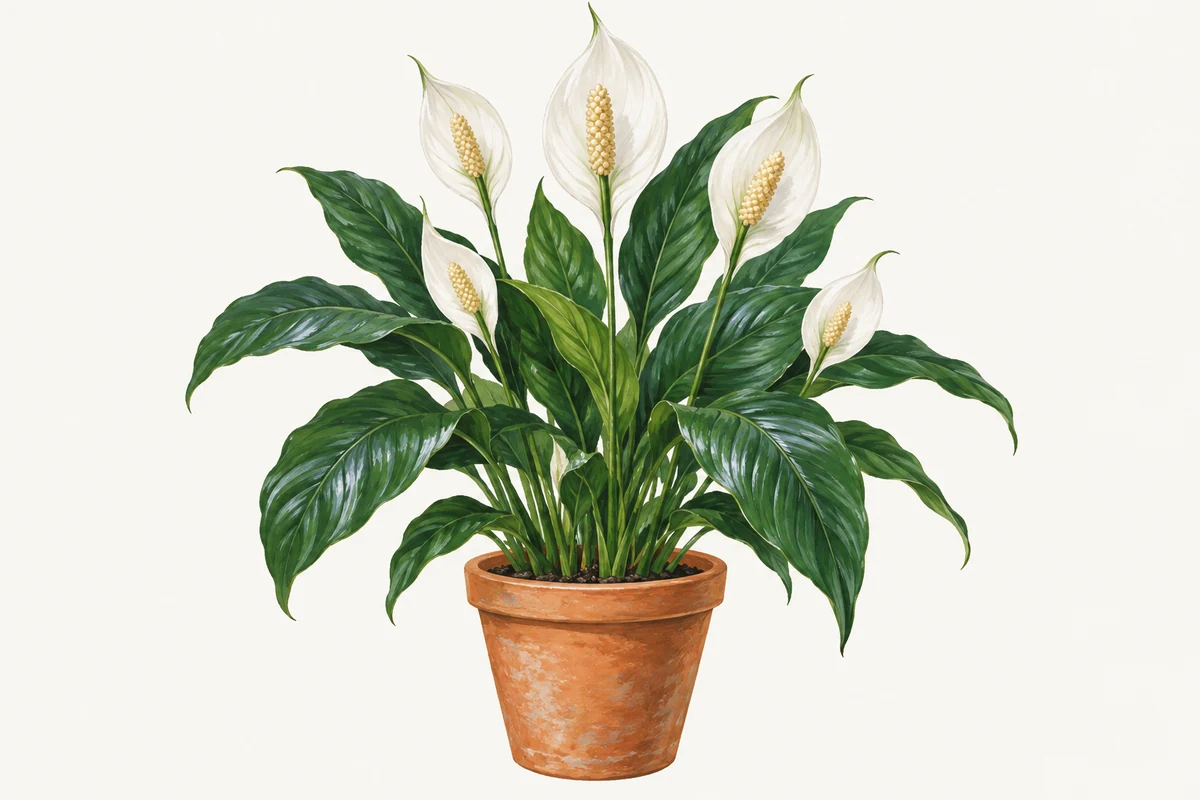 Houseplant profilePeace lily (Spathiphyllum): how to identify itSpathiphyllumIdentify a peace lily by its glossy, pointed leaves and white spathe around a cream spadix, and tell it from anthurium, calla lily and Chinese evergreen.
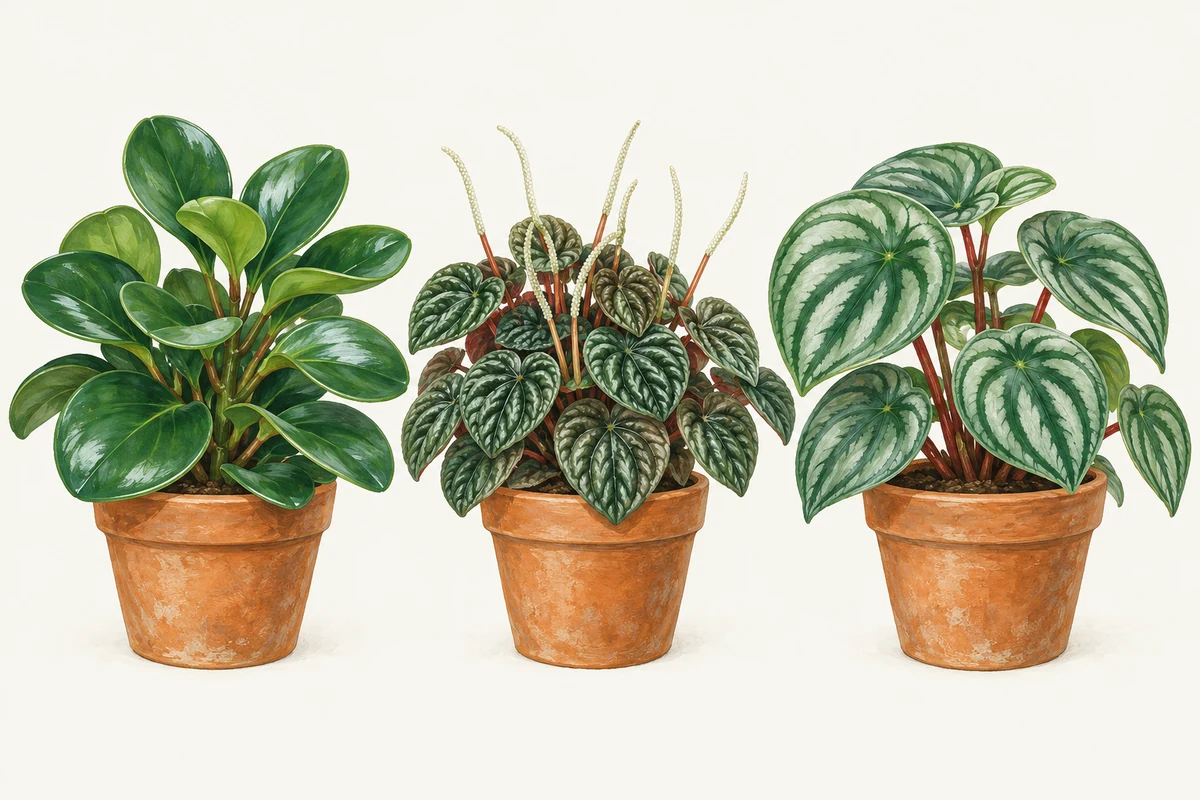 Houseplant profilePeperomia: how to identify the radiator plantPeperomiaIdentify a peperomia by its small, fleshy, often cupped leaves and thin flower spikes, and tell it from the Chinese money plant and the rubber plant.
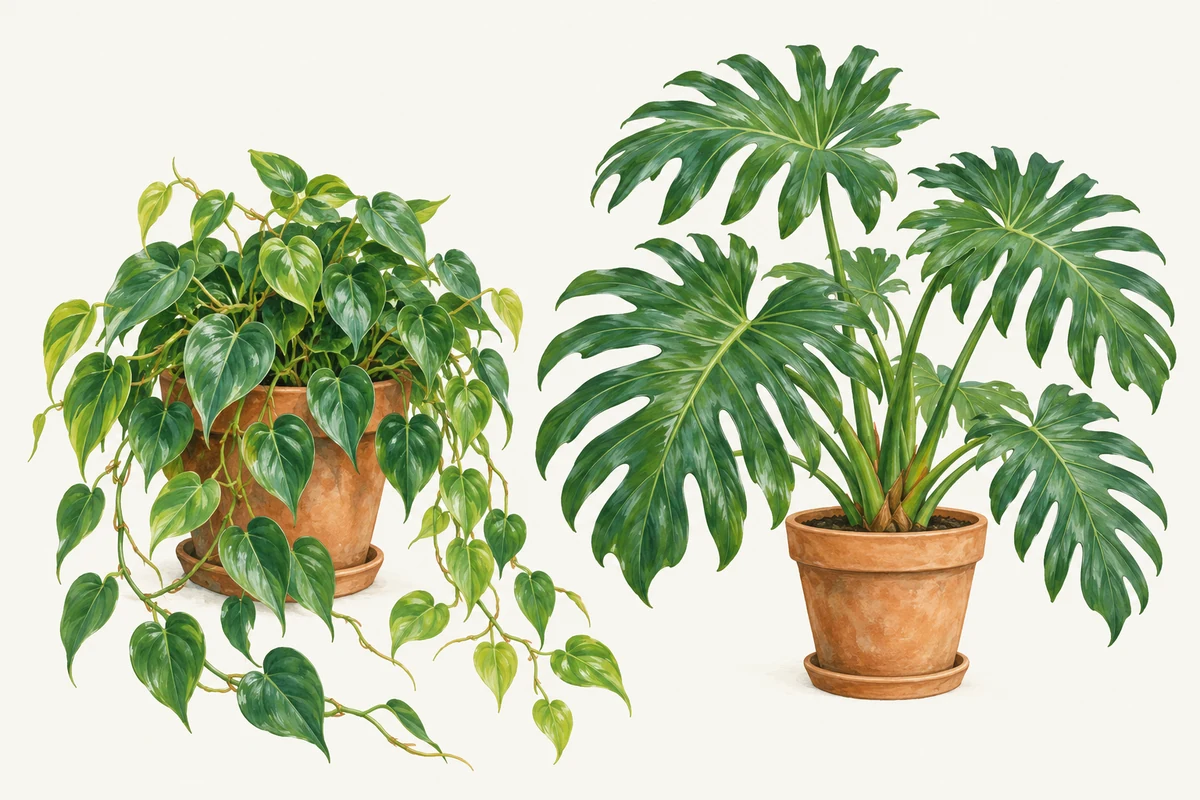 Houseplant profilePhilodendron: how to identify the vining and split-leaf typesPhilodendronIdentify a philodendron: heartleaf vines with papery sheaths on new leaves, split-leaf tree types with leaf scars, and the pothos and monstera look-alikes.
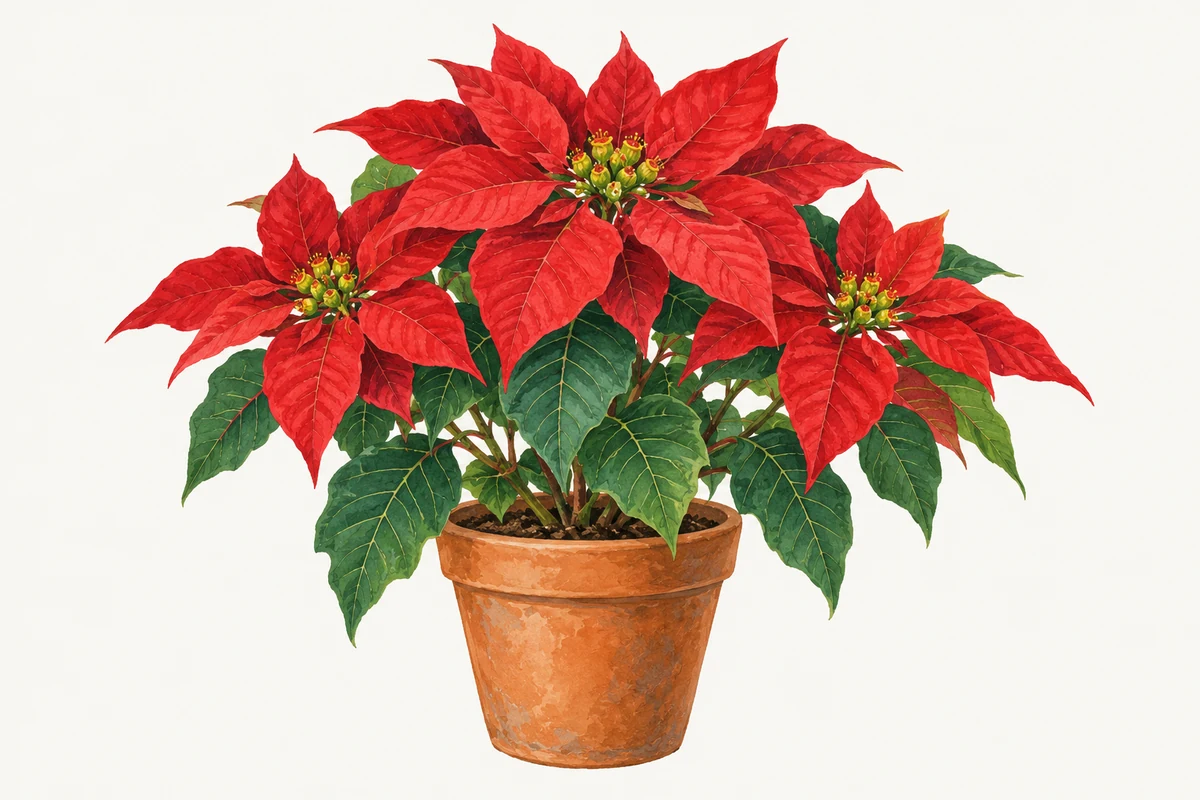 Houseplant profilePoinsettia plant (Euphorbia pulcherrima): how to identify itEuphorbia pulcherrimaIdentify a poinsettia plant by its colored bracts, tiny yellow cyathia and milky sap, and tell it from crotons and kalanchoe. Listed toxic by the ASPCA.
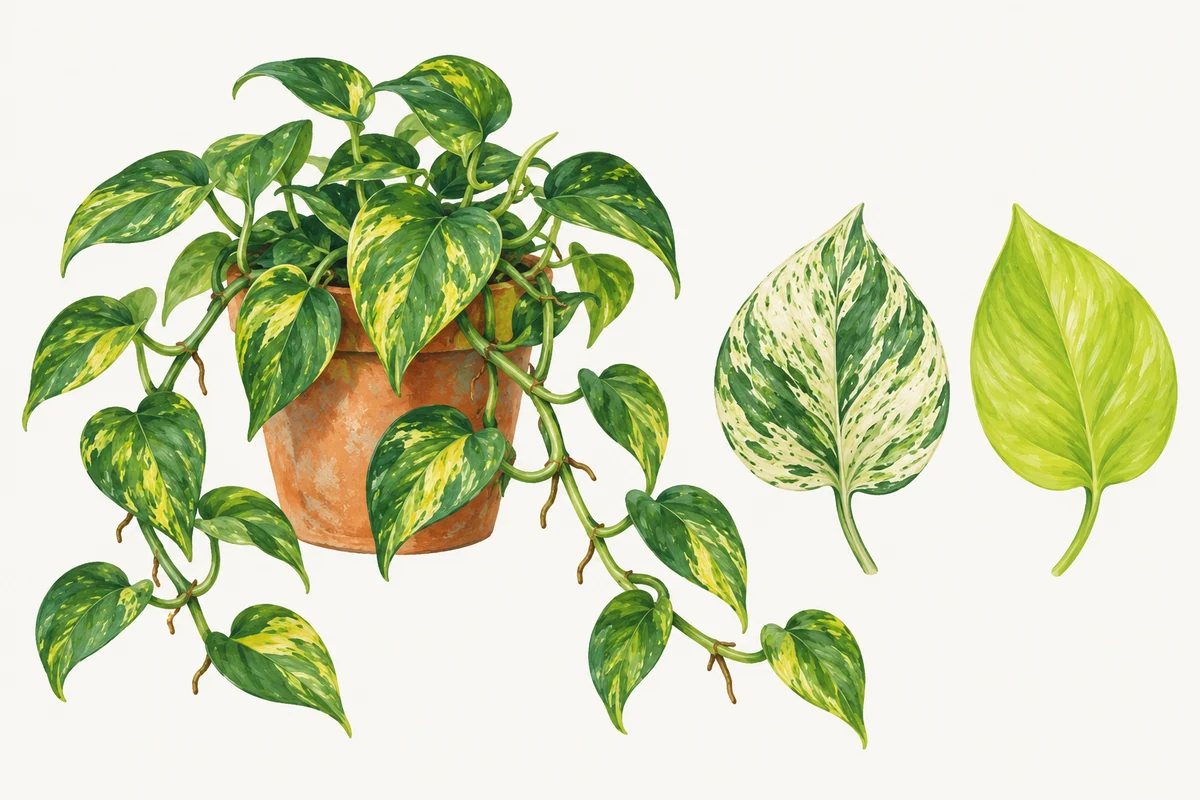 Houseplant profilePothos (Epipremnum aureum): how to identify itEpipremnum aureumIdentify a pothos plant (Epipremnum aureum) by its grooved leaf stalks, glossy heart-shaped leaves and sheath-free new growth, and name its cultivars.
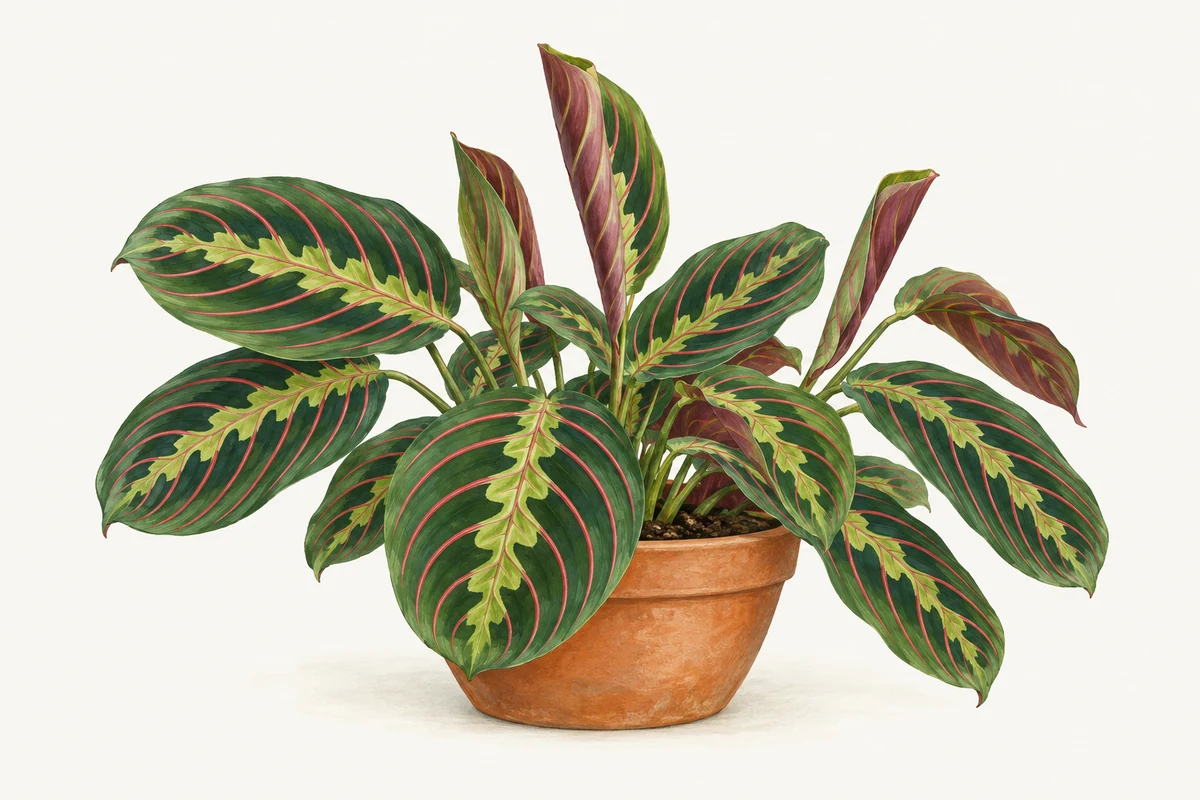 Houseplant profilePrayer plant (Maranta leuconeura): how to identify itMaranta leuconeuraIdentify a prayer plant by its oblong leaves with red fishbone veins, dark rabbit-track spots and night folding, and tell it from calathea and ctenanthe.
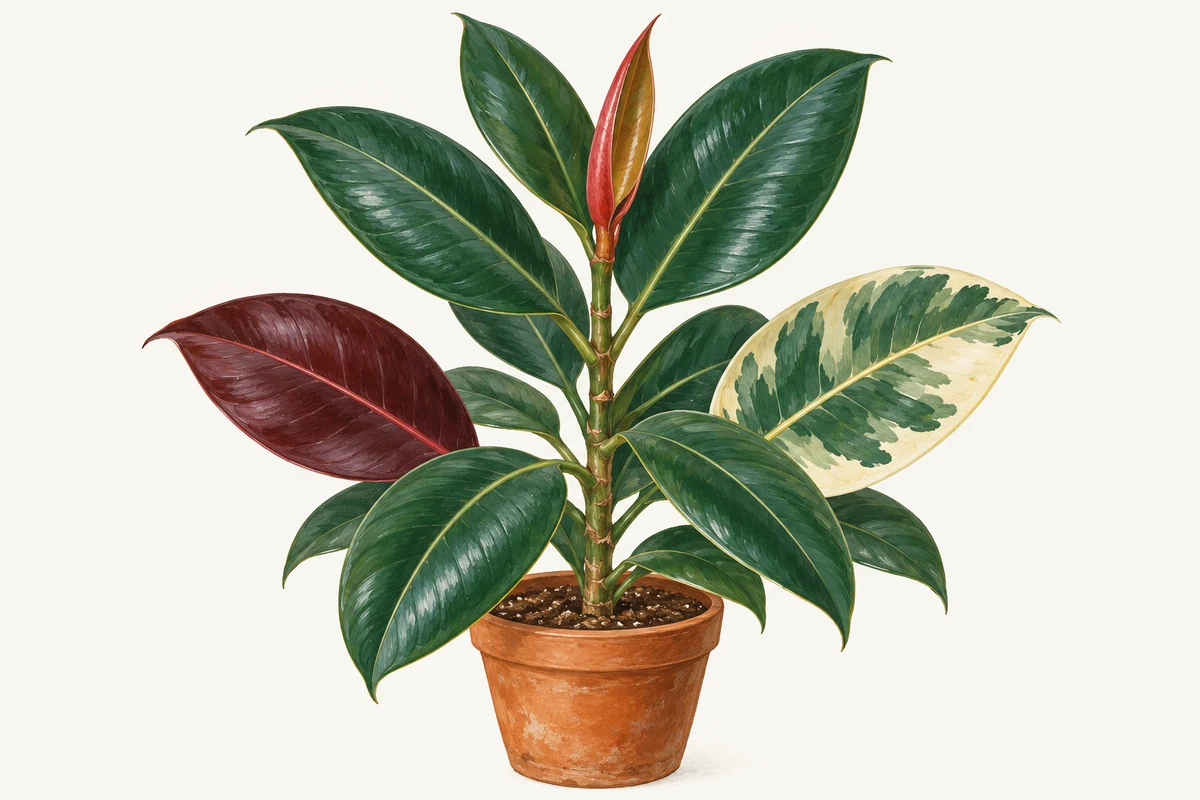 Houseplant profileRubber plant (Ficus elastica): how to identify itFicus elasticaIdentify a rubber plant by its glossy, leathery oval leaves and the pink to purple sheath at each shoot tip; tell it from fiddle leaf fig and other figs.
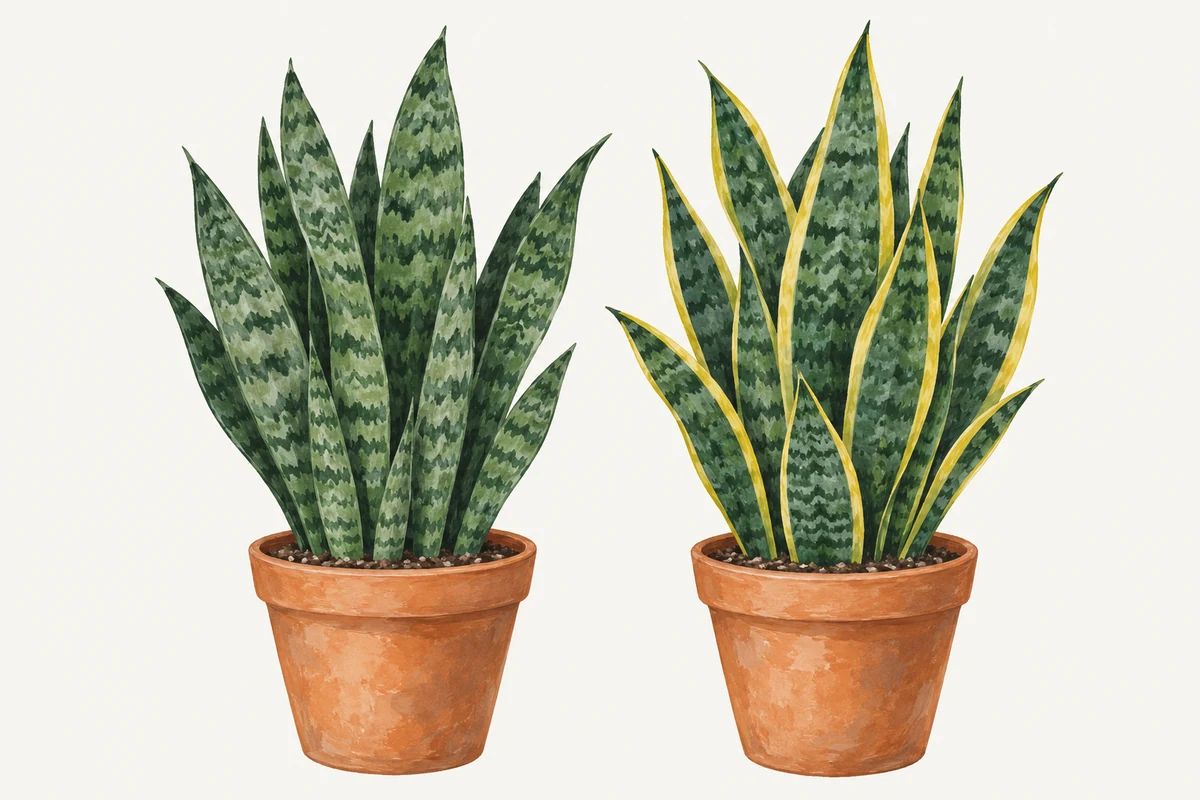 Houseplant profileSnake plant (Dracaena trifasciata): how to identify itDracaena trifasciataIdentify a snake plant by its stiff, flat, sword-shaped leaves with gray-green crossbands, and tell it from the cylindrical snake plant and ZZ plant.
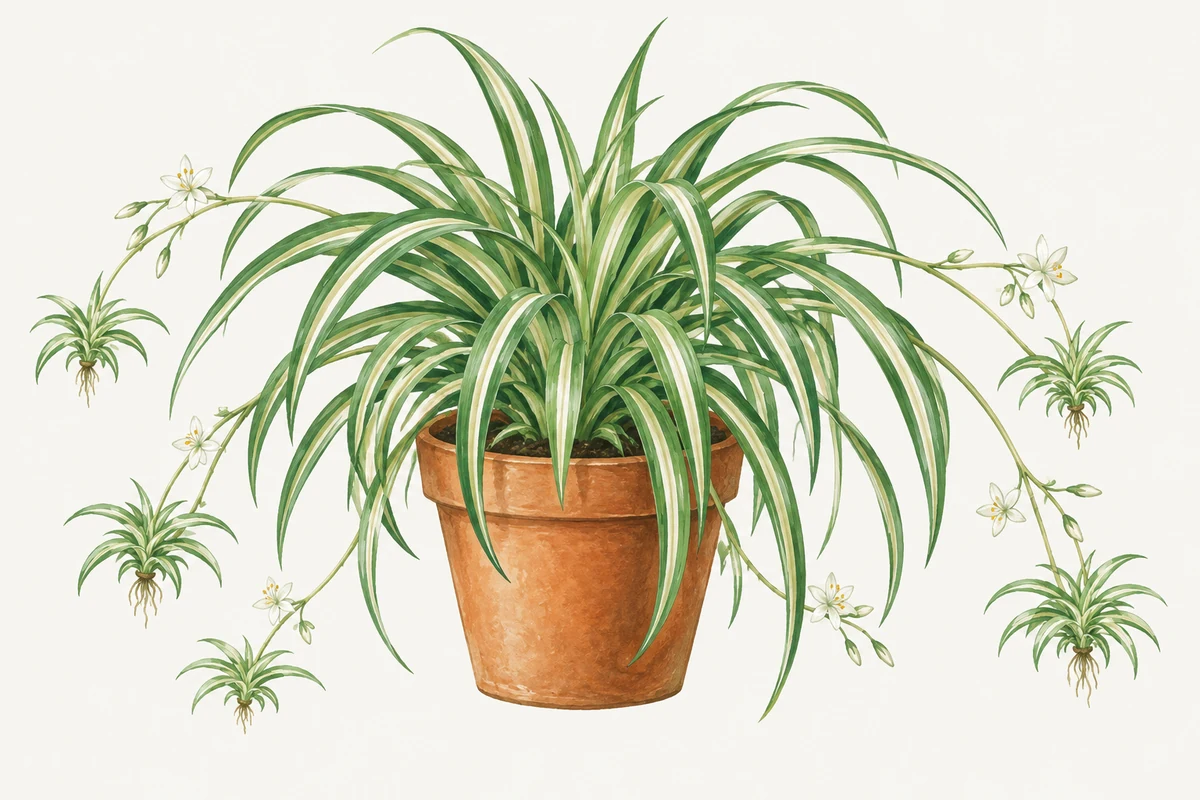 Houseplant profileSpider plant (Chlorophytum comosum): how to identify itChlorophytum comosumIdentify a spider plant by its arching, striped, grass-like leaves and the long runners that carry baby plantlets, and tell it from dracaena and lilyturf.
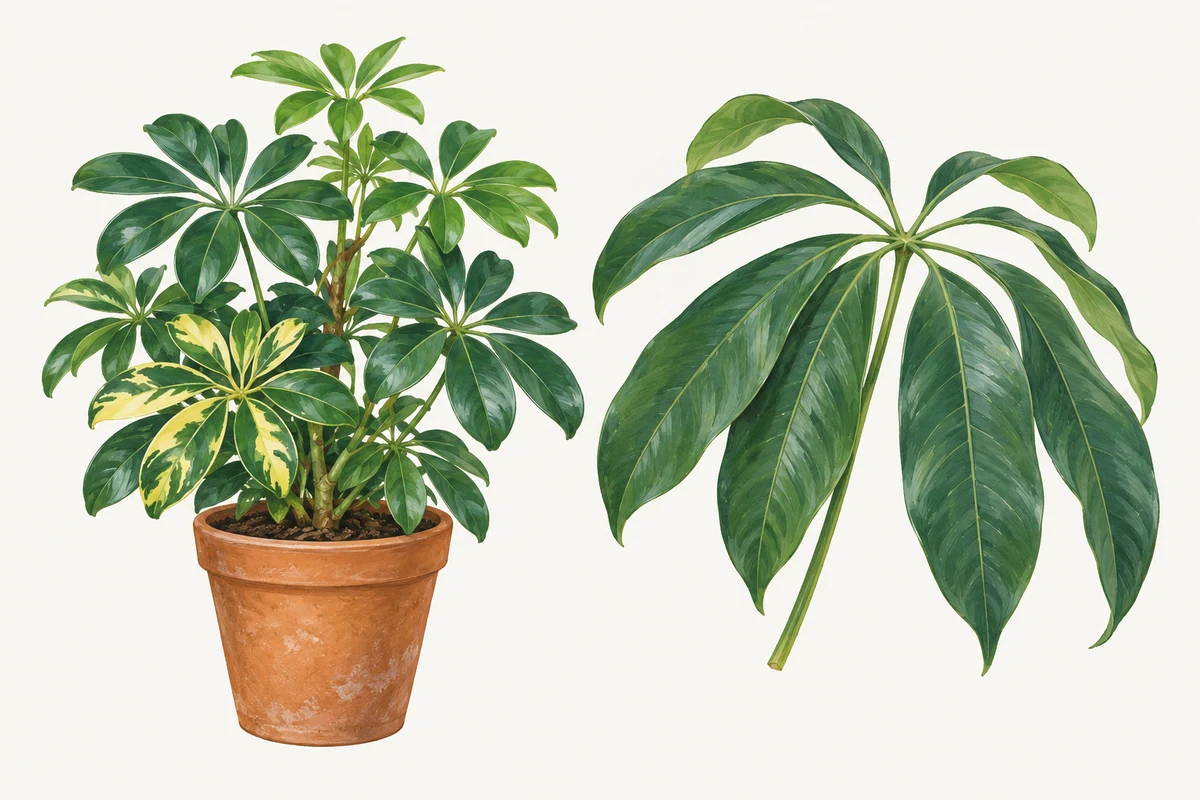 Houseplant profileUmbrella plant (Heptapleurum, formerly Schefflera): how to identify itHeptapleurum arboricola, Heptapleurum actinophyllumIdentify an umbrella plant (schefflera) by its leaflets spread like umbrella spokes, tell dwarf from large schefflera, and both from money tree and fatsia.
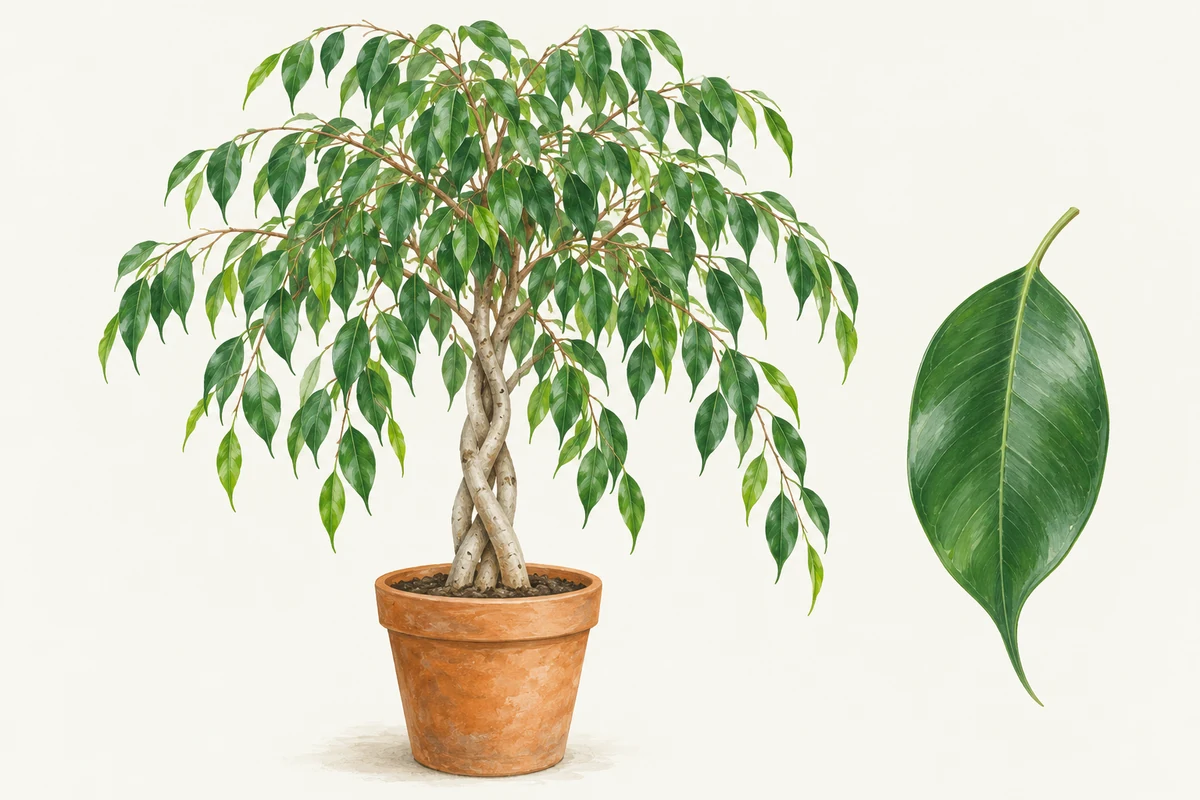 Houseplant profileWeeping fig (Ficus benjamina): how to identify itFicus benjaminaIdentify a weeping fig by its small, glossy, long-tipped leaves on drooping branches, and tell it from rubber plant, fiddle leaf fig and Chinese banyan.
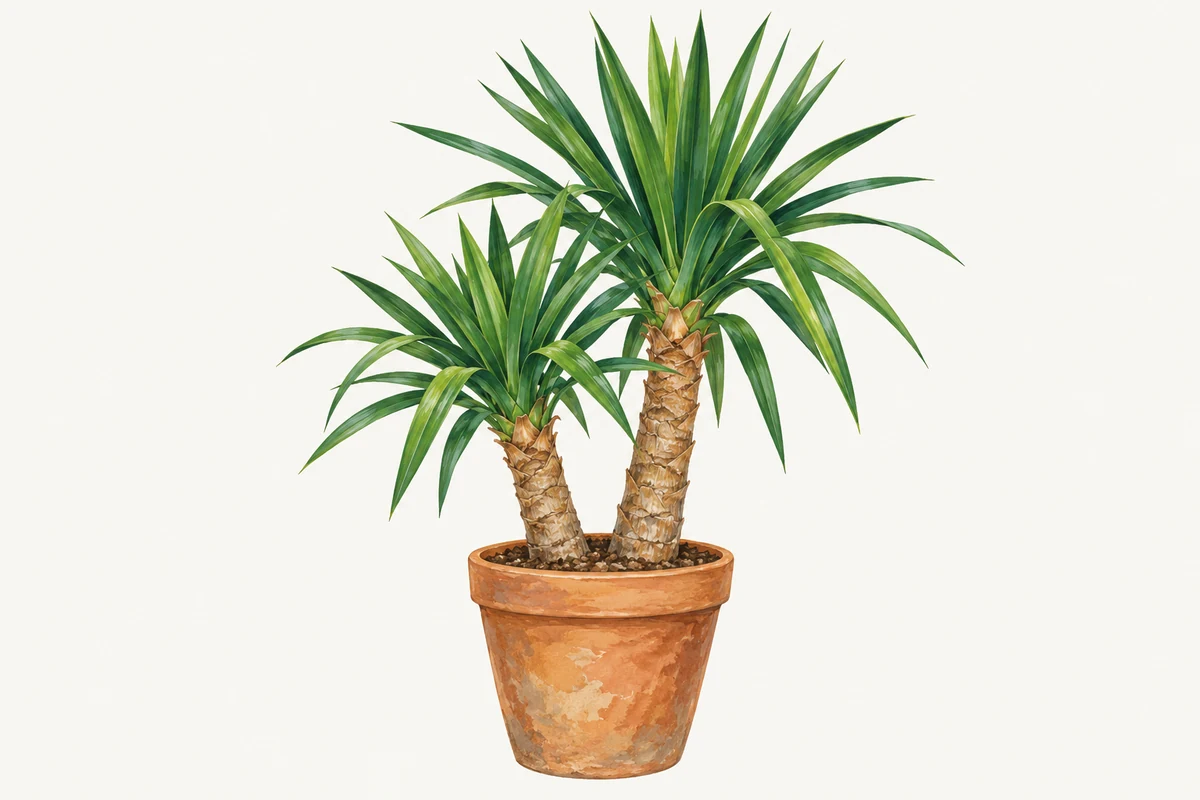 Houseplant profileYucca (Yucca gigantea): how to identify itYucca giganteaIdentify a yucca by its thick woody trunk and stiff, leathery leaves in spiral rosettes, and tell it from dragon tree, cabbage tree and Adam's needle.
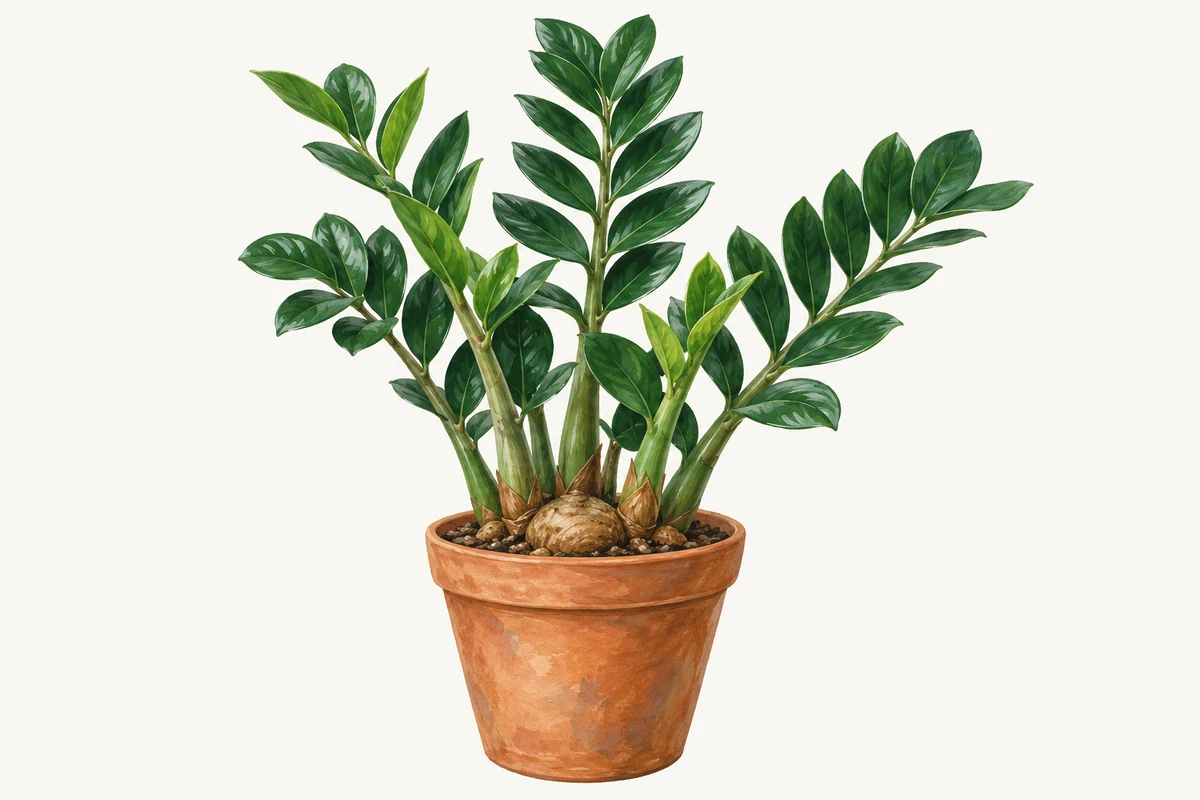 Houseplant profileZZ plant (Zamioculcas zamiifolia): how to identify itZamioculcas zamiifoliaIdentify a ZZ plant by its upright stalks of glossy paired leaflets and buried rhizome, and tell it from snake plant, jade plant and dark 'Raven'.
Flowers
Garden flowers and wildflowers, by their petals, leaves and season.
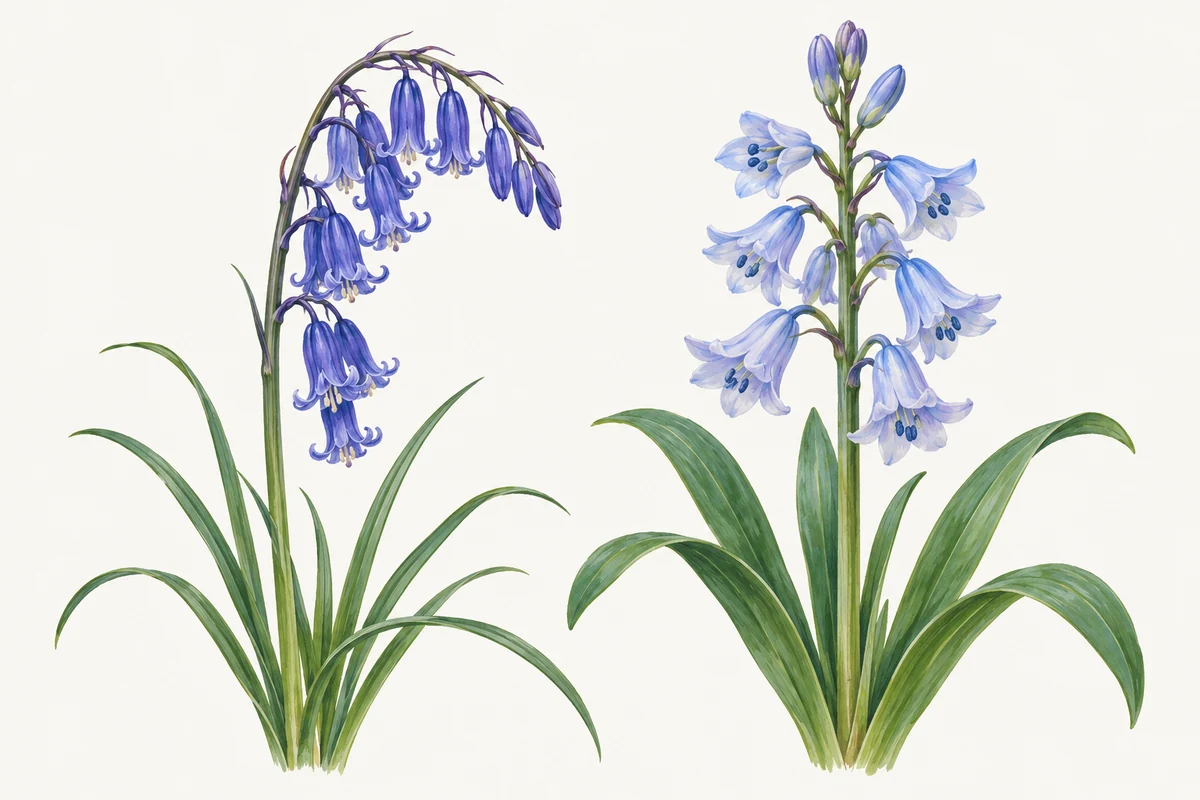 Flower profileBluebell (Hyacinthoides non-scripta): what it is and how to identify itHyacinthoides non-scriptaBluebell (Hyacinthoides non-scripta): nodding violet bells on one side of the stem, cream pollen. How to tell Spanish and hybrid bluebells apart.
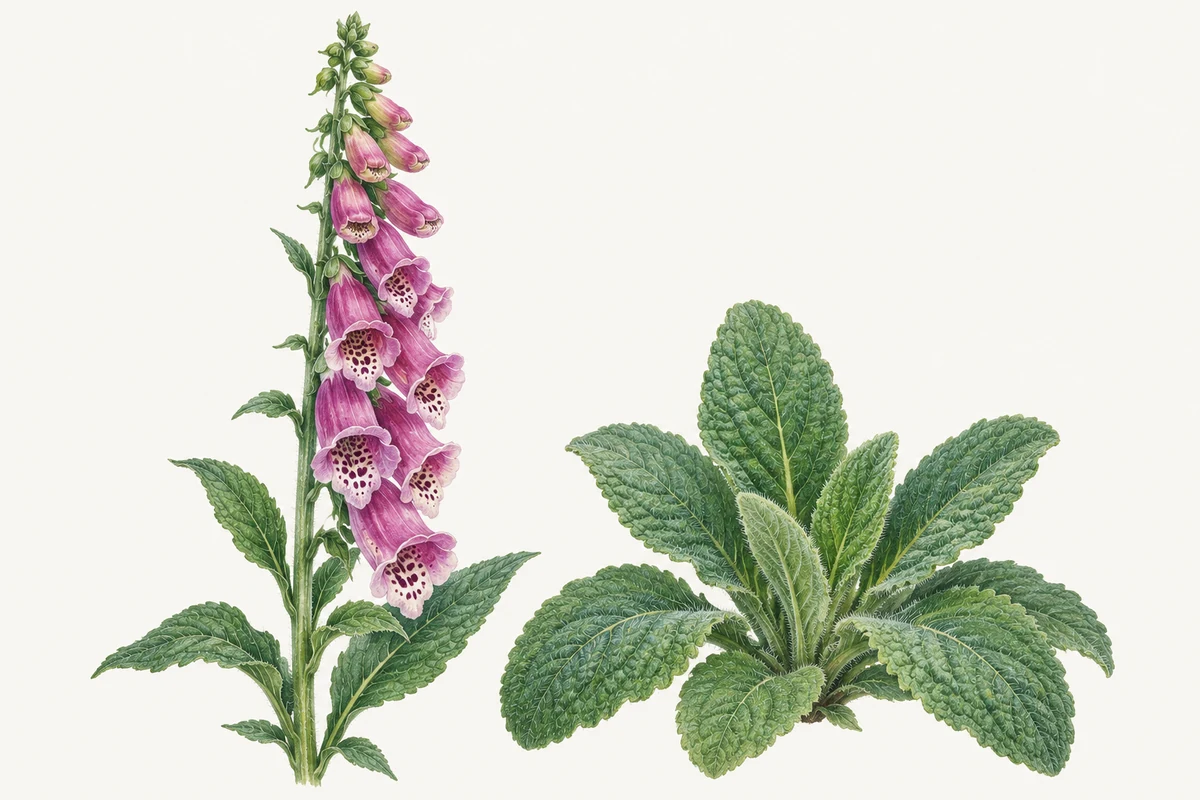 Flower profileFoxglove plant (Digitalis purpurea): how to identify itDigitalis purpureaIdentify a foxglove plant by its spike of spotted bells or its hairy, toothed first-year rosette, and tell it from mullein. Listed toxic by the ASPCA.
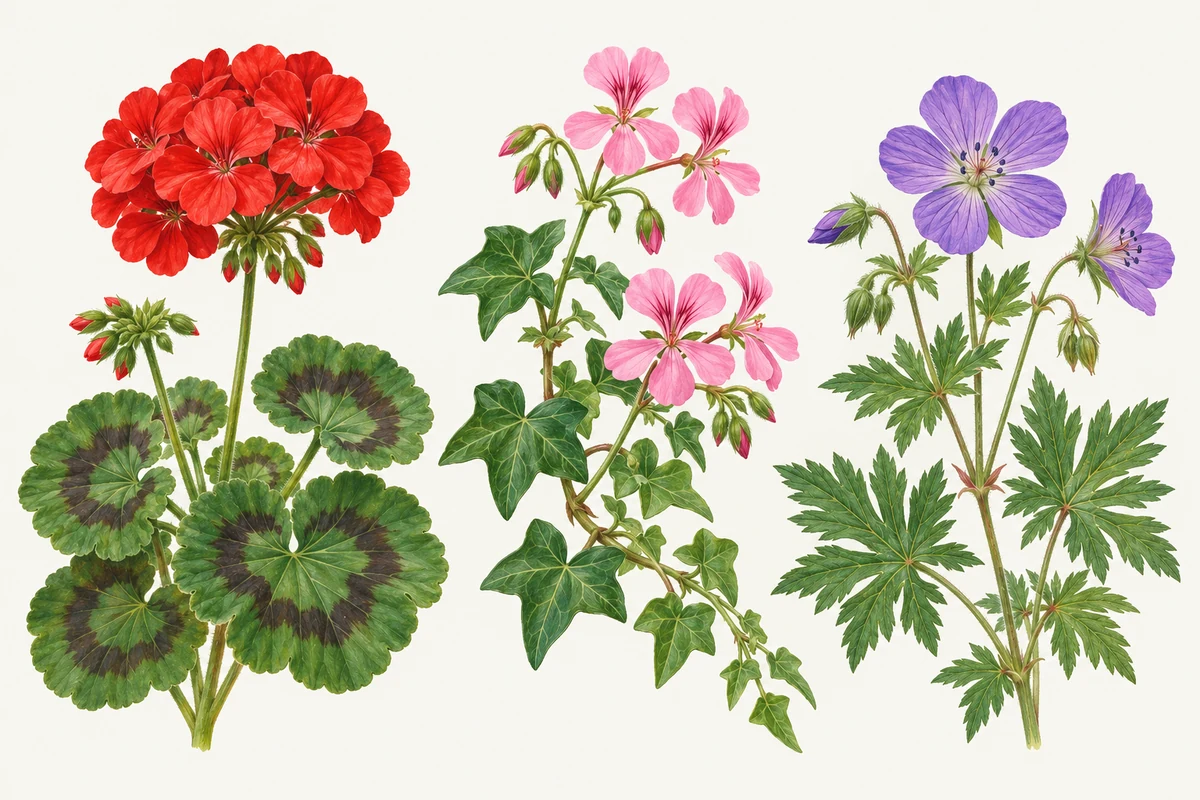 Flower profileGeranium plant (Pelargonium): how to identify itPelargonium × hybridum (syn. P. × hortorum, from P. zonale × P. inquinans) and Pelargonium peltatumIdentify the bedding geranium plant (Pelargonium) by its zoned, round leaves and clustered flowers, and tell it from the true geranium, or cranesbill.
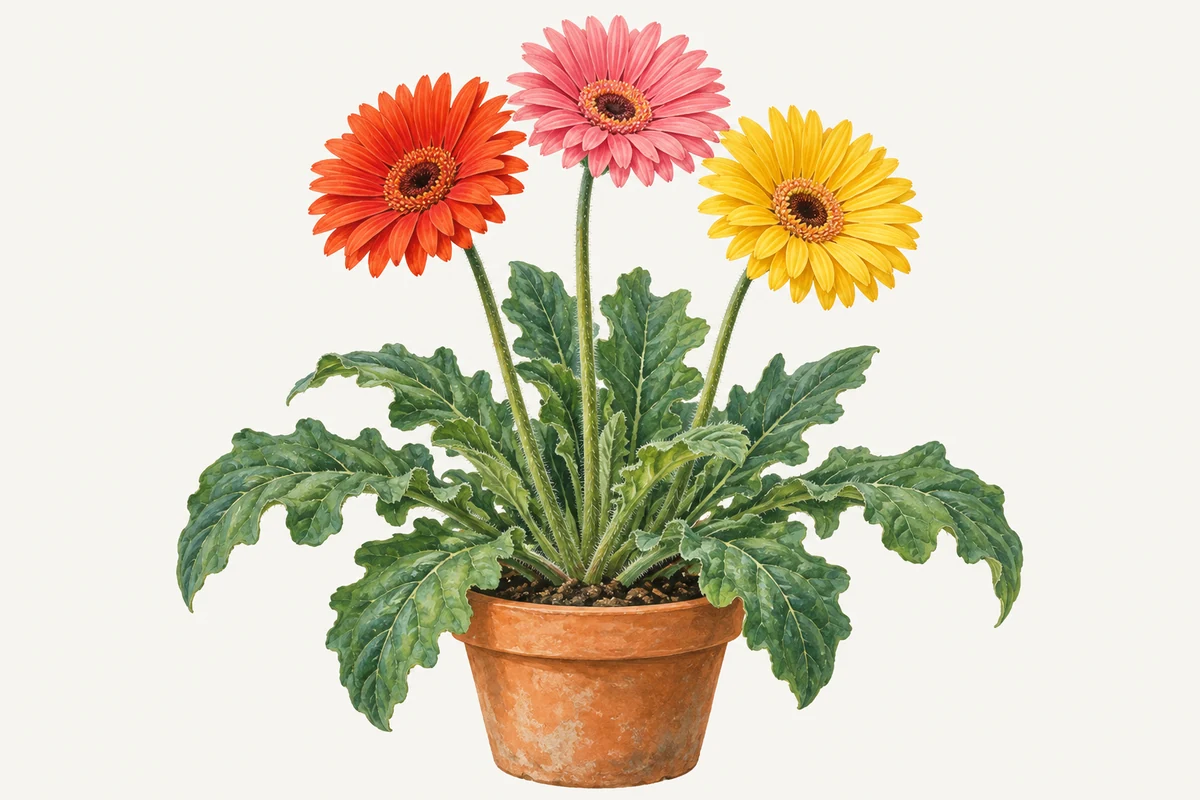 Flower profileGerbera daisy (Gerbera jamesonii): how to identify itGerbera jamesonii hybridsIdentify a gerbera daisy by its single large flower head on a leafless stem above a rosette of lobed leaves, and tell it from osteospermum and gazania.
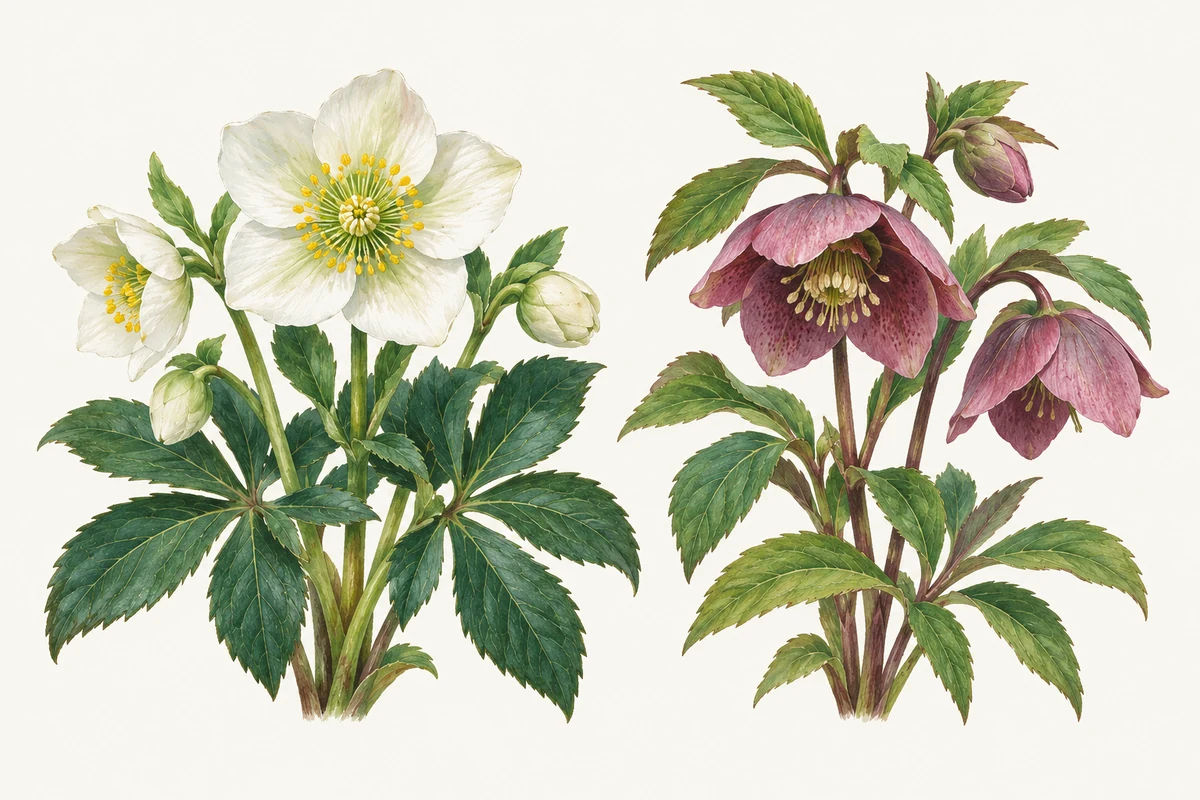 Plant profileHellebore (Helleborus): how to identify itHelleborus nigerIdentify hellebore by its leathery, hand-shaped evergreen leaves and nodding winter flowers, tell Christmas rose from Lenten rose, and see its toxicity.
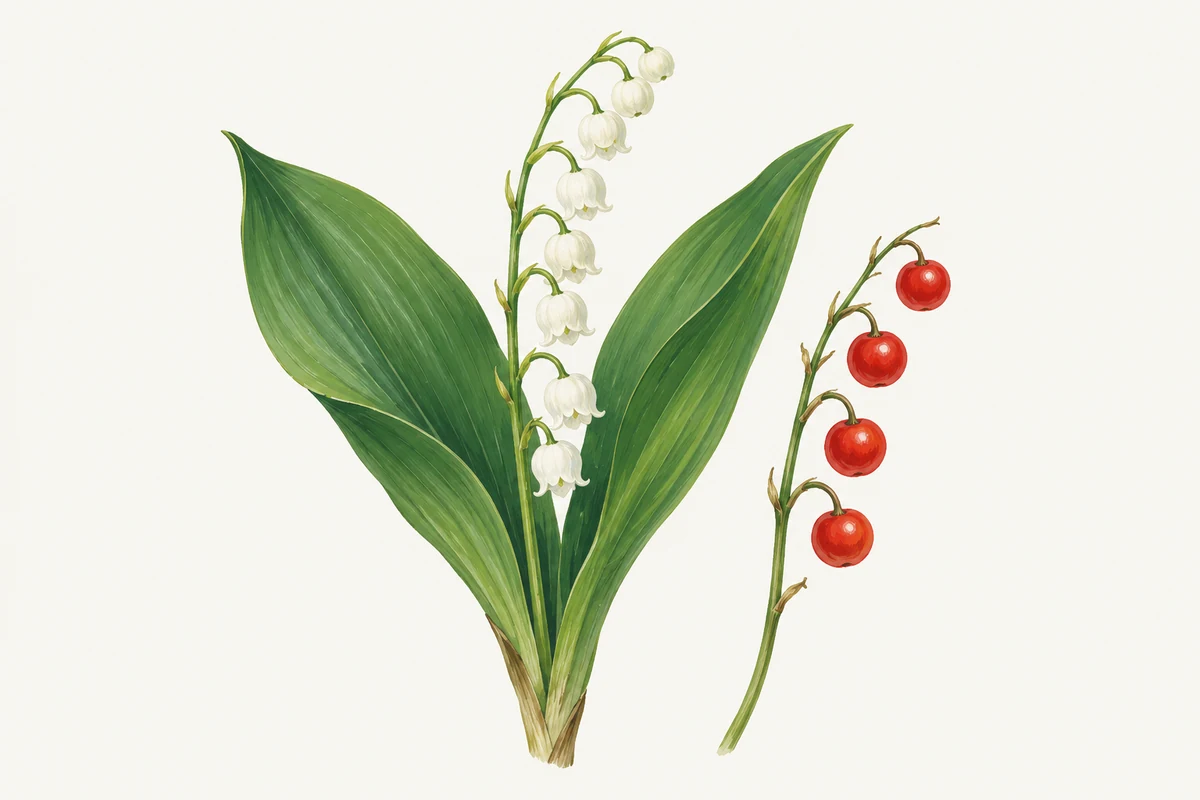 Flower profileLily of the valley (Convallaria majalis): what it is and how to identify itConvallaria majalisLily of the valley (Convallaria majalis): paired leaves, one-sided white bells, red berries. Listed toxic by the ASPCA; often mistaken for wild garlic.
Succulents and cacti
Echeveria, aloe, jade plant and the other water-storing plants.
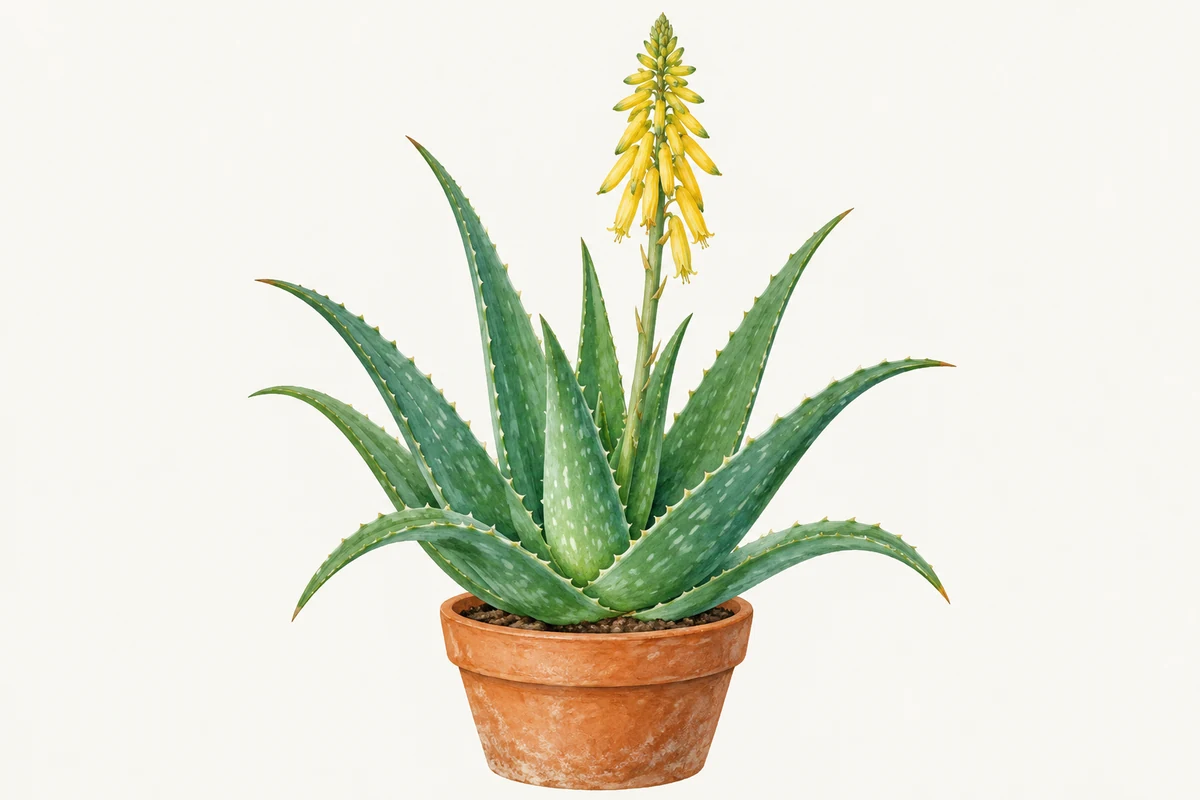 Succulent profileAloe vera: how to identify the plantAloe veraIdentify aloe vera by its gray-green, white-toothed rosette and gel-filled leaves, and tell it from agave, haworthia and gasteria with one check each.
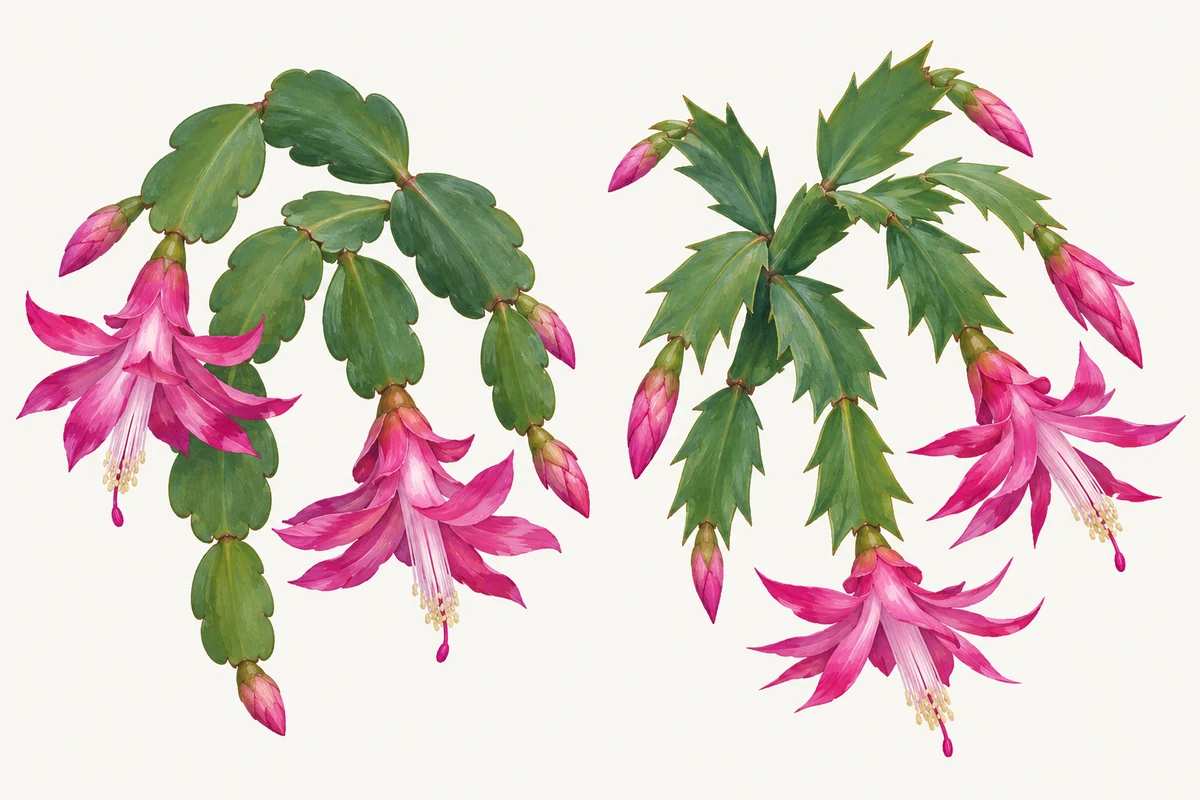 Succulent profileChristmas cactus leaf identification: Christmas, Thanksgiving or Easter cactusSchlumbergera × buckleyiChristmas cactus leaf identification: rounded or toothed segment edges, hanging or level flowers, and how to tell Thanksgiving and Easter cactus apart.
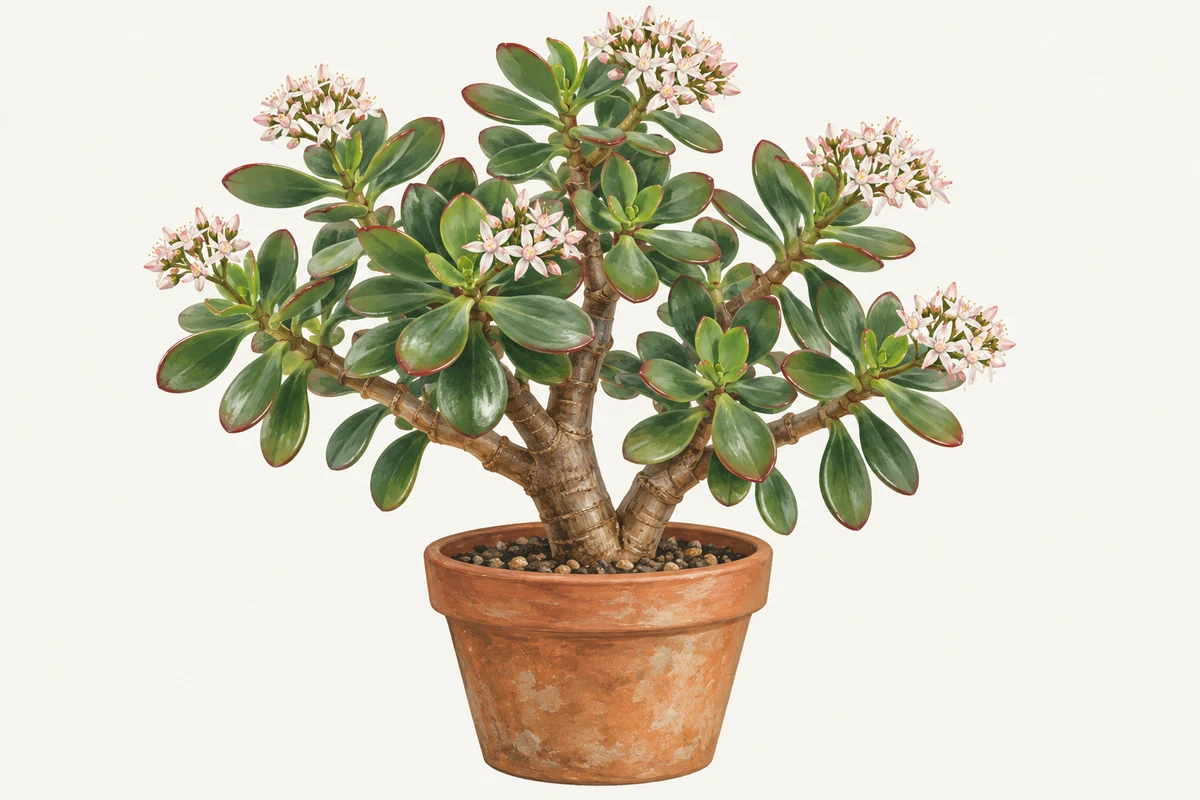 Plant profileJade plant (Crassula ovata): how to identify itCrassula ovataIdentify a jade plant by its glossy, egg-shaped leaves and ringed, thick stems, and tell it from elephant bush, silver dollar jade and 'Gollum'.
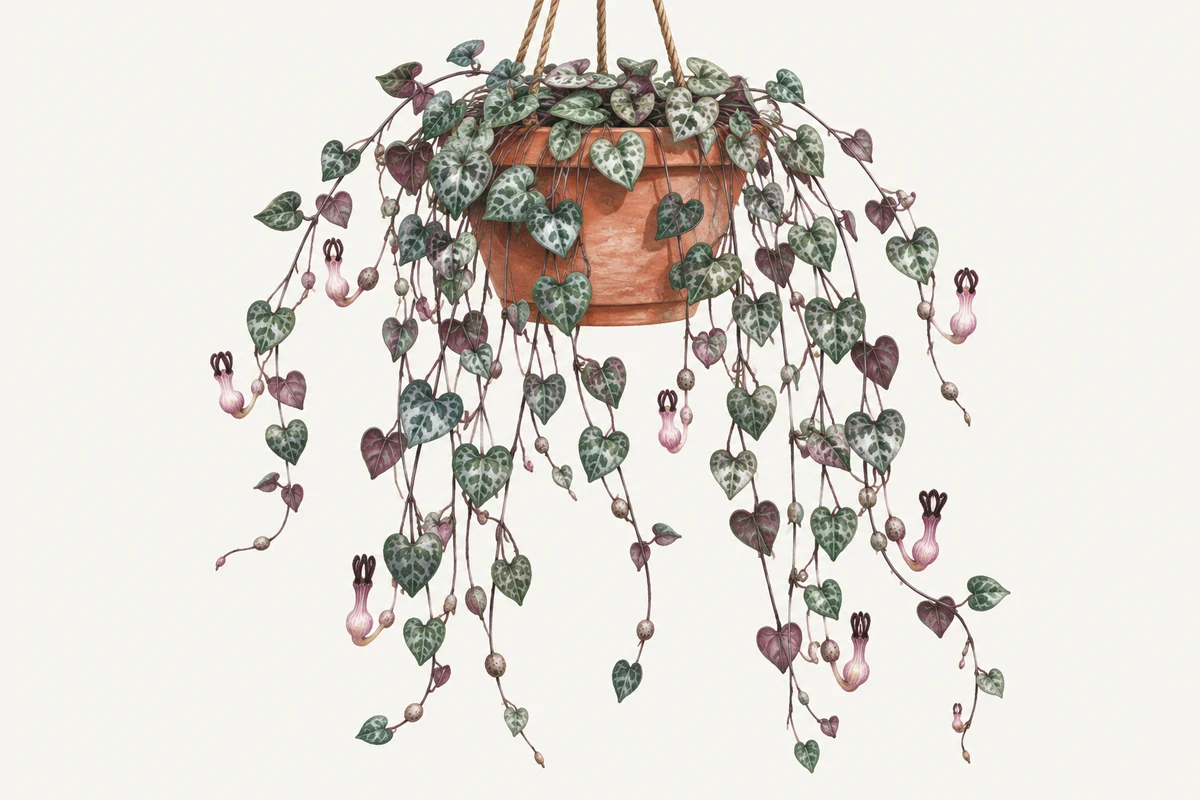 Plant profileString of hearts (Ceropegia woodii): how to identify itCeropegia woodiiIdentify string of hearts by its small silver-etched heart leaves in pairs on wiry trailing stems, and tell it from string of pearls and string of turtles.
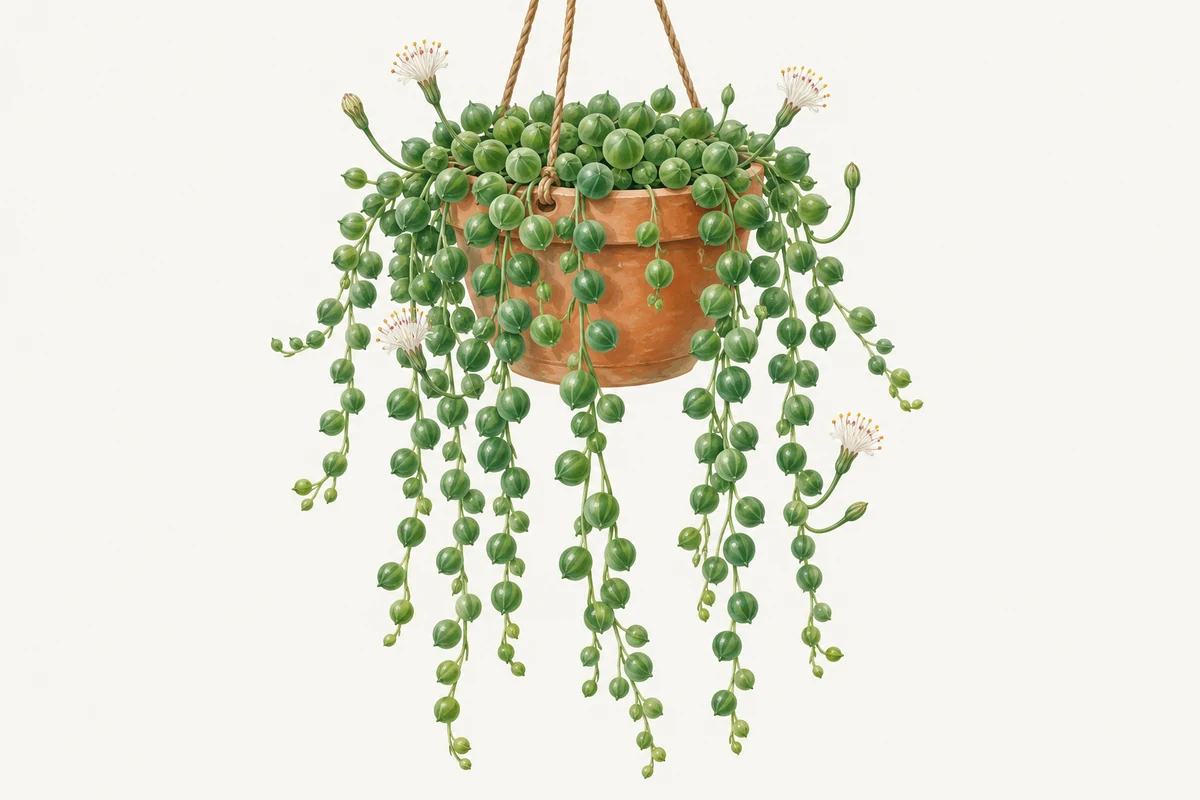 Plant profileString of pearls (Curio rowleyanus): how to identify itCurio rowleyanusIdentify string of pearls by its pea-shaped leaves with a translucent stripe on thin trailing stems, and tell it from string of bananas.
Weeds
The plants that turn up in lawns, beds and paving cracks, and how to tell them apart.
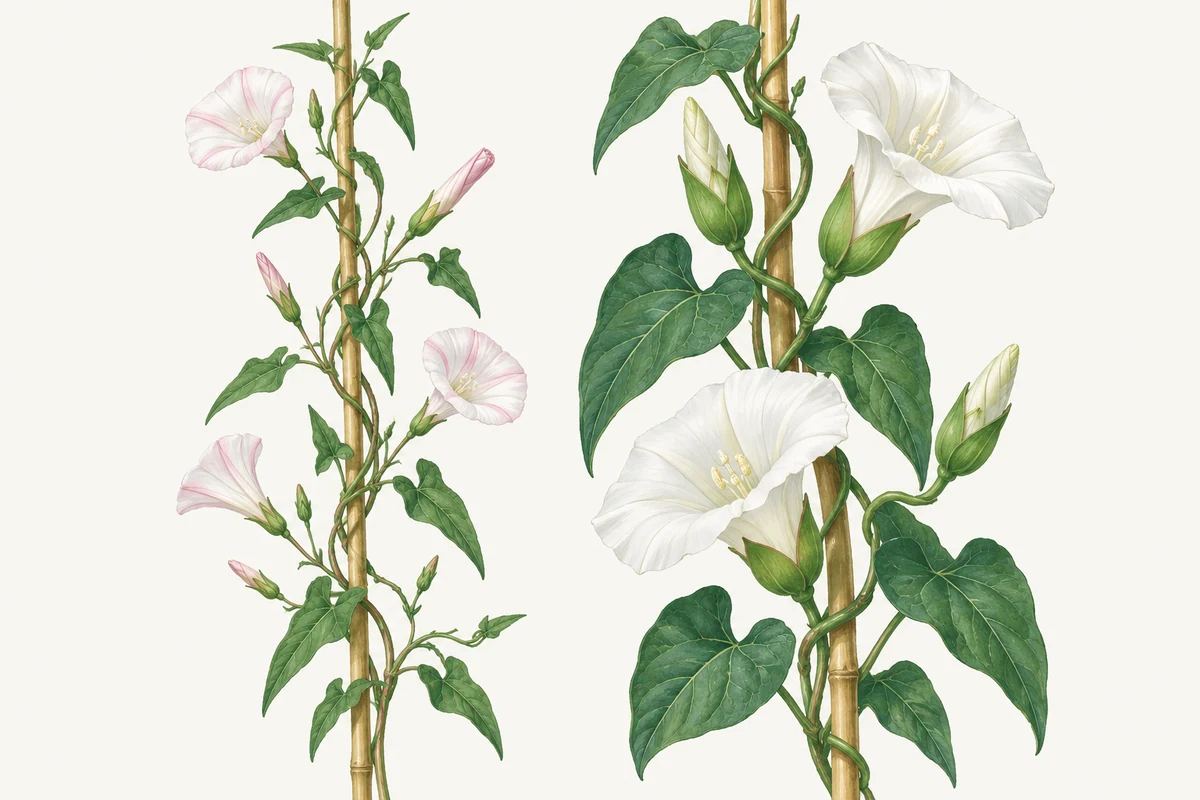 Weed profileBindweed (Convolvulus arvensis, Calystegia sepium): how to identify itConvolvulus arvensis and Calystegia sepiumIdentify bindweed by its twining stems, arrow-shaped leaves and white to pink funnel flowers, and tell field from hedge bindweed and morning glory.
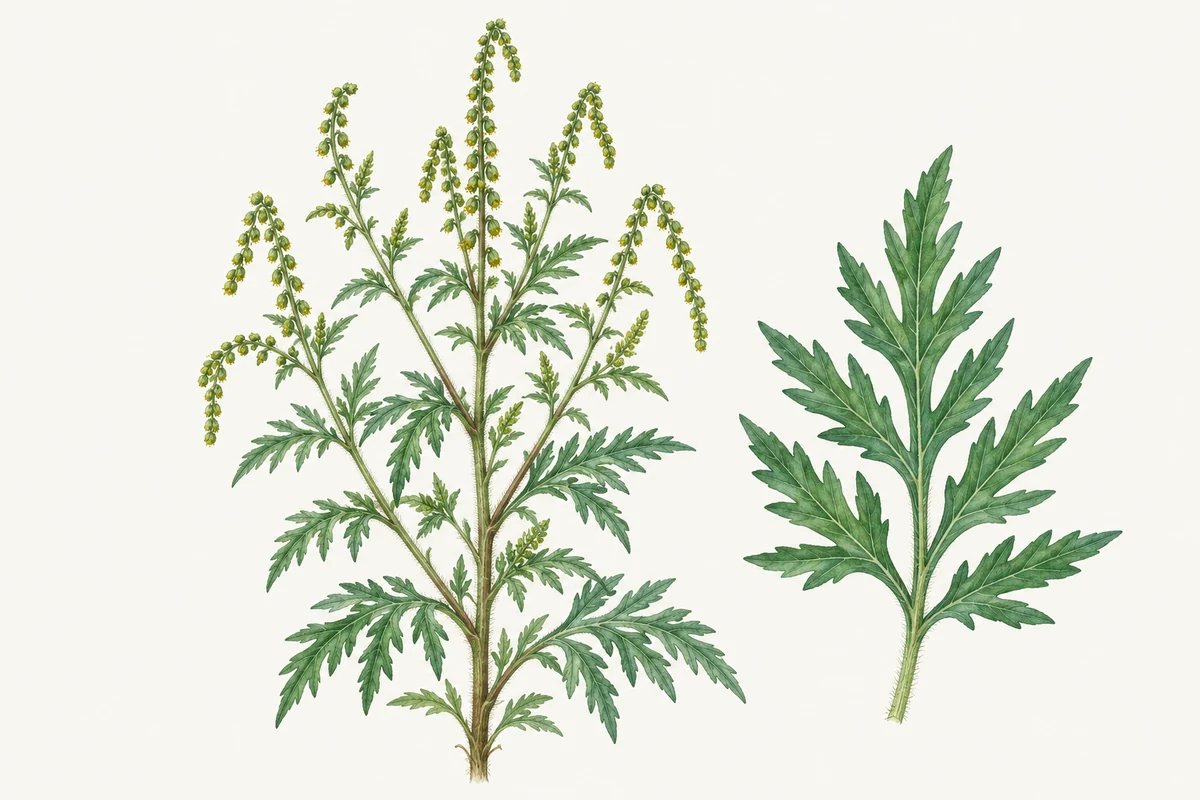 Weed profileCommon ragweed (Ambrosia artemisiifolia): how to identify itAmbrosia artemisiifoliaIdentify common ragweed by its fern-like hairy leaves, pinkish hairy stem and green flower spikes, and tell it from mugwort, giant ragweed and marigolds.
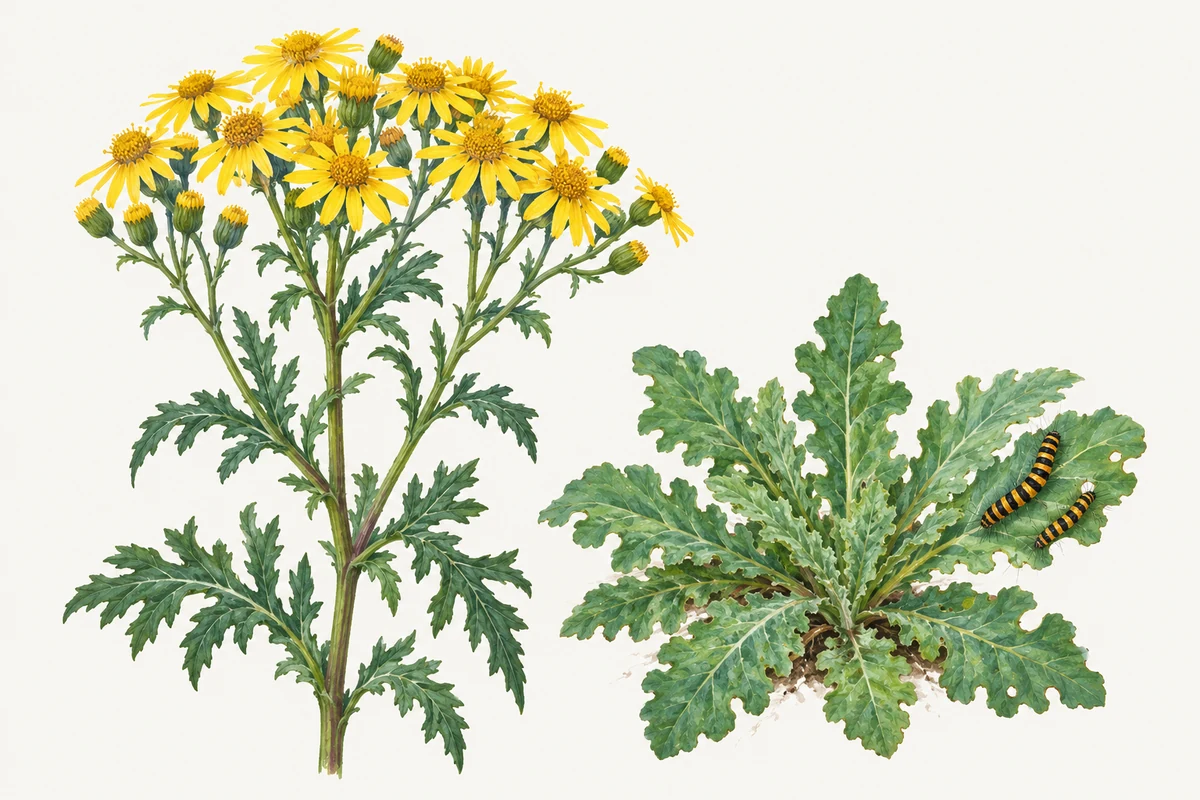 Weed profileCommon ragwort (Jacobaea vulgaris): how to identify itJacobaea vulgarisIdentify common ragwort by its first-year rosette, ragged dark green leaves and flat-topped yellow flower clusters, and see what UK rules say about it.
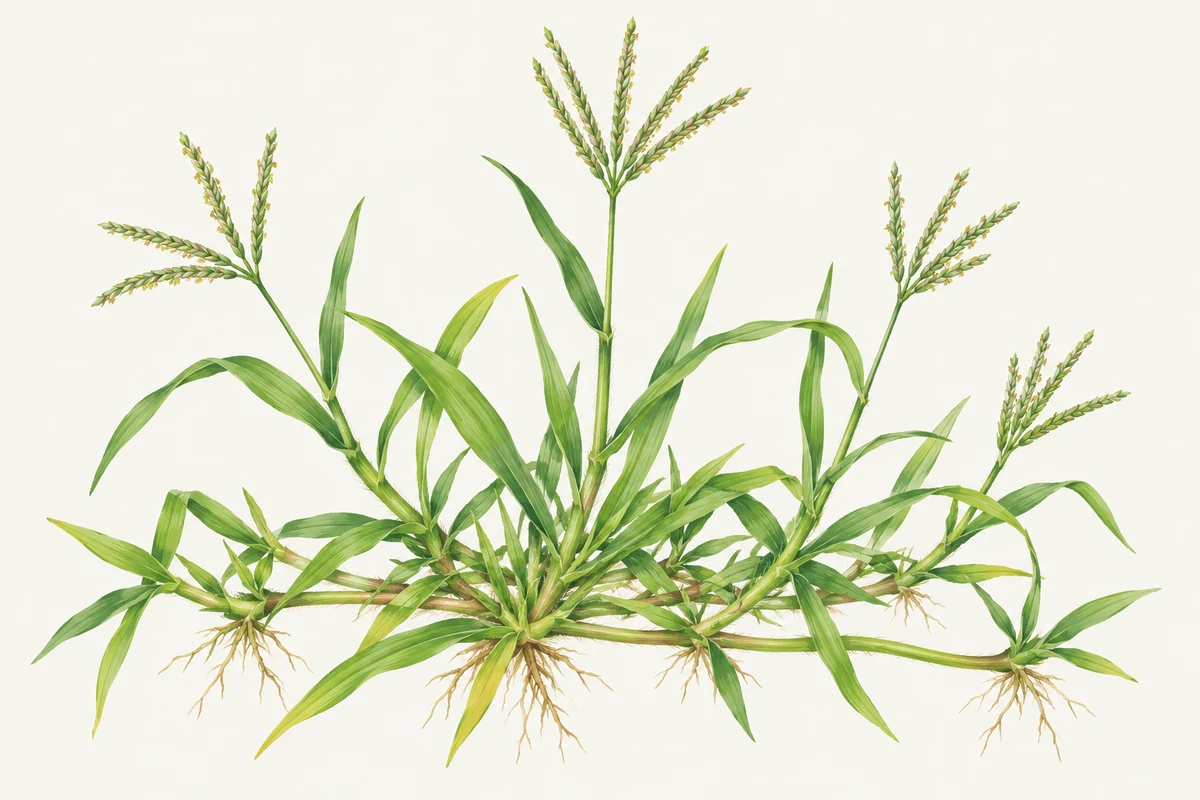 Weed profileCrabgrass (Digitaria): how to identify it in your lawnDigitaria ischaemum and Digitaria sanguinalisIdentify crabgrass by its pale, wide blades, rolled young leaves and finger-like seed heads, and tell it from goosegrass, quackgrass and tall fescue.
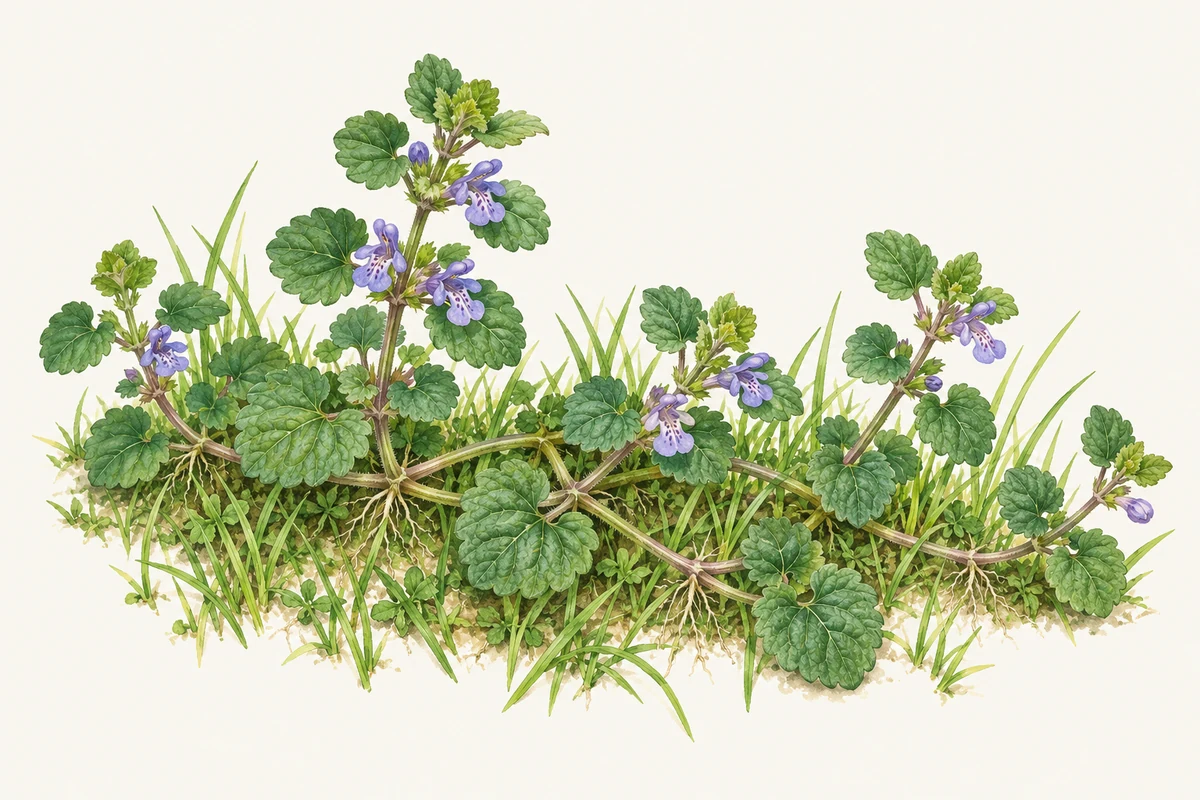 Weed profileCreeping Charlie (Glechoma hederacea): how to identify ground ivyGlechoma hederaceaIdentify creeping Charlie by its square rooting stems, round scalloped leaves, aromatic smell and violet flowers, and tell it from henbit and mallow.
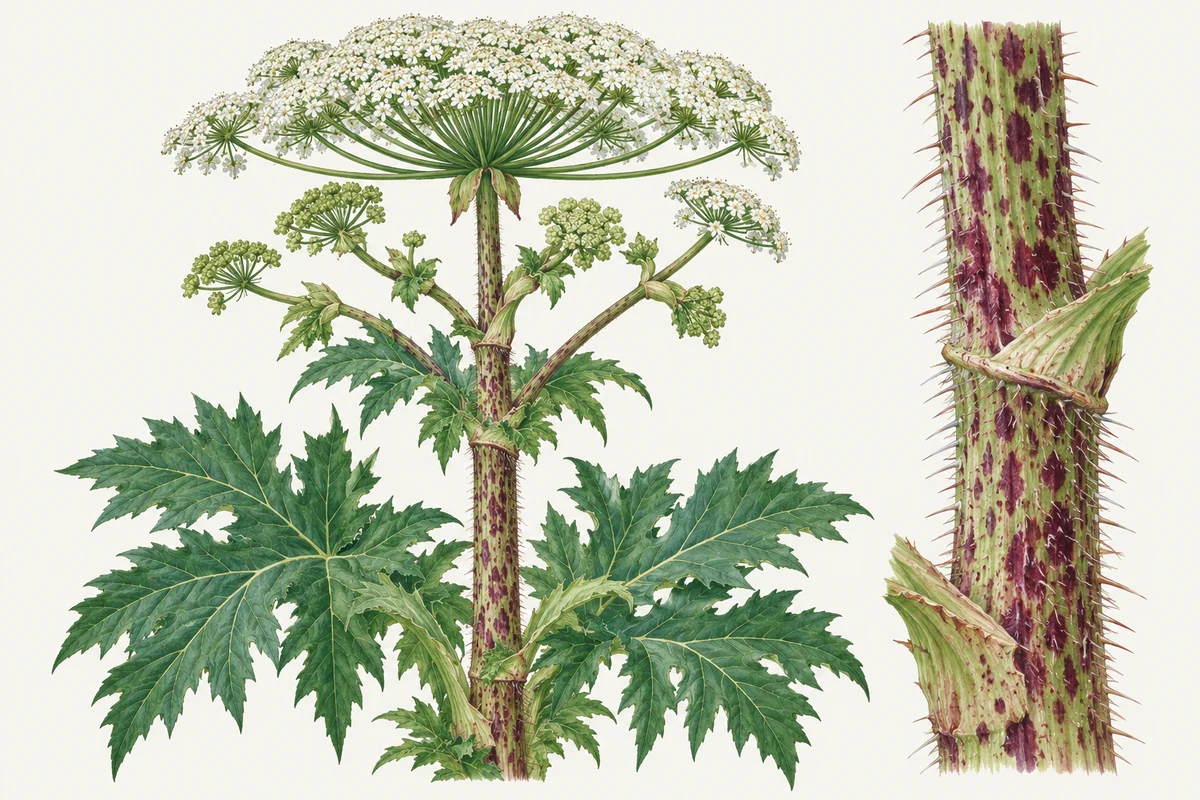 Weed profileGiant hogweed (Heracleum mantegazzianum): how to identify itHeracleum mantegazzianumIdentify giant hogweed by its 7 to 14 ft height, purple-blotched hairy stem and 2.5 ft white umbels; tell it from cow parsnip and how to report it.
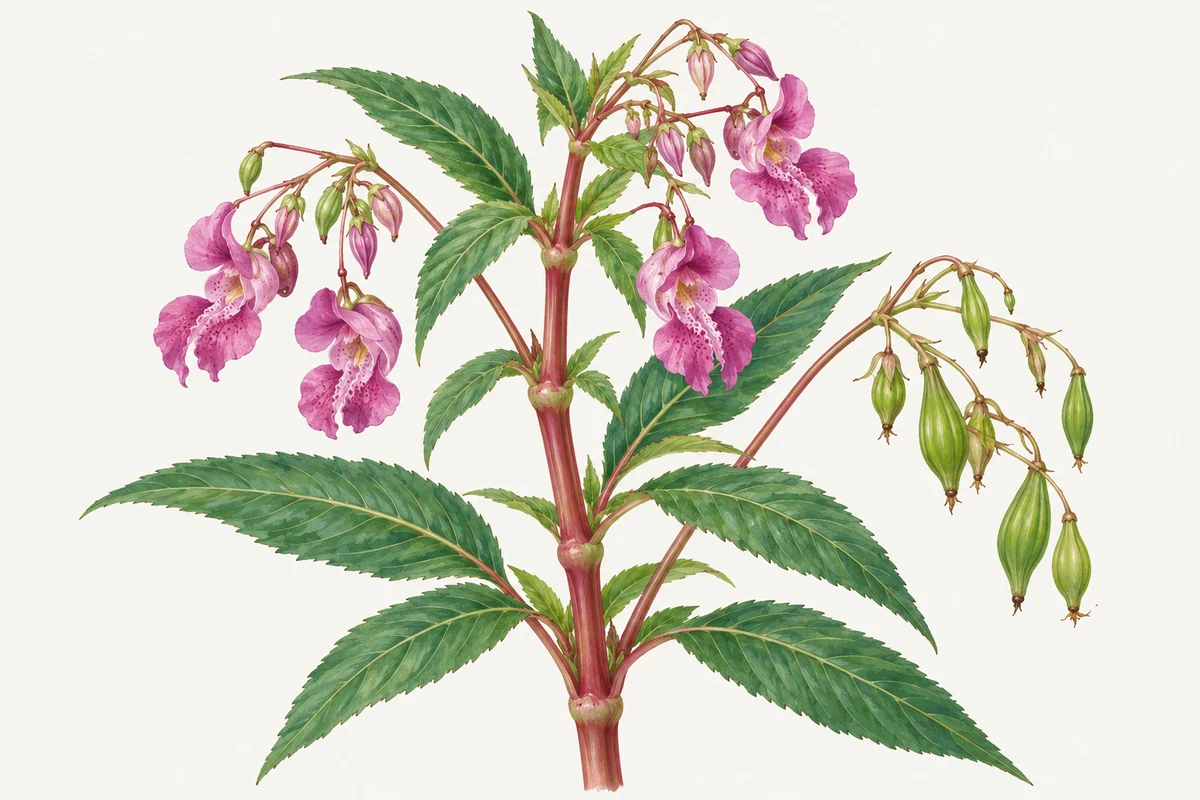 Weed profileHimalayan balsam (Impatiens glandulifera): how to identify itImpatiens glanduliferaIdentify Himalayan balsam by its hollow reddish stems, toothed leaves, pink helmet-shaped flowers and exploding seed pods, and see how to report it.
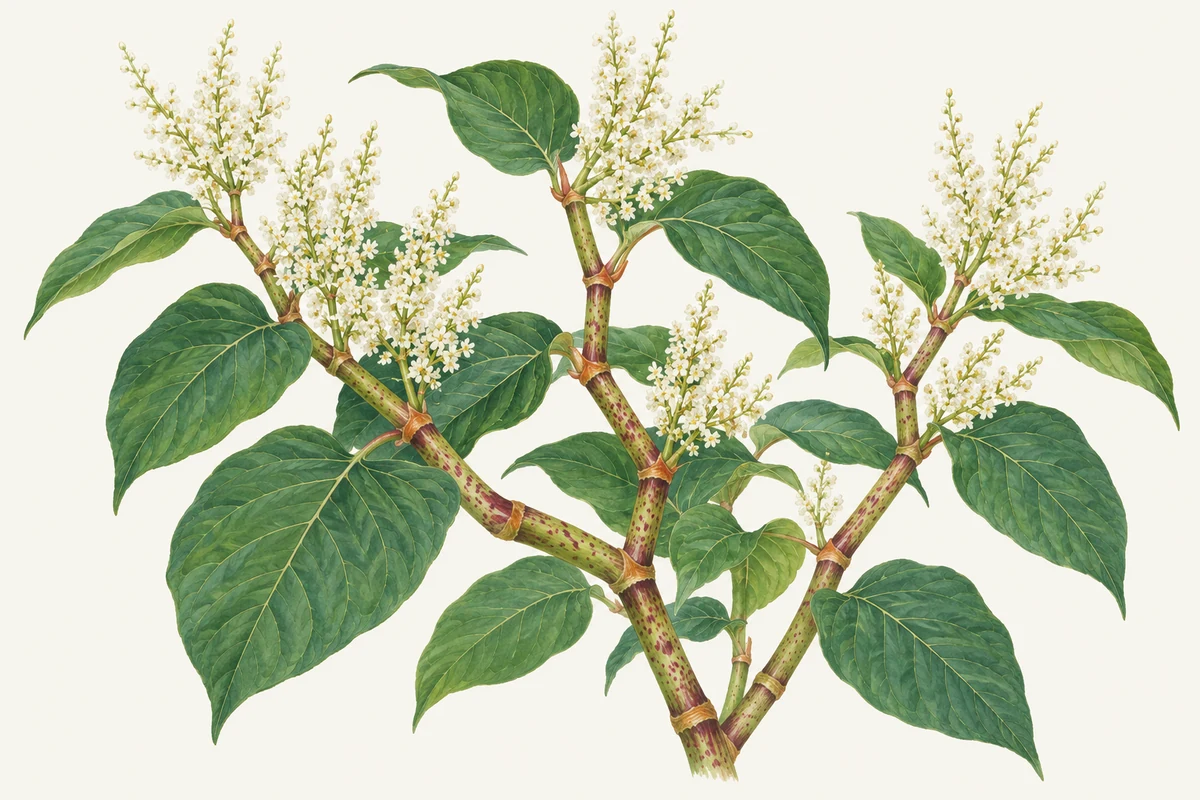 Weed profileJapanese knotweed (Reynoutria japonica): how to identify itReynoutria japonicaIdentify Japanese knotweed by its speckled bamboo-like stems, zig-zag spade-shaped leaves and late-summer cream flowers, and see what the law expects.
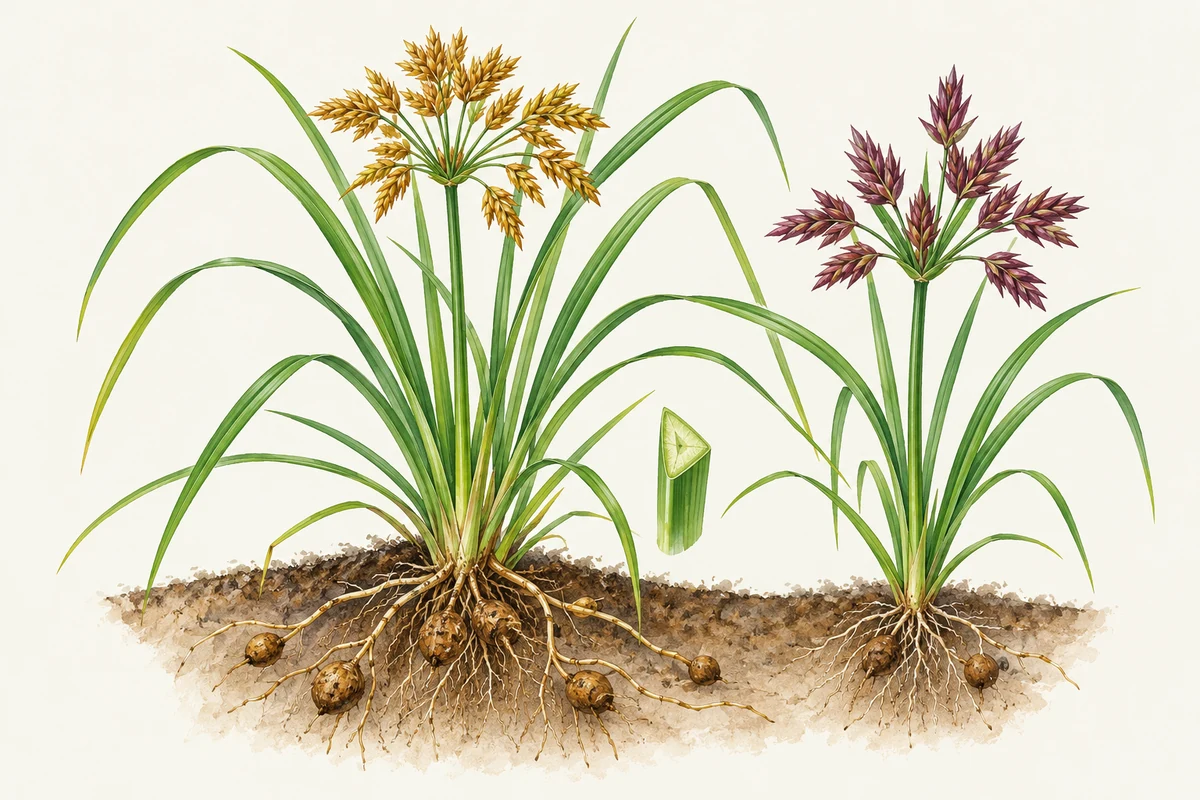 Weed profileNutsedge (Cyperus esculentus and C. rotundus): how to identify itCyperus esculentusIdentify nutsedge in a lawn by its triangular stem, leaves in threes and fast upright growth, and tell yellow from purple nutsedge, grasses and kyllinga.
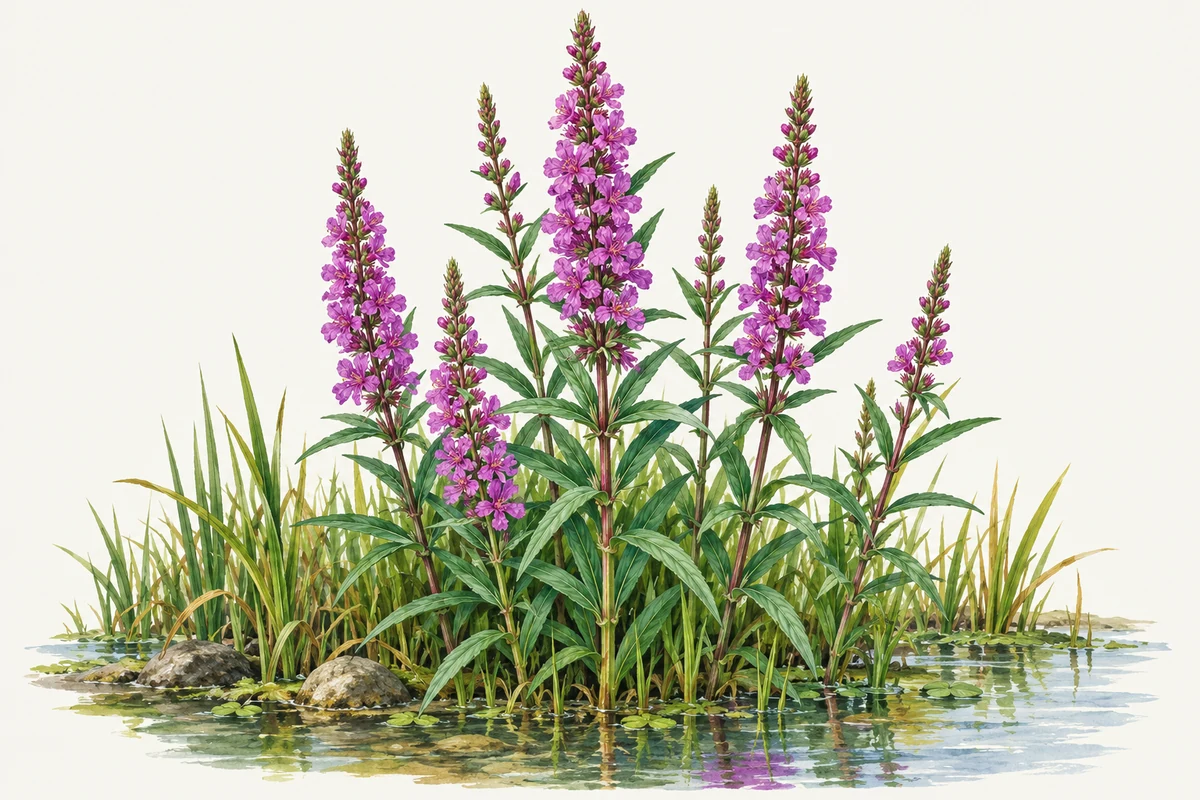 Weed profilePurple loosestrife (Lythrum salicaria): how to identify itLythrum salicariaIdentify purple loosestrife by its square stems, pink-purple flower spikes and smooth-edged opposite leaves; see its look-alikes and how to report it.
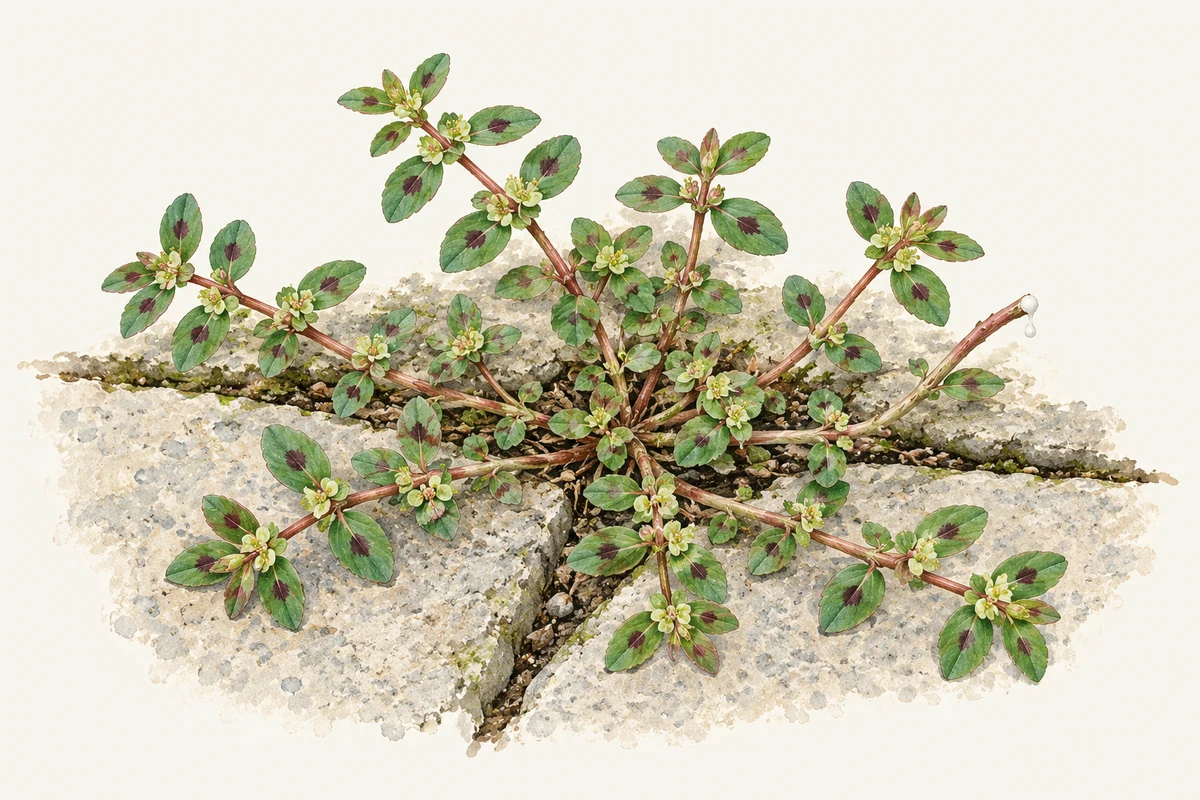 Weed profileSpotted spurge (Euphorbia maculata): how to identify itEuphorbia maculataIdentify spotted spurge by its flat mat of small paired leaves with a red spot, hairy stems and milky sap, and tell it from knotweed and purslane.
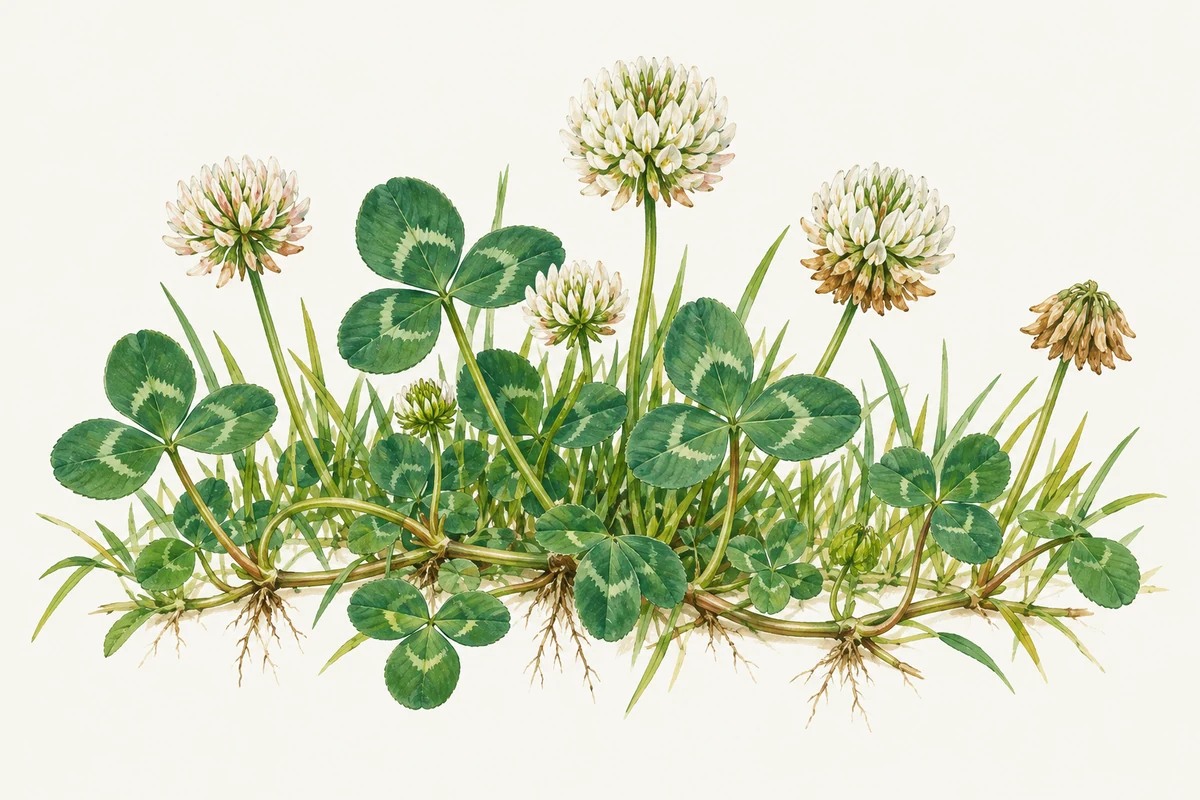 Weed profileWhite clover (Trifolium repens): how to identify clover in a lawnTrifolium repensIdentify white clover by its three rounded leaflets with a pale crescent, rooting runners and white ball flowers, and tell it from oxalis and black medic.
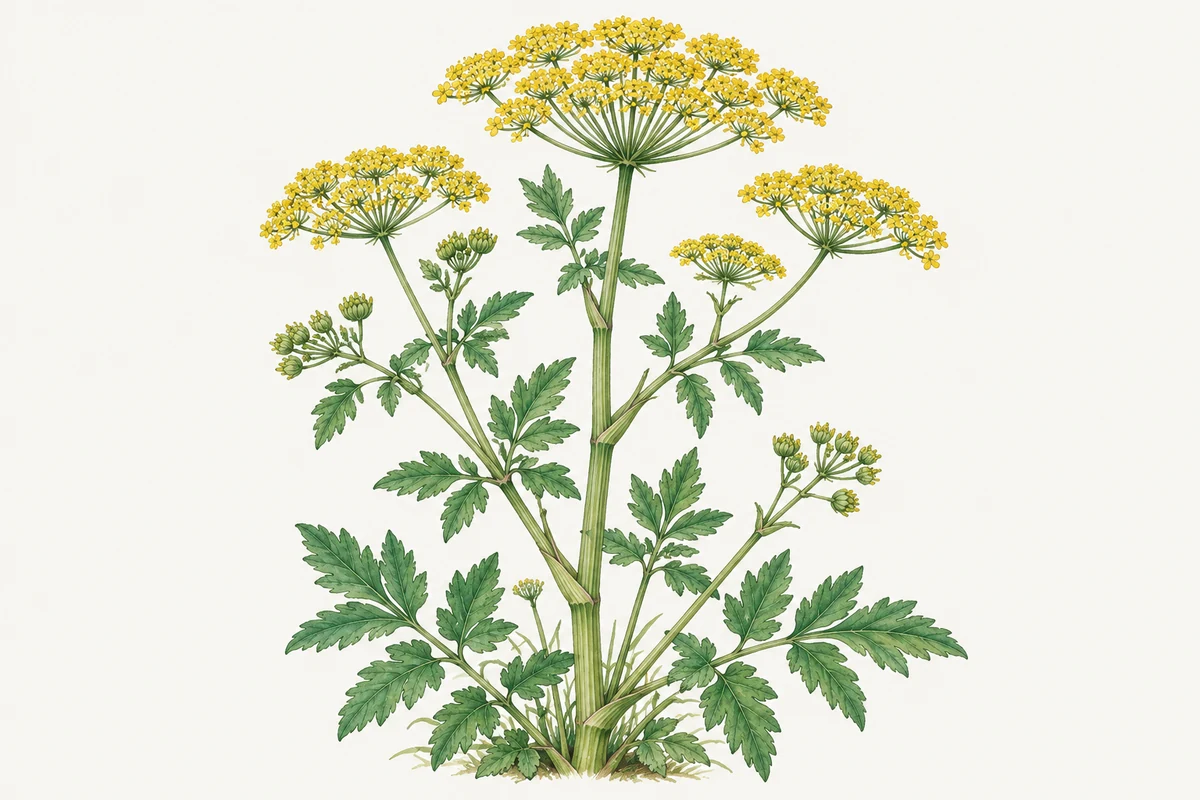 Weed profileWild parsnip (Pastinaca sativa): how to identify itPastinaca sativaIdentify wild parsnip by its yellow-green umbrella flowers, grooved stem and mitten-shaped leaflets; tell it from giant hogweed and avoid its sap.
Shrubs, trees and herbs
Garden shrubs, climbers, small trees and culinary herbs.
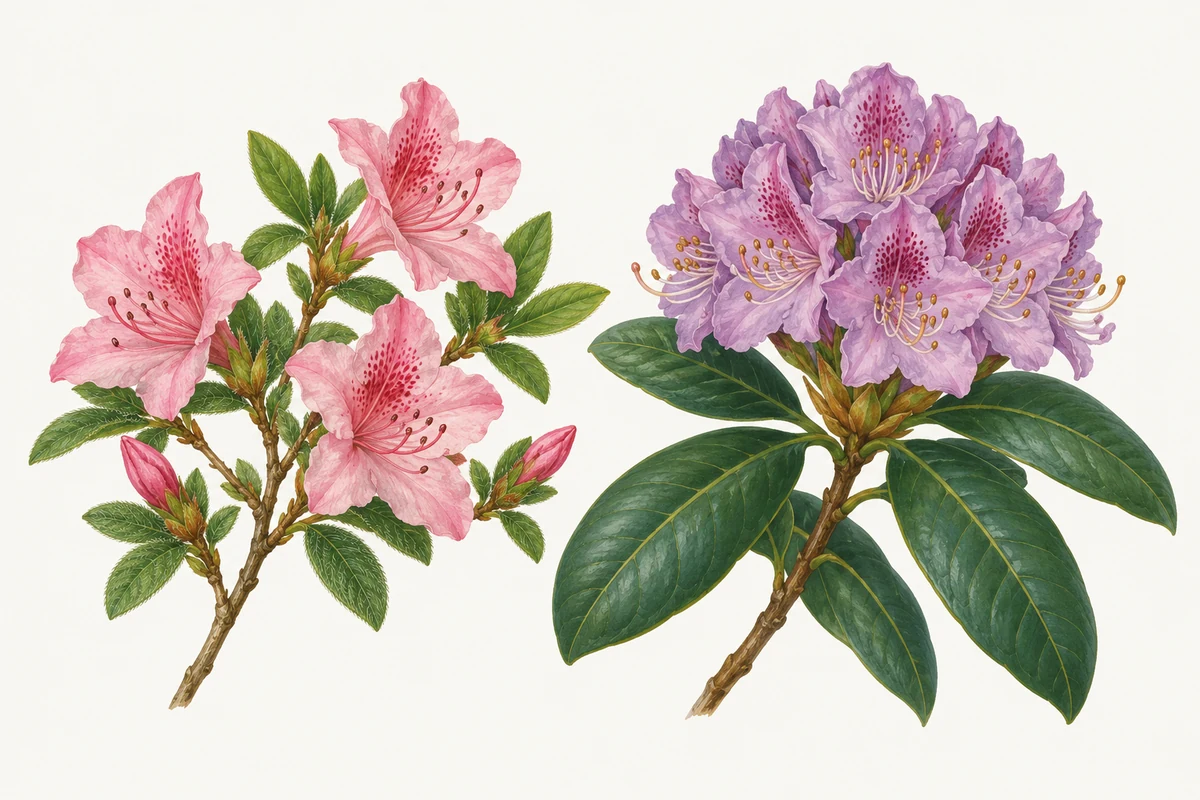 Plant profileAzalea: how to identify it, and how to tell it from a rhododendronRhododendron spp.Identify an azalea by its funnel-shaped flowers and small, hairy leaves clustered at the tips, tell it from a rhododendron, and see its toxicity listings.
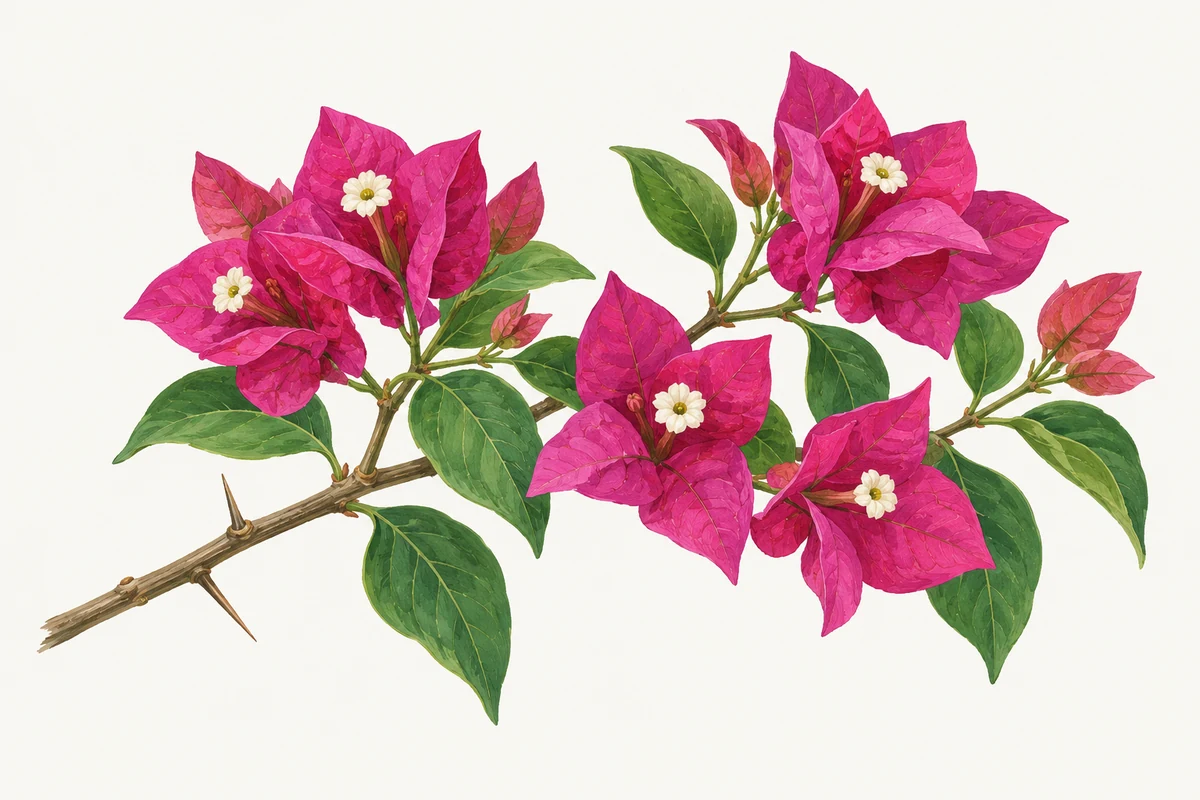 Vine profileBougainvillea plant: how to identify itBougainvillea spectabilis, Bougainvillea glabra and hybridsIdentify a bougainvillea plant by its papery colored bracts around tiny white flowers and its thorny scrambling stems, and tell the two main species apart.
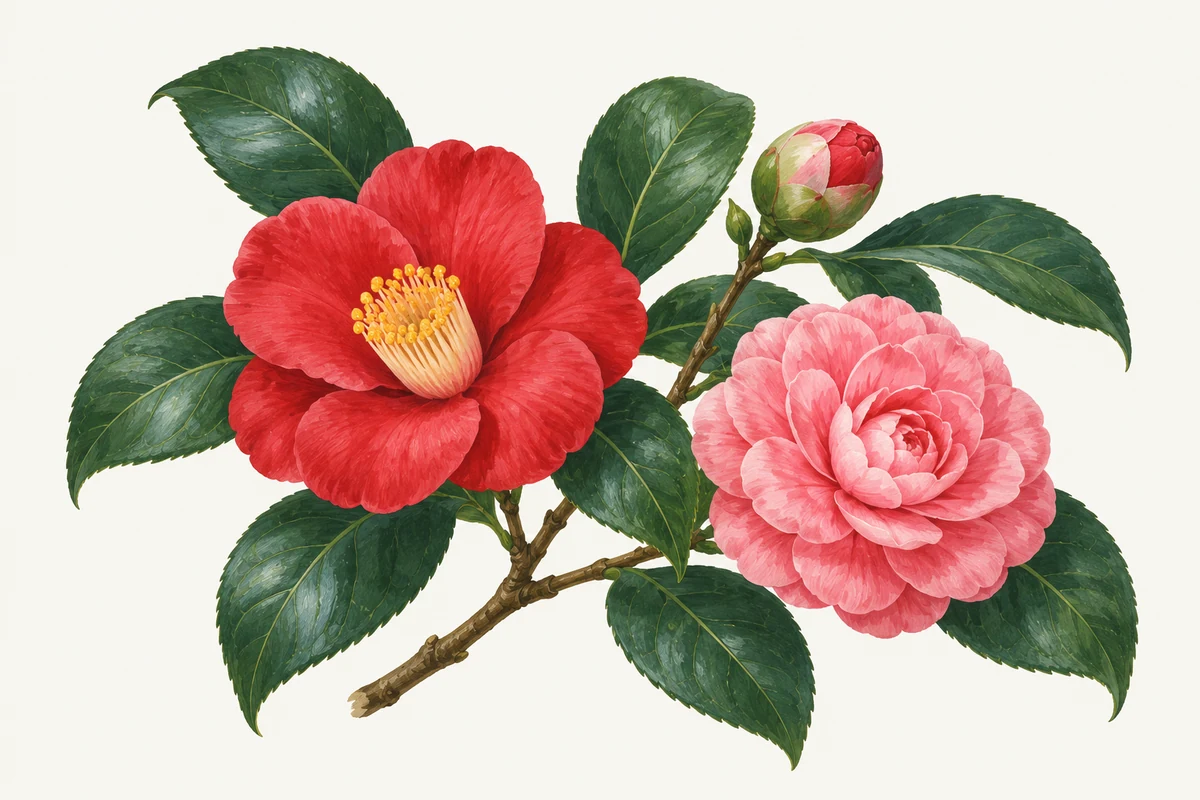 Plant profileCamellia (Camellia japonica and C. sasanqua): how to identify itCamellia japonicaIdentify camellia by its glossy, toothed leaves set one per node and its big winter flowers, tell japonica from sasanqua, and see how ASPCA lists it.
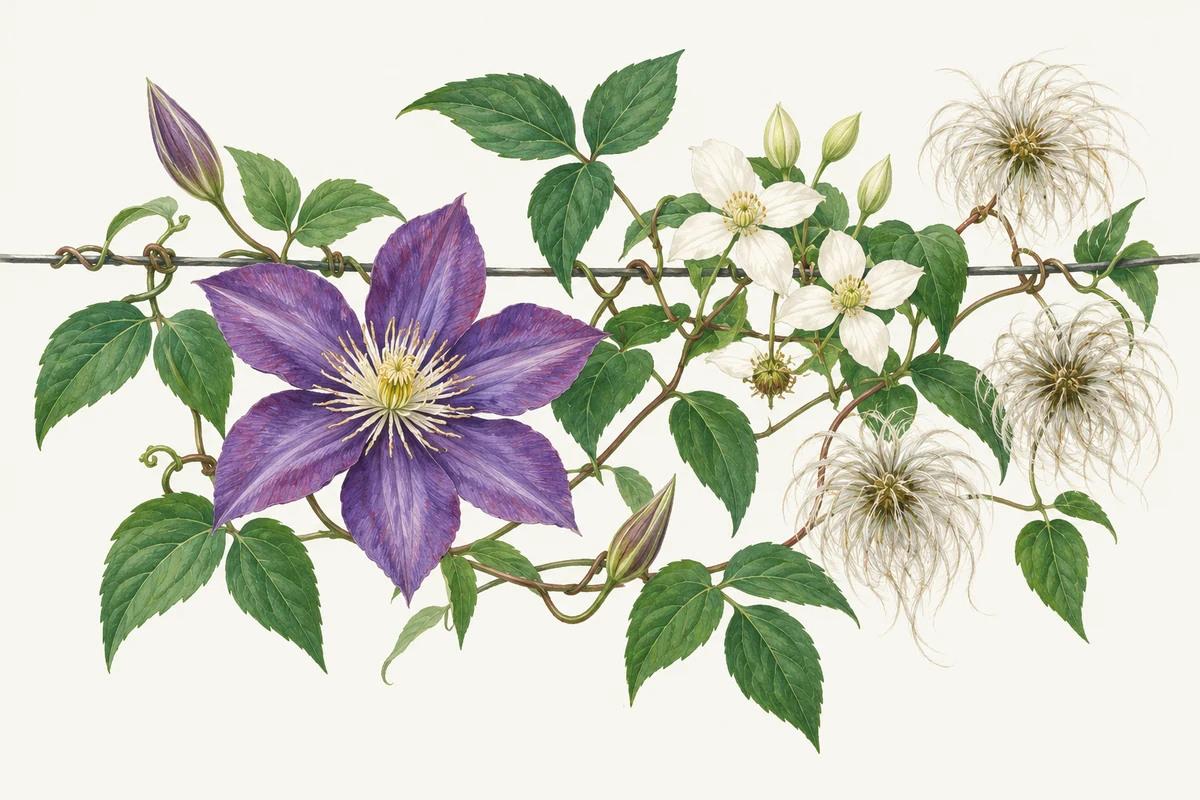 Vine profileClematis: how to identify a clematis vineClematis spp.Identify clematis by its opposite compound leaves, twining leaf stalks and feathery seed heads, and tell hybrids, montana and wild clematis apart.
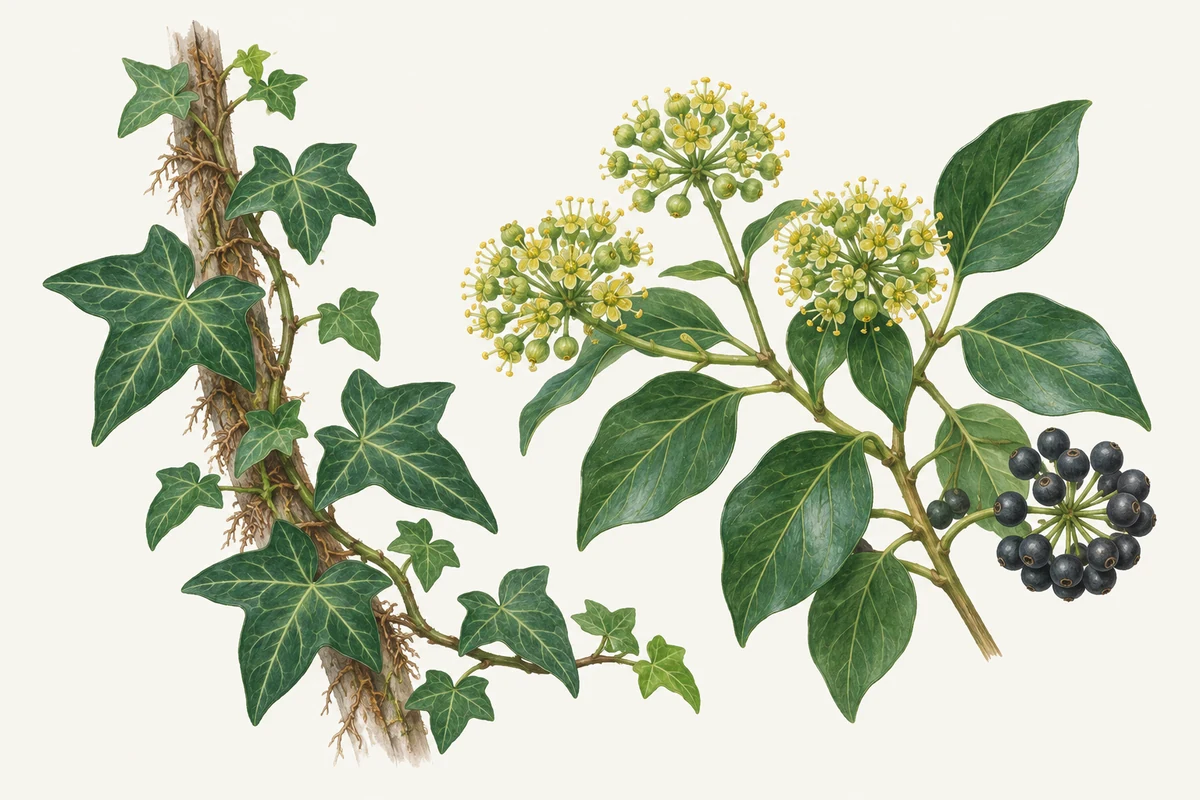 Vine profileEnglish ivy plant (Hedera helix): how to identify itHedera helixIdentify an English ivy plant by its lobed juvenile leaves, unlobed adult leaves and clinging rootlets, and tell it from Boston ivy and Virginia creeper.
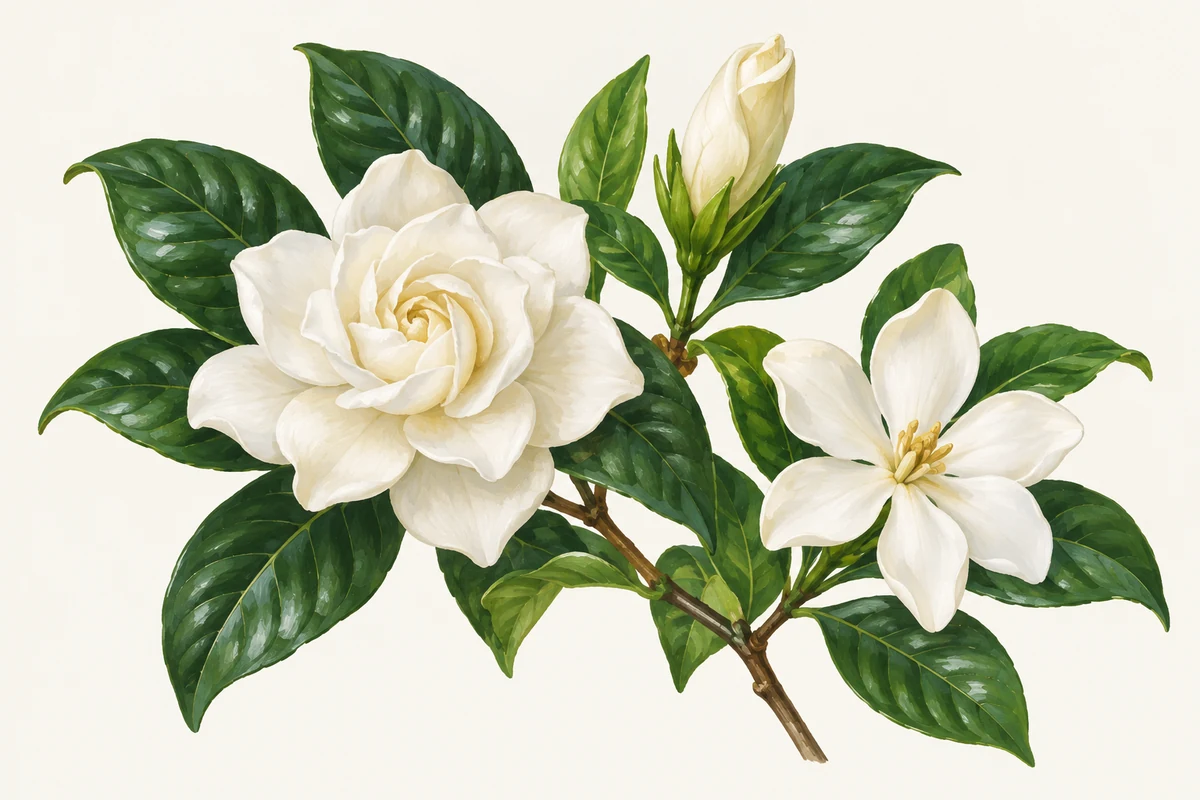 Plant profileGardenia (Gardenia jasminoides): how to identify itGardenia jasminoidesIdentify gardenia by its glossy, vein-creased leaves in pairs or whorls, waxy white flowers that age to yellow and spiral buds, plus its toxicity listings.
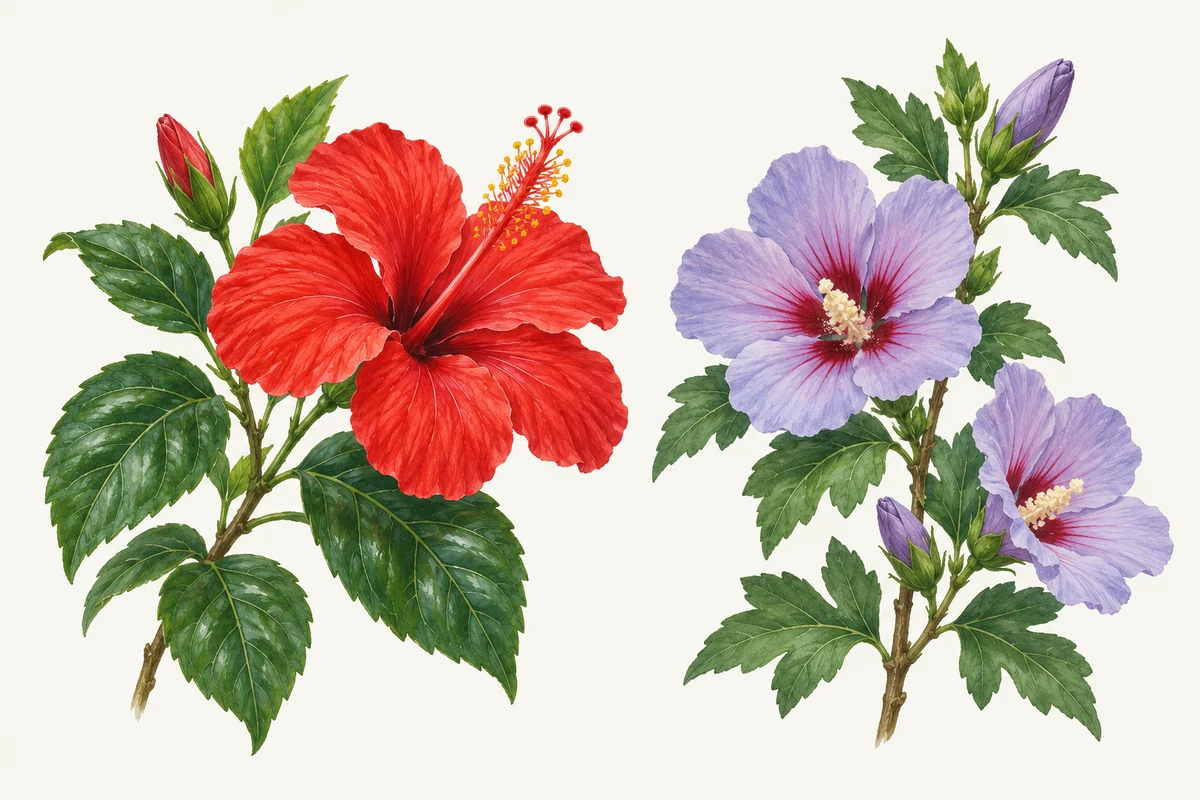 Shrub profileHow to identify a hibiscus plantHibiscus rosa-sinensis, Hibiscus syriacus, Hibiscus moscheutosIdentify hibiscus by its five-petaled flowers with a long central column, and tell tropical hibiscus, rose of Sharon and rose mallow from Abutilon.
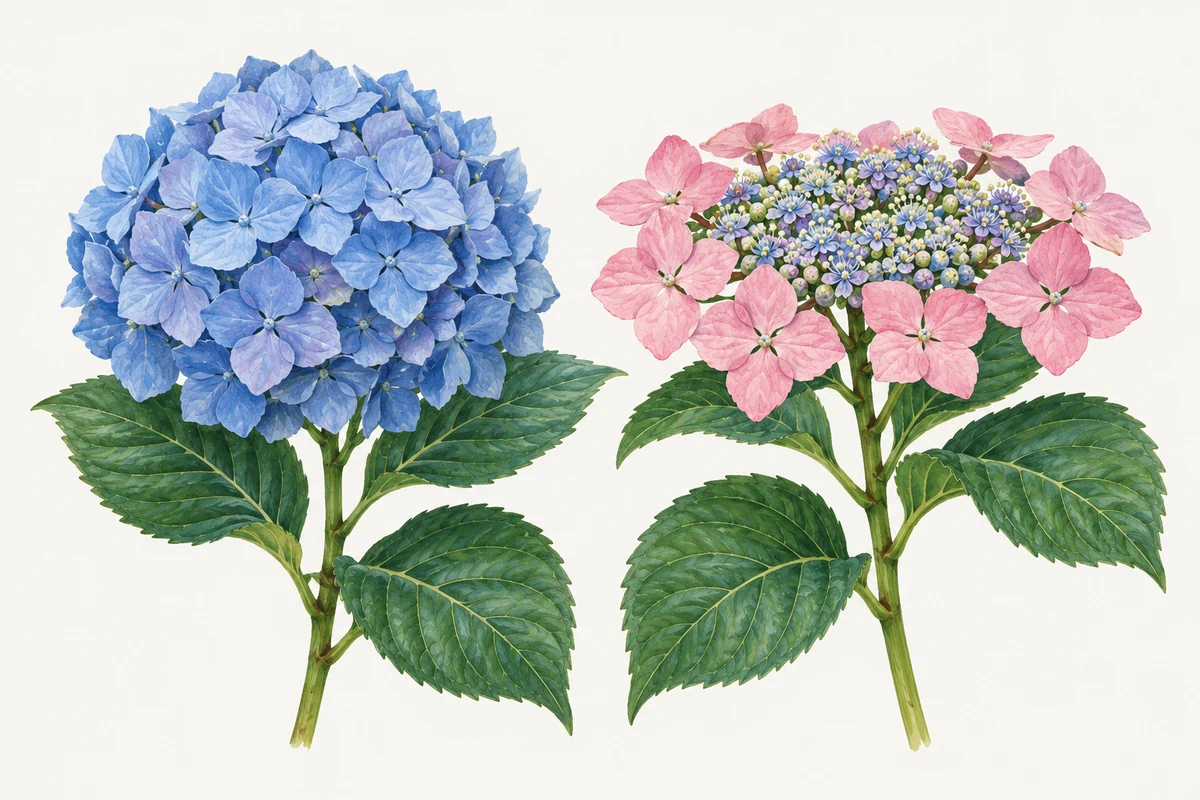 Plant profileHydrangea: how to identify it and tell the types apartHydrangea macrophyllaTell bigleaf, panicle, smooth, oakleaf and climbing hydrangeas apart by leaf and flower-head shape, and see why bigleaf flowers turn blue or pink.
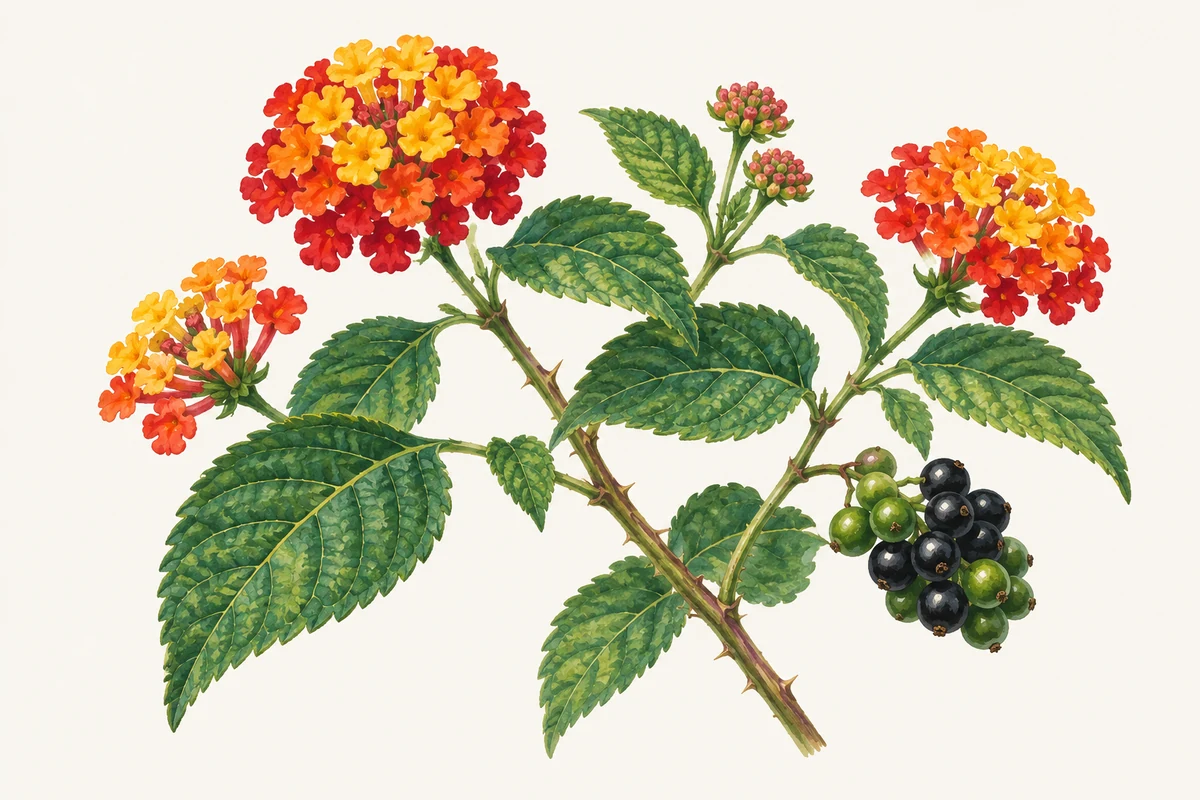 Garden shrub profileLantana (Lantana camara): how to identify itLantana camaraIdentify lantana by its domed clusters of tiny flowers that change color, rough toothed leaves and square stems, and tell it from verbena and pentas.
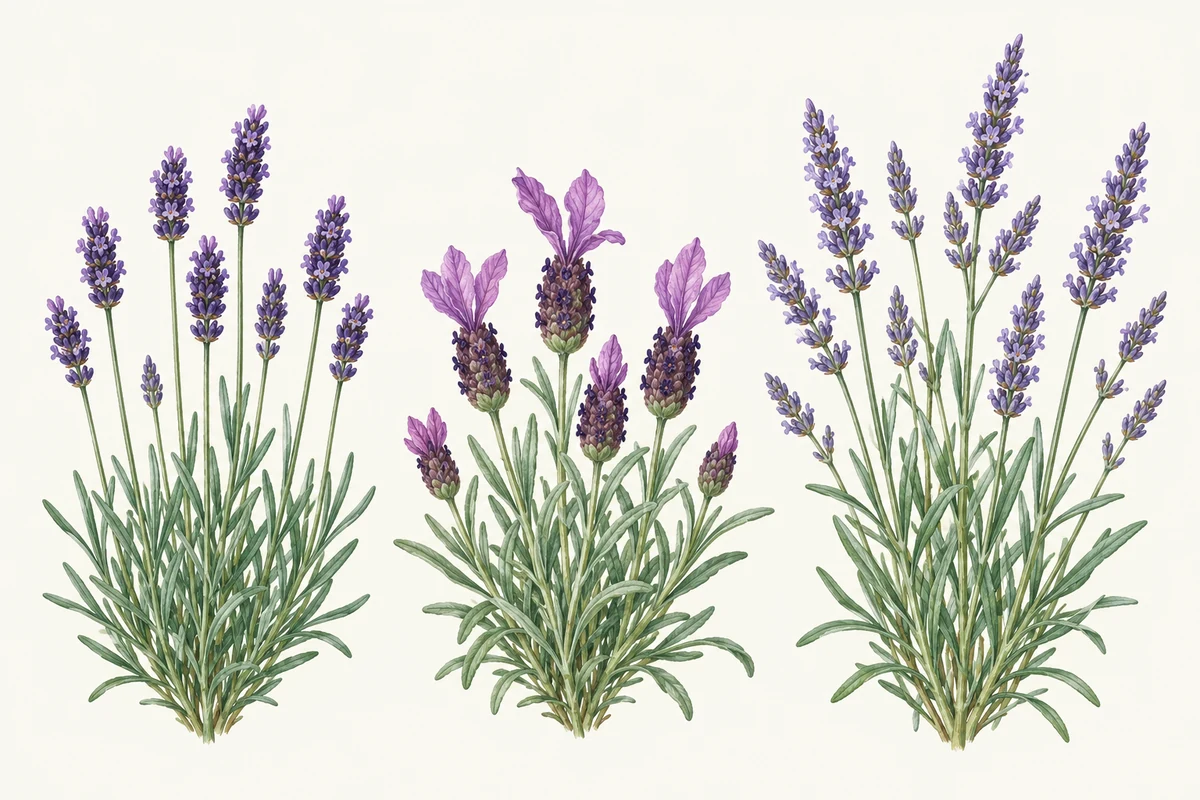 Garden shrub profileLavender (Lavandula): how to identify the plant and its typesLavandula angustifoliaIdentify a lavender plant by its narrow, scented gray-green leaves and purple spikes on bare stalks, and tell it from Russian sage and catmint.
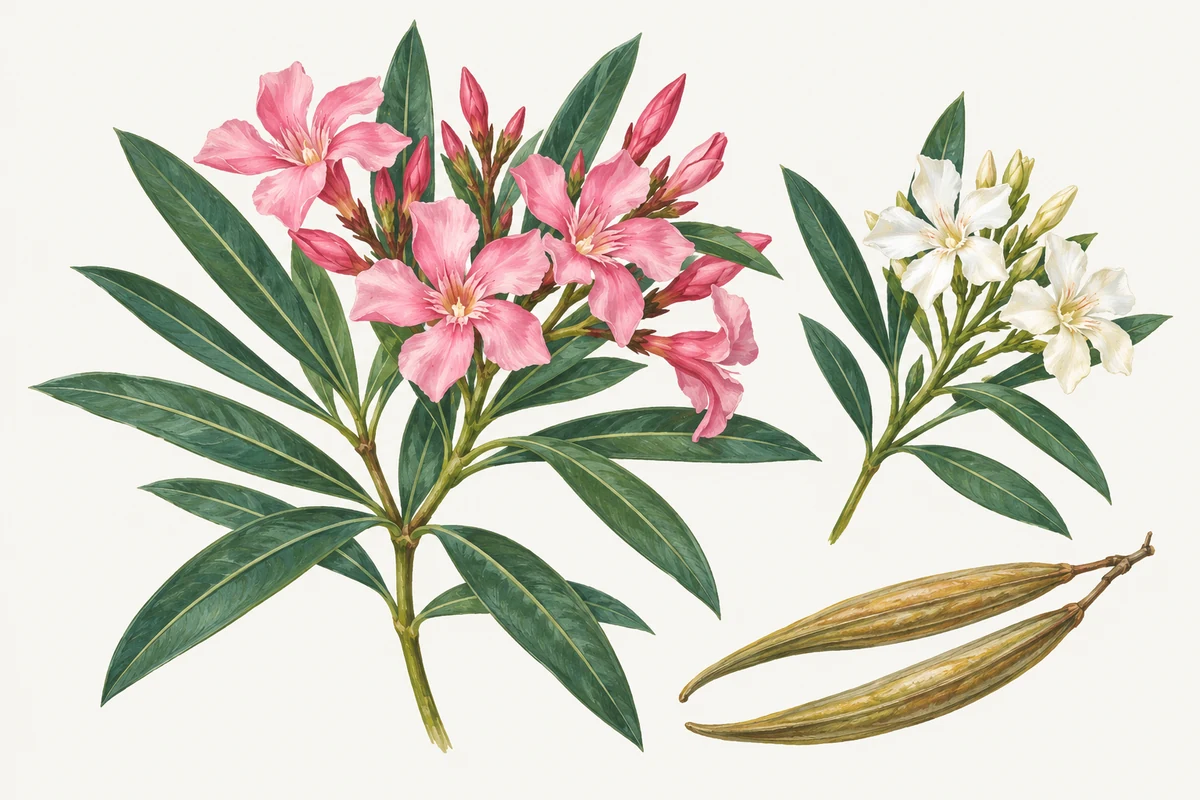 Plant profileOleander (Nerium oleander): how to identify itNerium oleanderIdentify oleander by its narrow leaves in whorls of 3, funnel flowers with a fringed center and long paired pods, and see how sources list its toxicity.
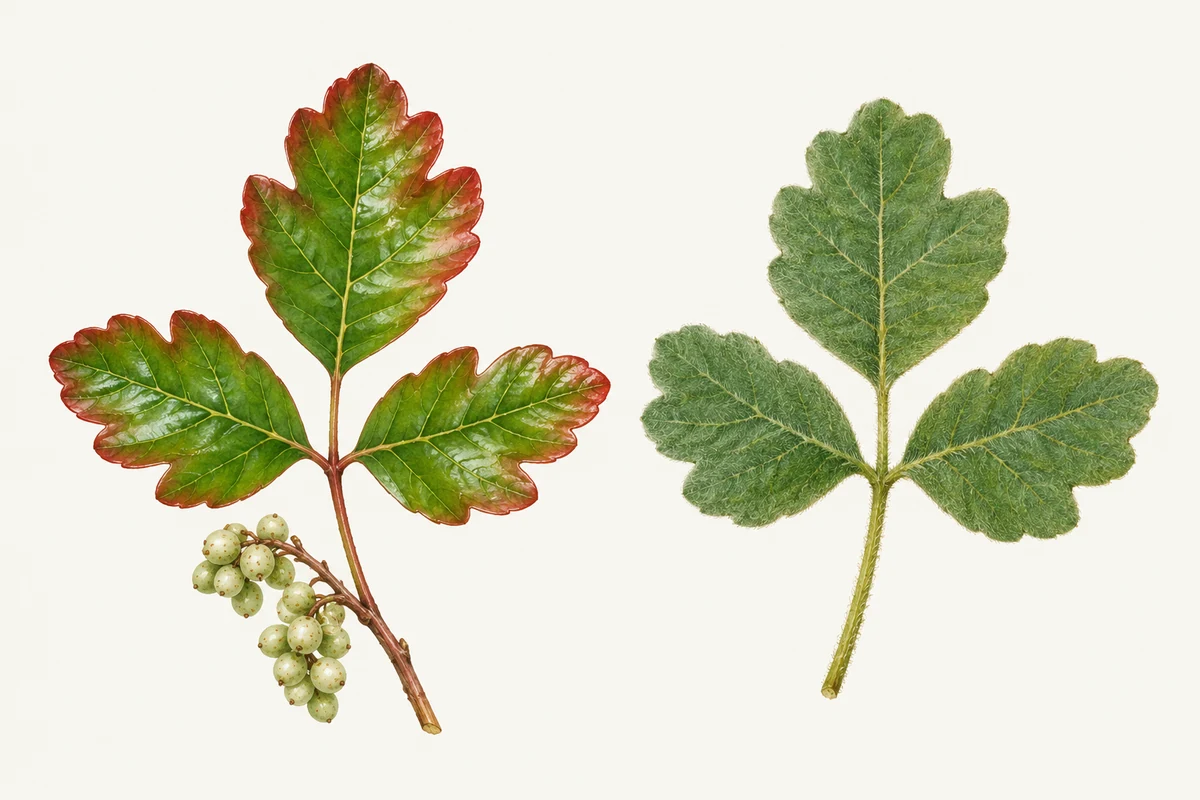 Plant profilePoison oak (Toxicodendron diversilobum and T. pubescens): how to identify itToxicodendron diversilobumIdentify poison oak by three oak-like leaflets, a longer middle stalk and no thorns, and tell it from true oak, blackberry and poison ivy.
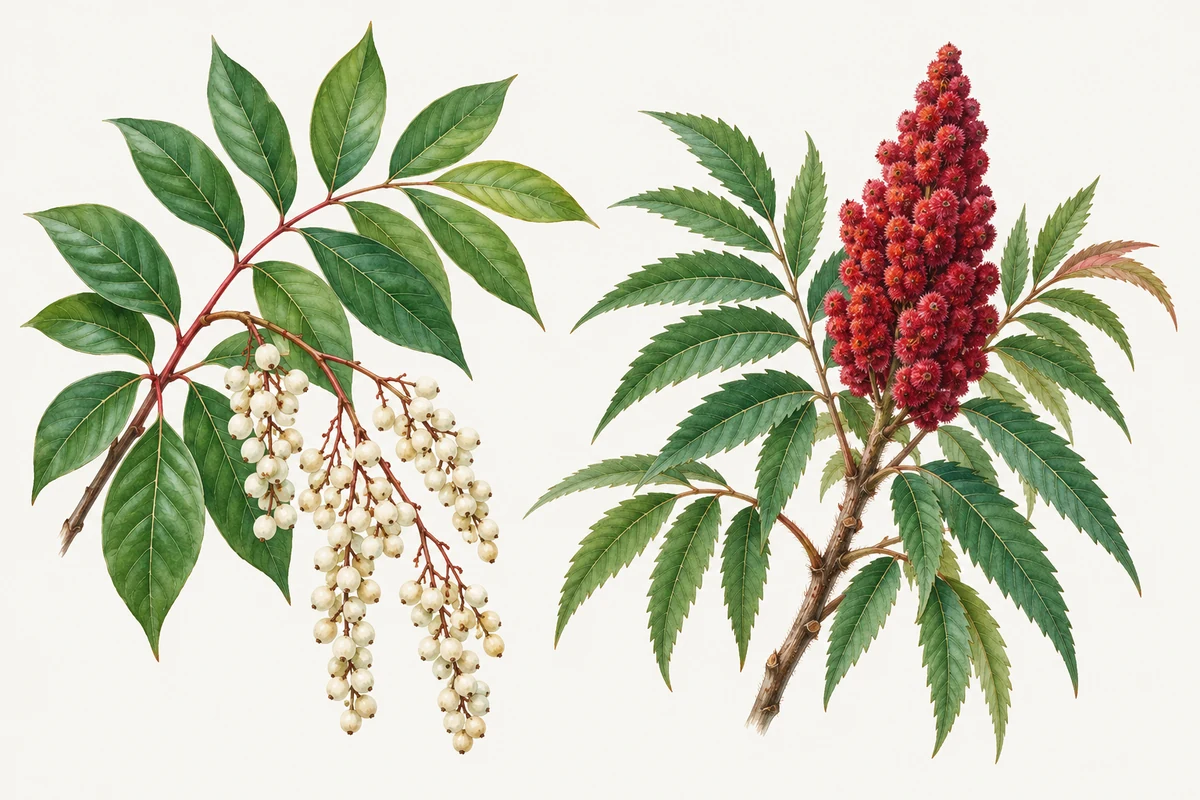 Plant profilePoison sumac (Toxicodendron vernix): how to identify itToxicodendron vernixIdentify poison sumac by 7 to 13 smooth leaflets, red stems, pale fruit and wet ground, and tell it from staghorn and smooth sumac.
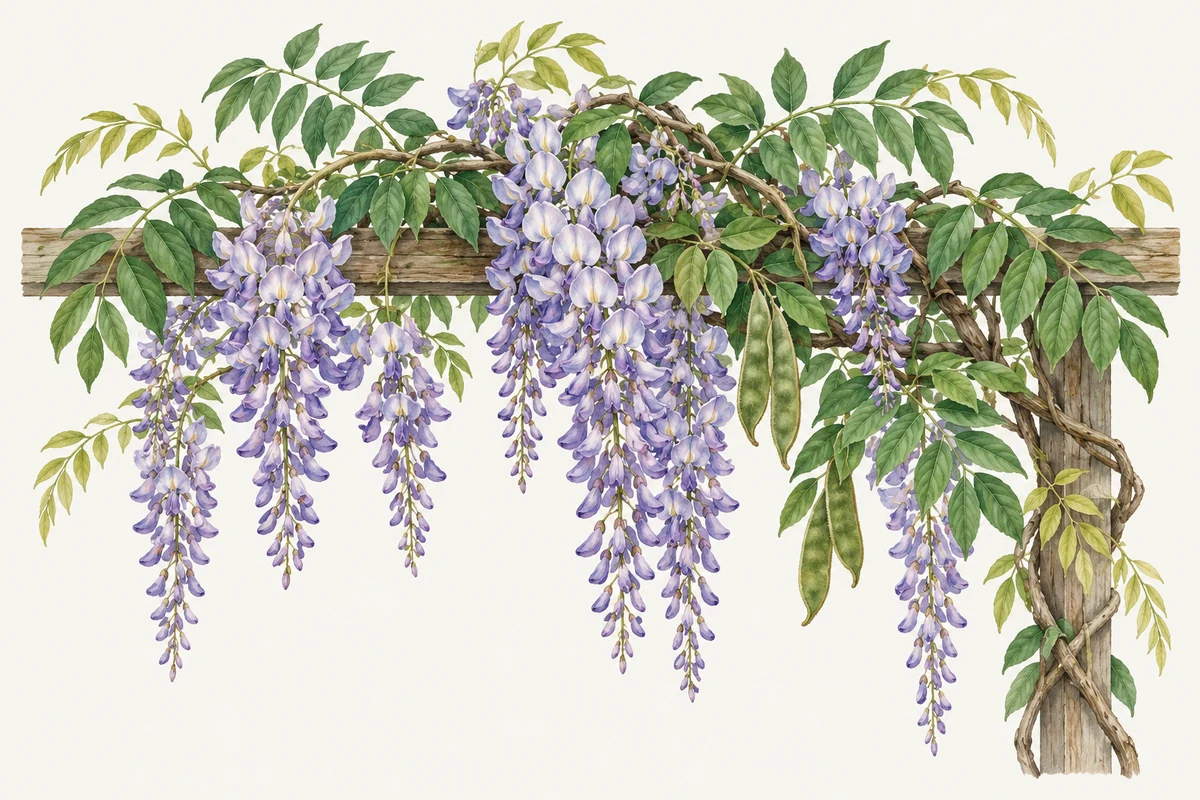 Vine profileWhat flower is wisteria? How to identify a wisteria vineWisteria sinensis, Wisteria floribunda, Wisteria frutescensIdentify wisteria by its hanging chains of pea-shaped flowers, pinnate leaves and velvety pods, and tell Chinese, Japanese and American wisteria apart.
Look-alike pairs
Two plants people mix up, side by side, with the field marks that settle it.