Plant identification guides
Step-by-step methods for naming a plant from what you can see: leaves, flowers, stems and growth habit, and how to get a useful answer from a photo. Each guide cites the botanical references and extension services it draws on.
Identification methods
How to read leaves, flowers, stems and growth habit, and how to take a photo an app can use.
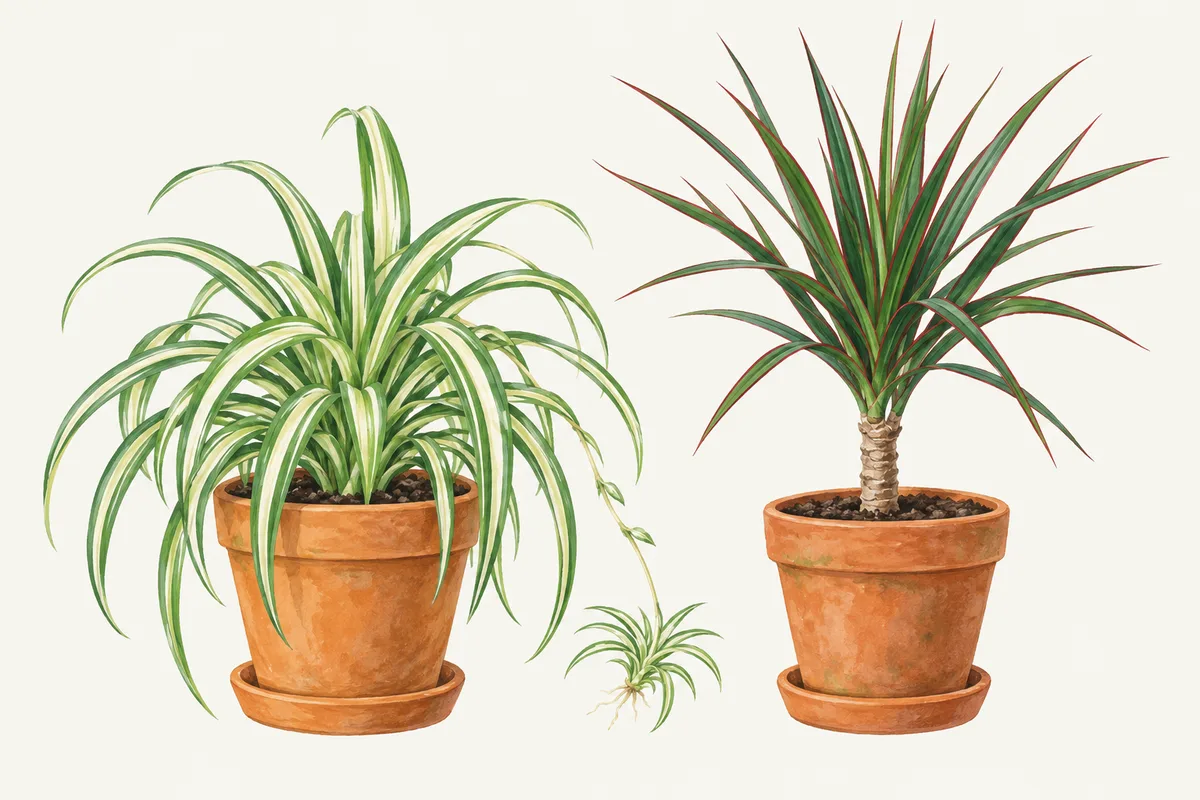 EvidenceHow accurate are plant identification apps? What the studies foundWhat peer-reviewed tests of PlantNet, Google Lens, Seek, PictureThis and others found, what makes a result right or wrong, and how to check one.
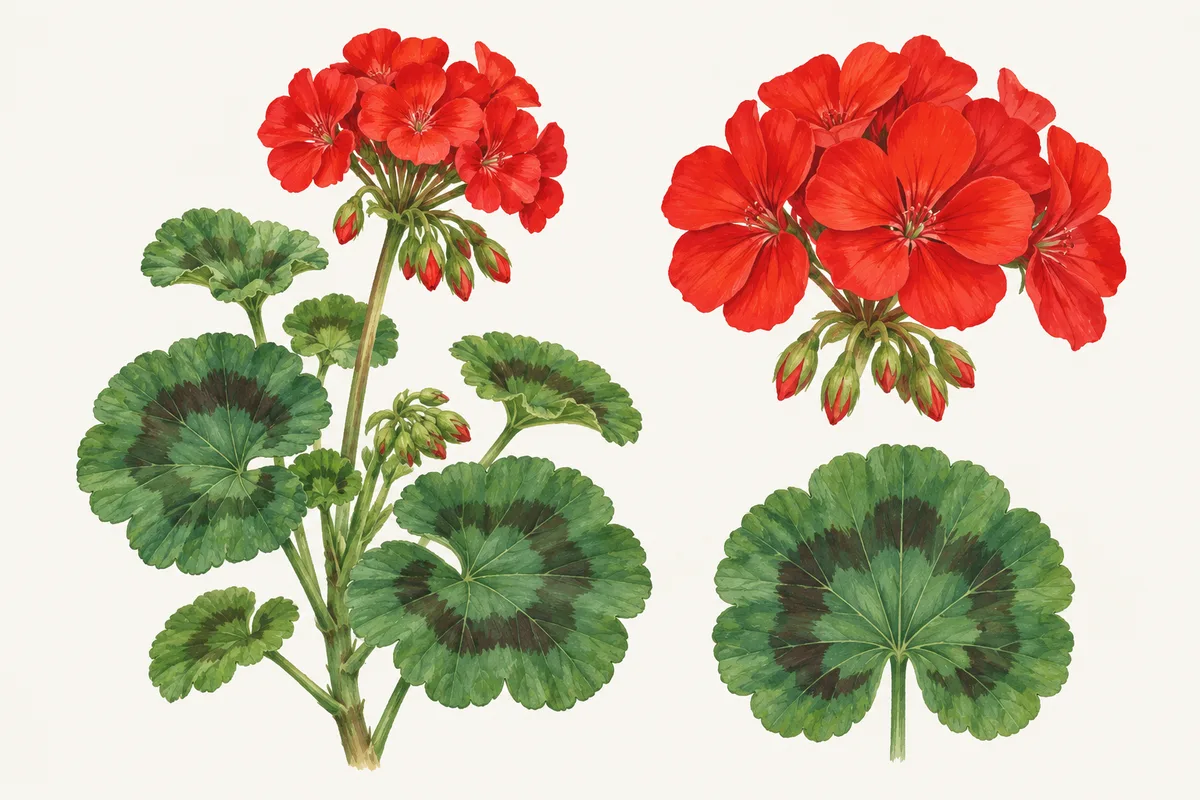 Field guideHow to identify a plant, step by stepSeven checks in a fixed order (habit, leaf arrangement, leaf shape and veins, stem, flowers, fruit, place and season), then how to confirm the name.
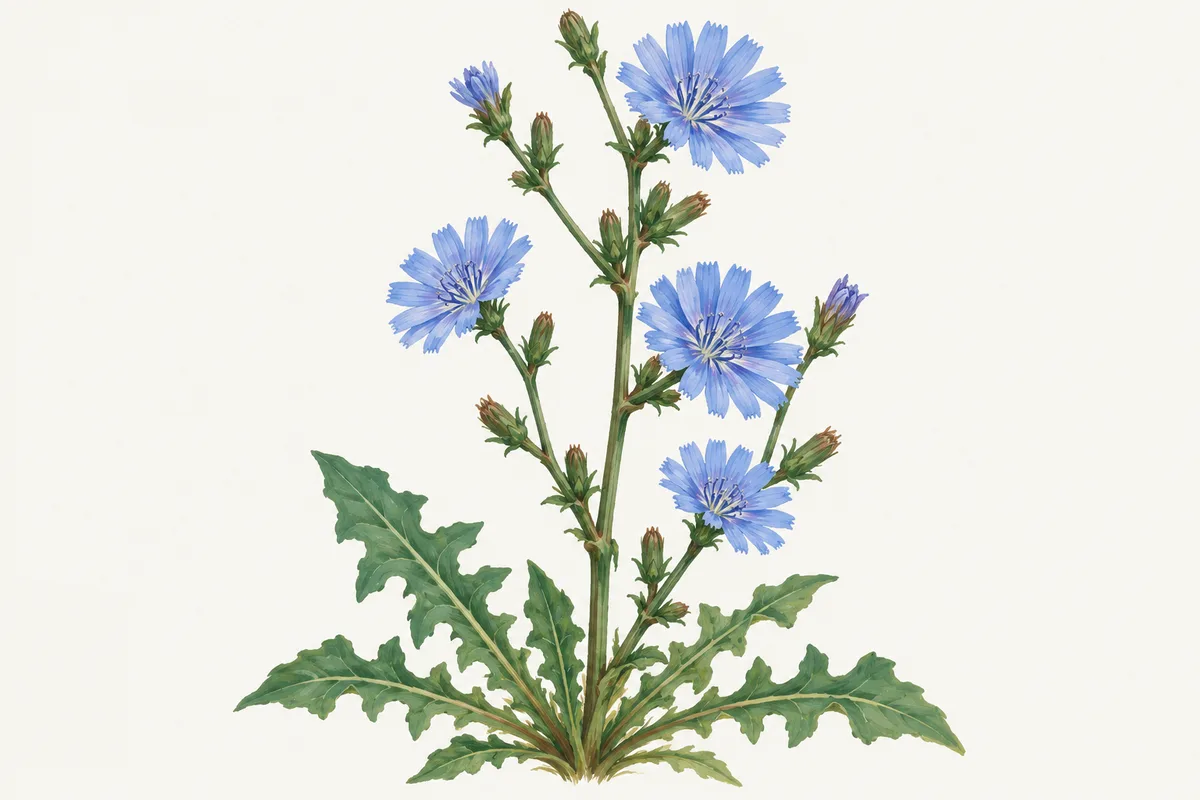 iPhone how-toHow to identify plants on iPhone, with or without an appIdentify plants on iPhone with Visual Look Up in Photos or Google Lens, why Look Up sometimes doesn't appear, and when a plant app is worth installing.
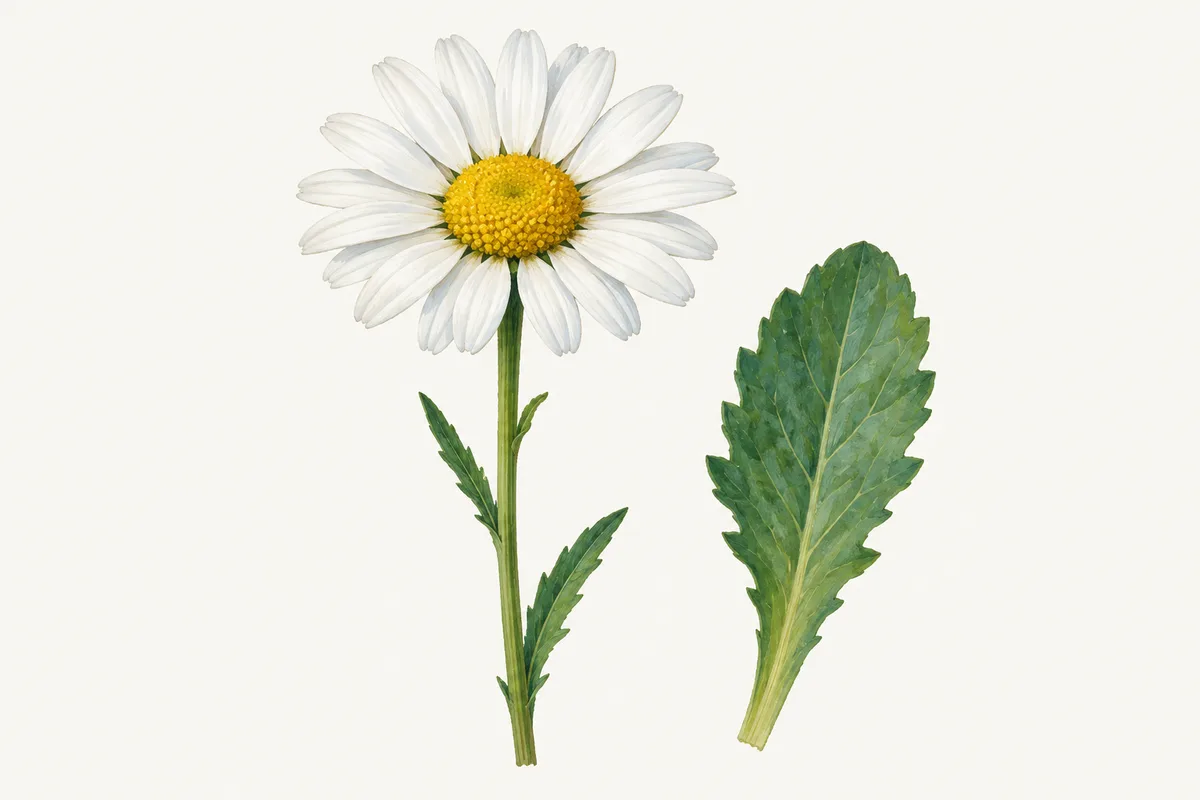 Photo checklistHow to photograph a plant for identificationThe shot list for a plant ID photo: what to shoot for houseplants, flowers, shrubs, seedlings, succulents and grasses, plus light, focus and scale.
Start from one clue
You noticed one thing, such as purple flowers or striped leaves: each page lists the plants that match it.
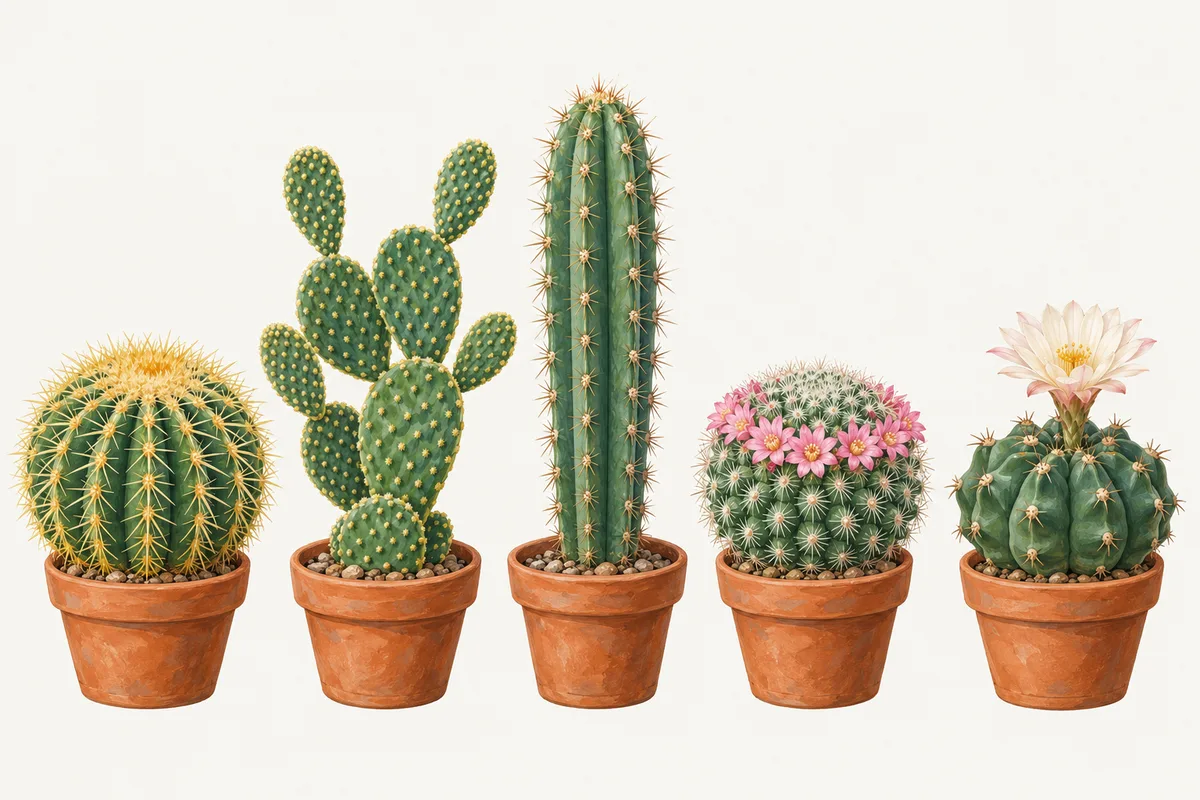 Field guideCactus identification: how to tell common cacti apartCactus identification in four checks: areoles, ribs or pads, spines and glochids, flowers. A chart of common cacti, plus how to spot euphorbias.
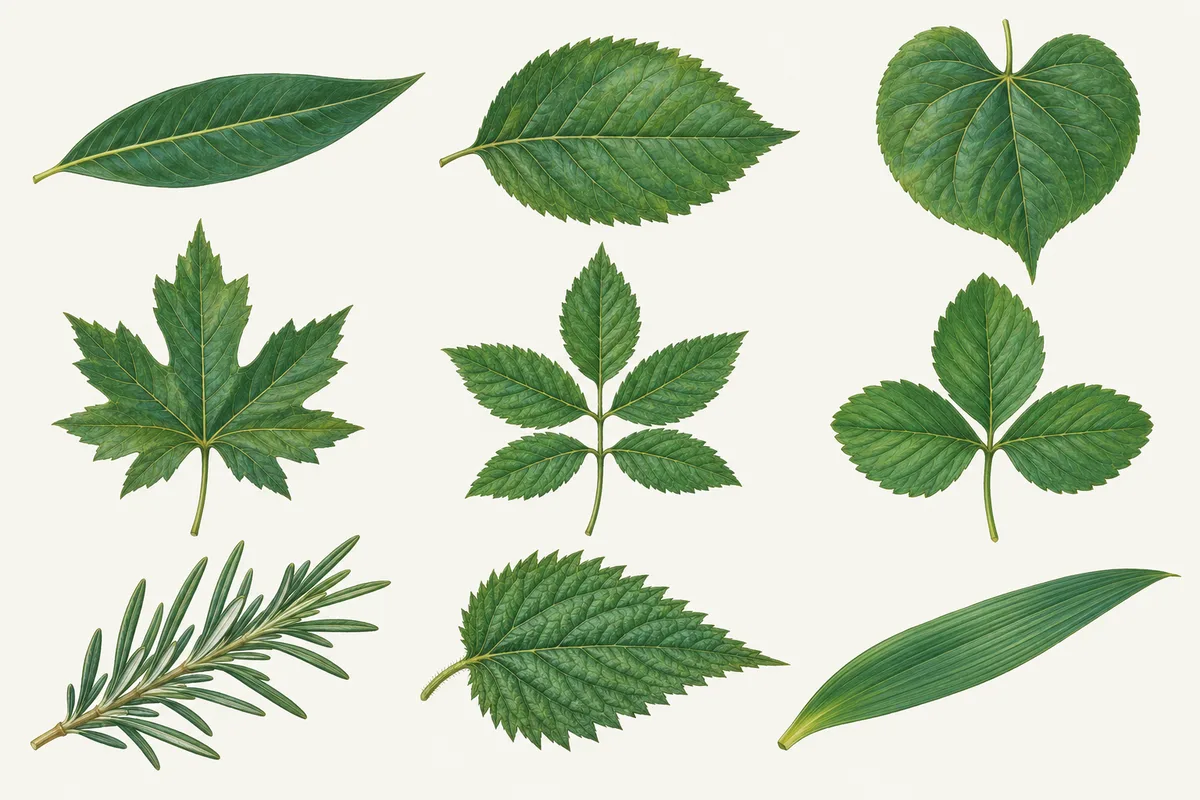 Field guideHow to identify a plant by its leafIdentify a plant by its leaf in seven checks: arrangement, leaflets, shape, edge, veins, texture and smell. With a leaf shape chart and real examples.
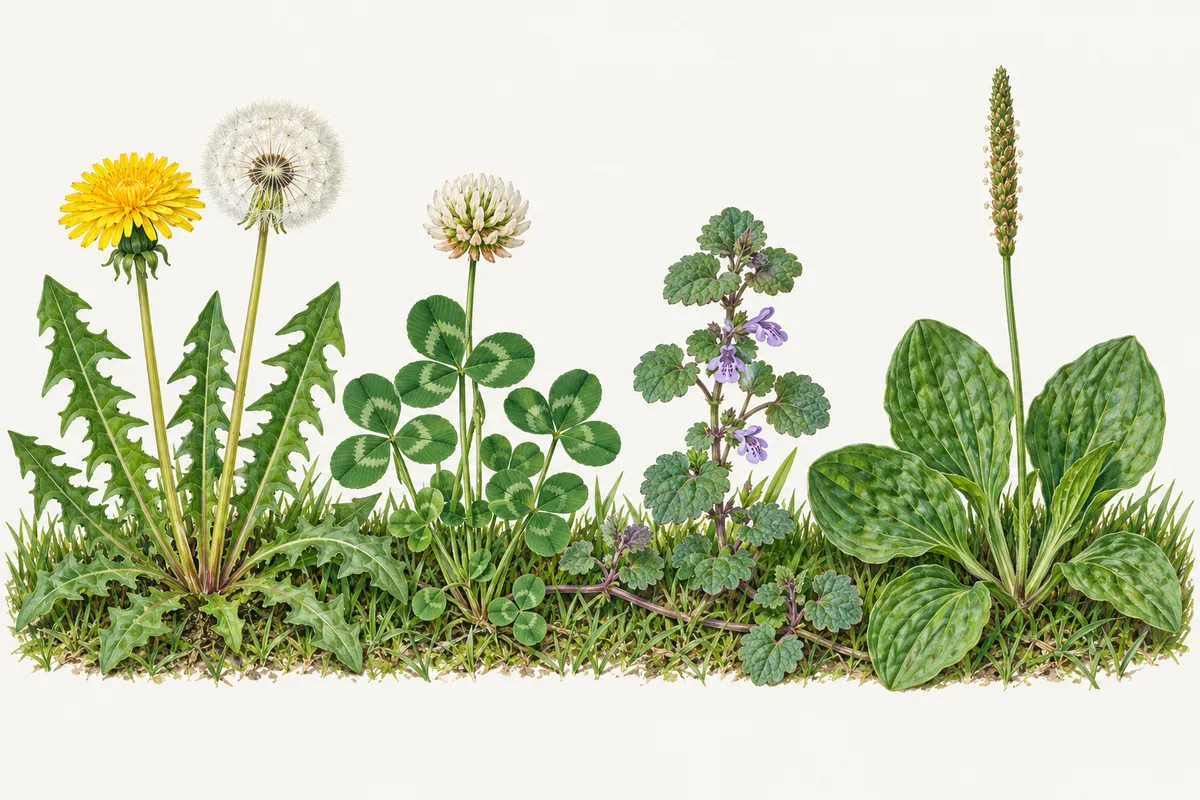 Lawn and gardenHow to identify weeds in your lawnA lawn weed identification chart for 15 common weeds by leaf and habit, a field test for each look-alike pair, and what each weed says about your soil.
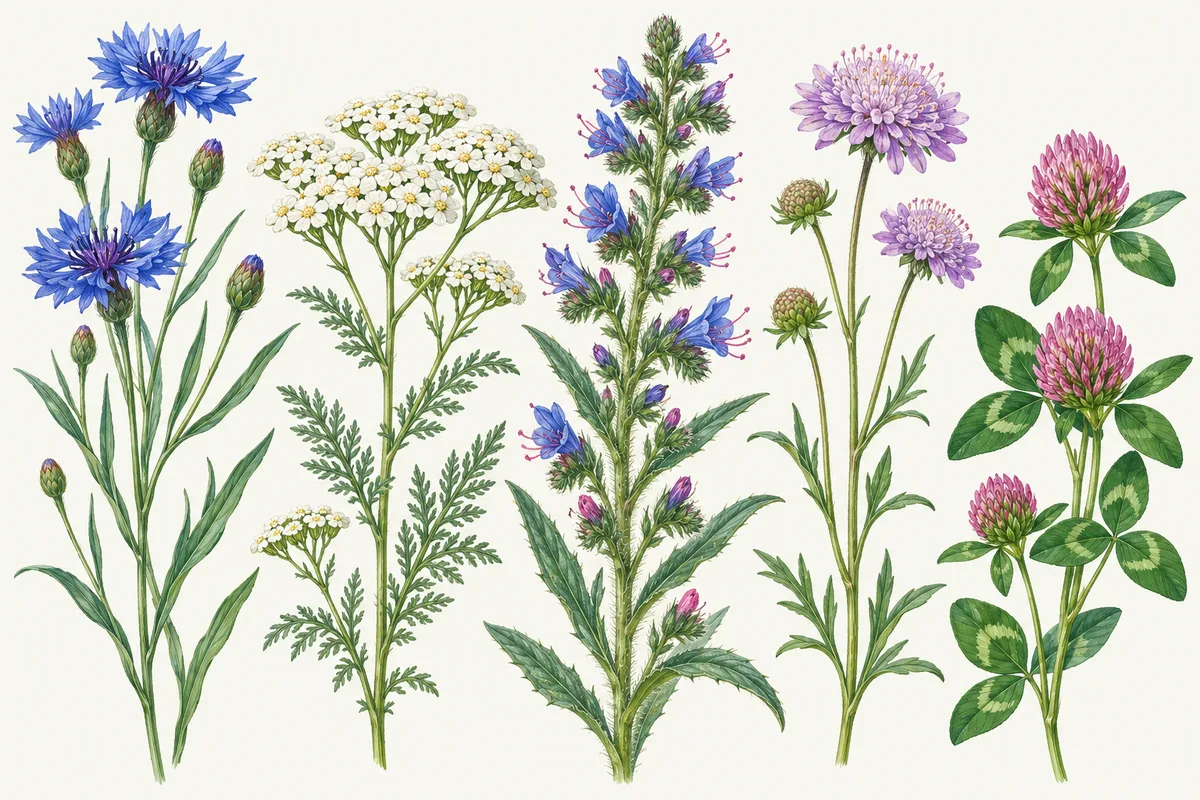 Field guideHow to identify wildflowers in the fieldIdentify wildflowers by flower shape first (daisy heads, pea flowers, umbels, mints, mustards, buttercups, bells), then color, leaves, habitat and month.
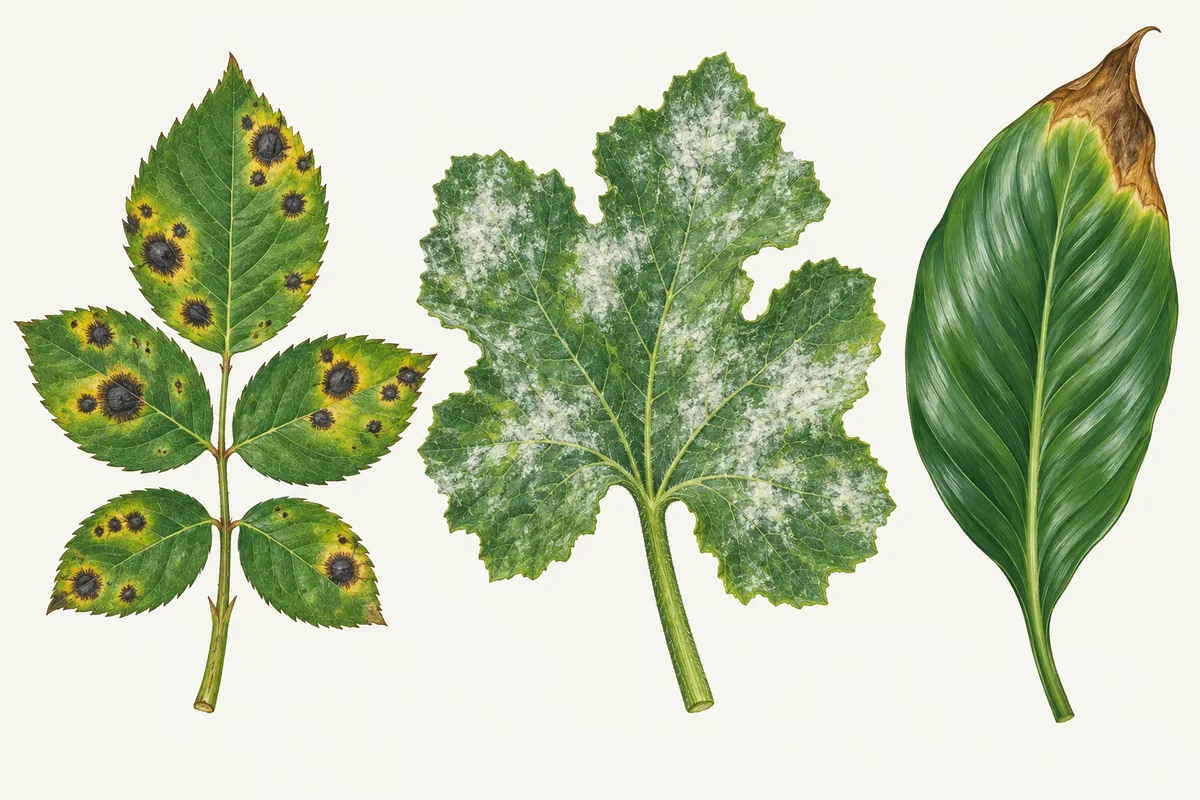 Plant healthPlant disease identification, symptom by symptomMatch leaf spots, white powder, black film, sticky leaves, webbing, holes and wilting to their likely causes, then rule out watering and light first.
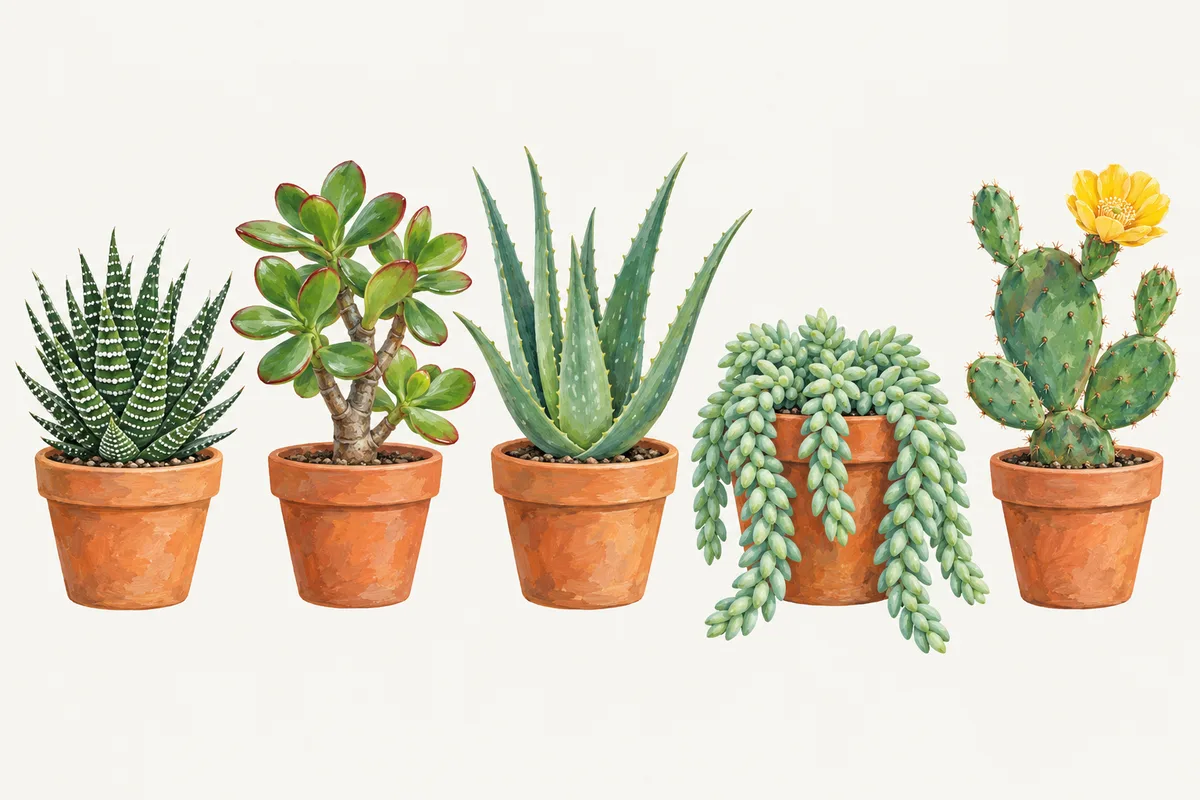 Field guideSucculent identification: how to identify succulents by shape, leaf and sapIdentify a succulent by rosette, stem or trailing habit, with field tests for Echeveria vs Sempervivum, jade vs elephant bush and cactus vs euphorbia.
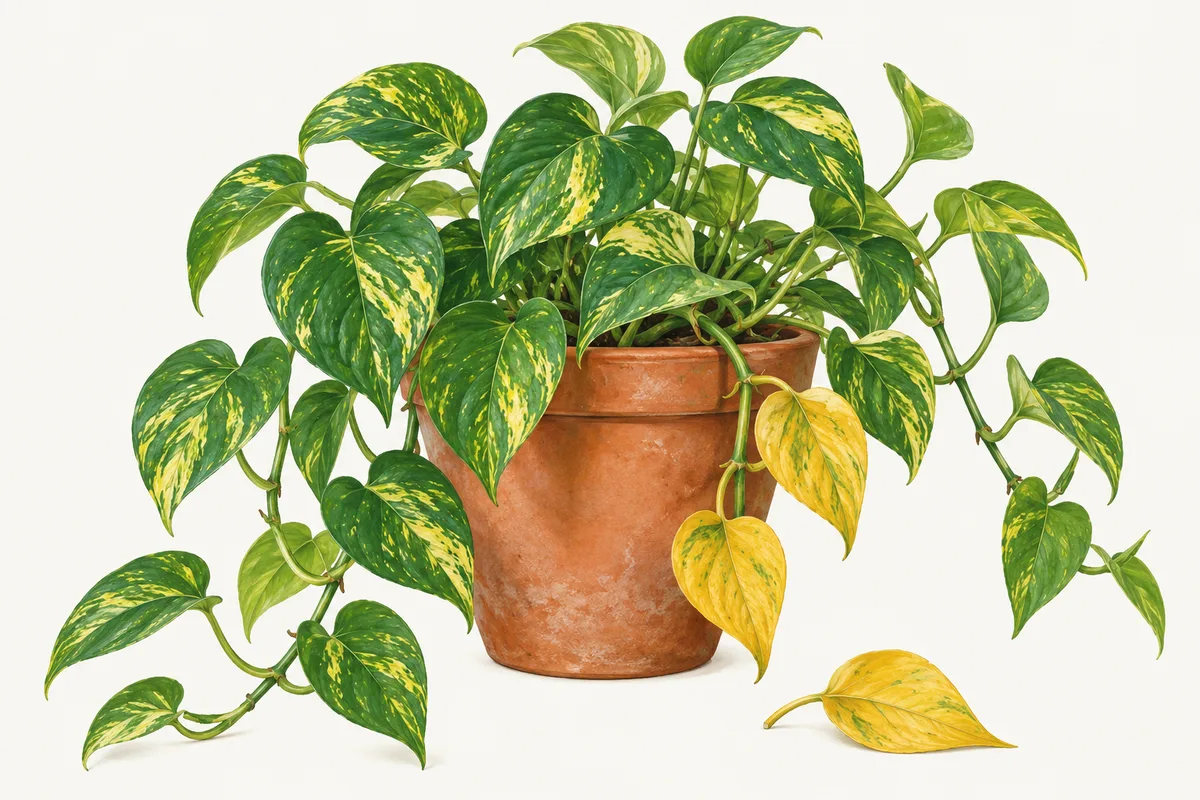 Plant healthYellow leaves on plants, and what each pattern meansWhy plant leaves turn yellow: read which leaves go first and the pattern on them, then check watering, light, cold, pests, feeding and age, in that order.
Plants by country and region
The plants you are most likely to meet in a country or region, and how to tell them apart.
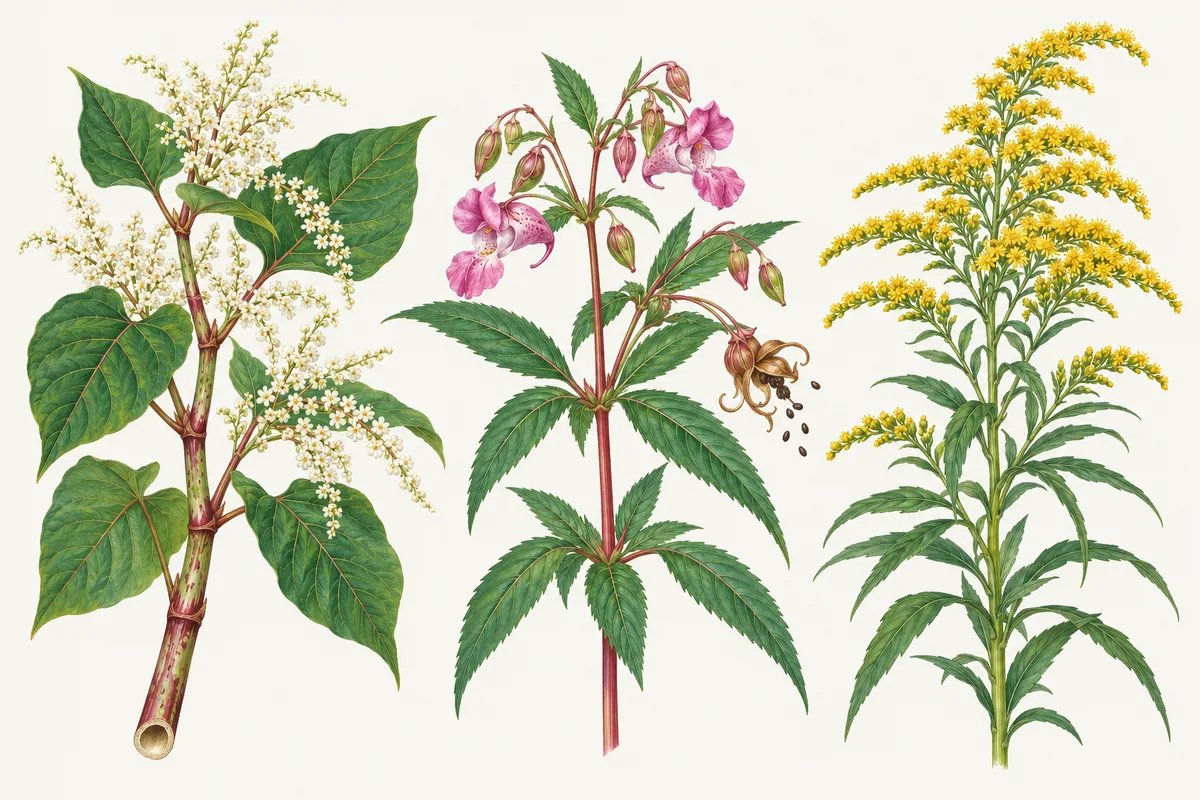
Plants, pets and safety
What the poison centres and veterinary associations list, and what to do when someone may have eaten a plant.
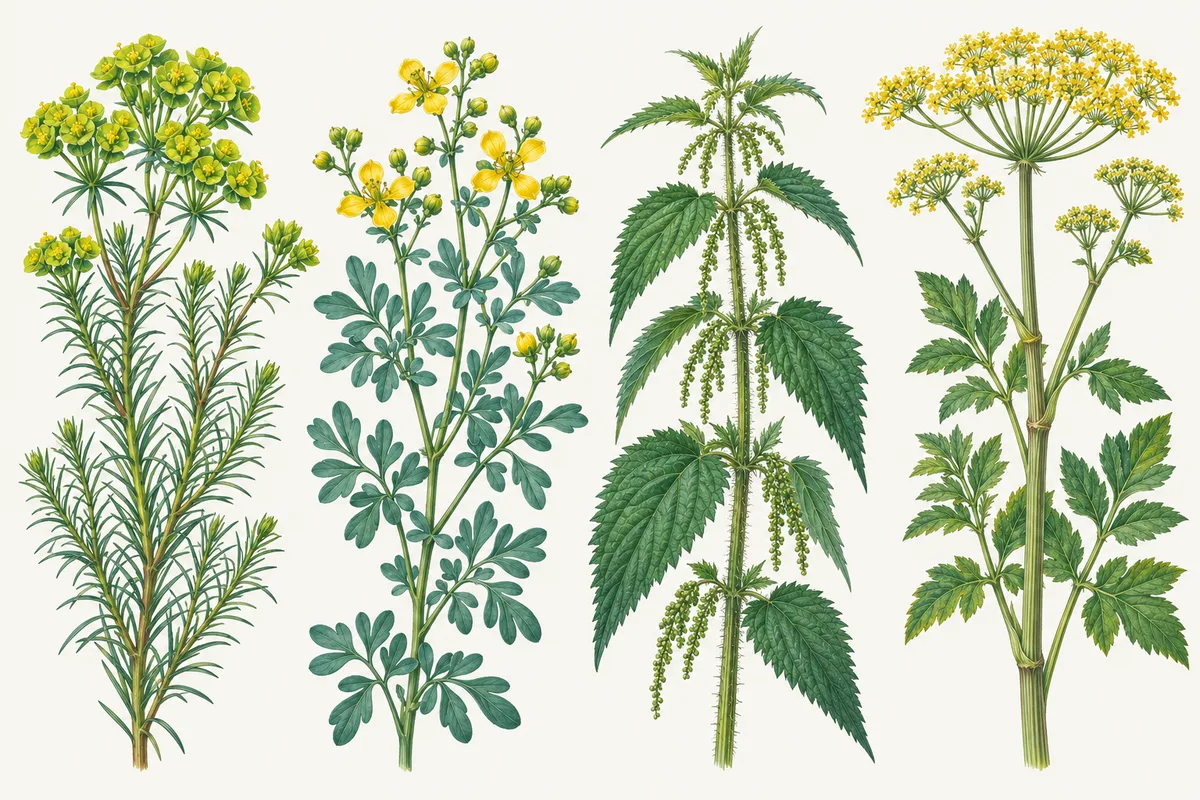 Safety guidePlants that cause skin rashes, and how to tell which onePlants that cause skin rashes: poison ivy, giant hogweed, wild parsnip, nettle, rue, euphorbia and dieffenbachia, and what to do after contact.
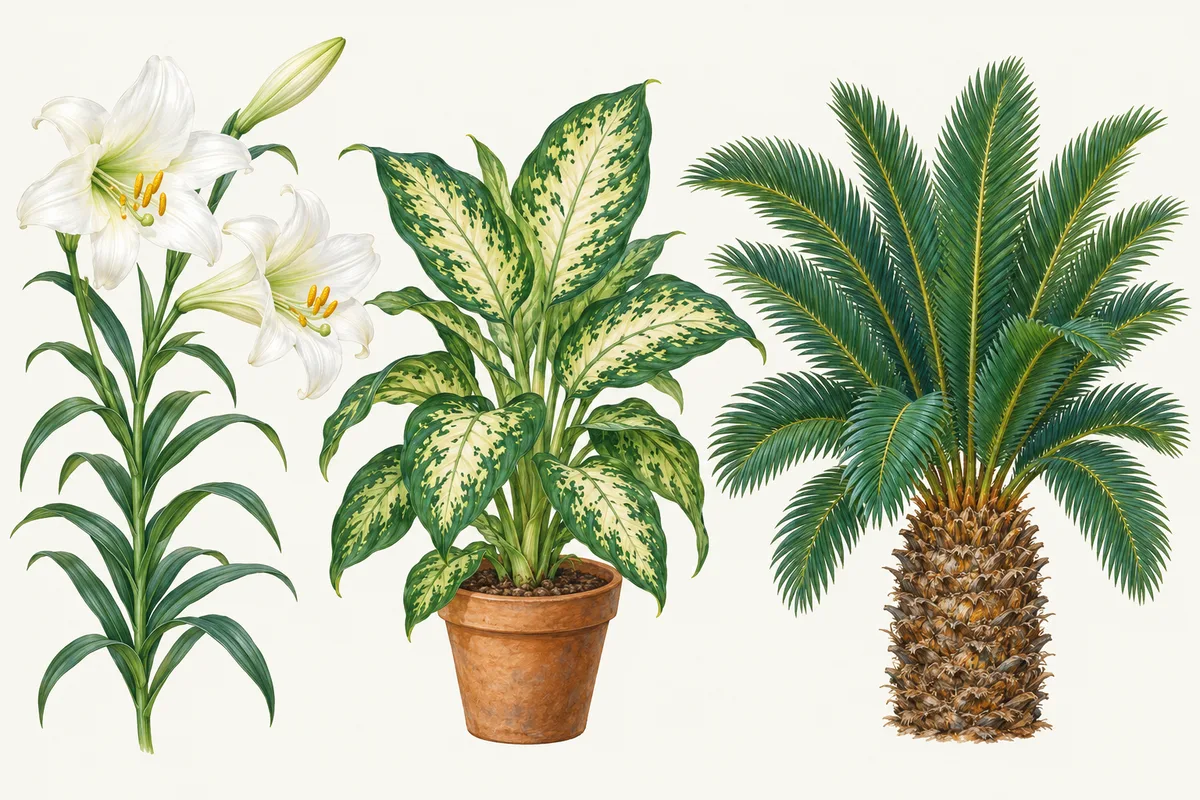 Pet safety guidePlants toxic to cats, and what to do if your cat chewed oneCat chewed a plant? Who to call first, how to name the plant, and 25 houseplants and garden plants as the ASPCA lists them, with lilies explained.
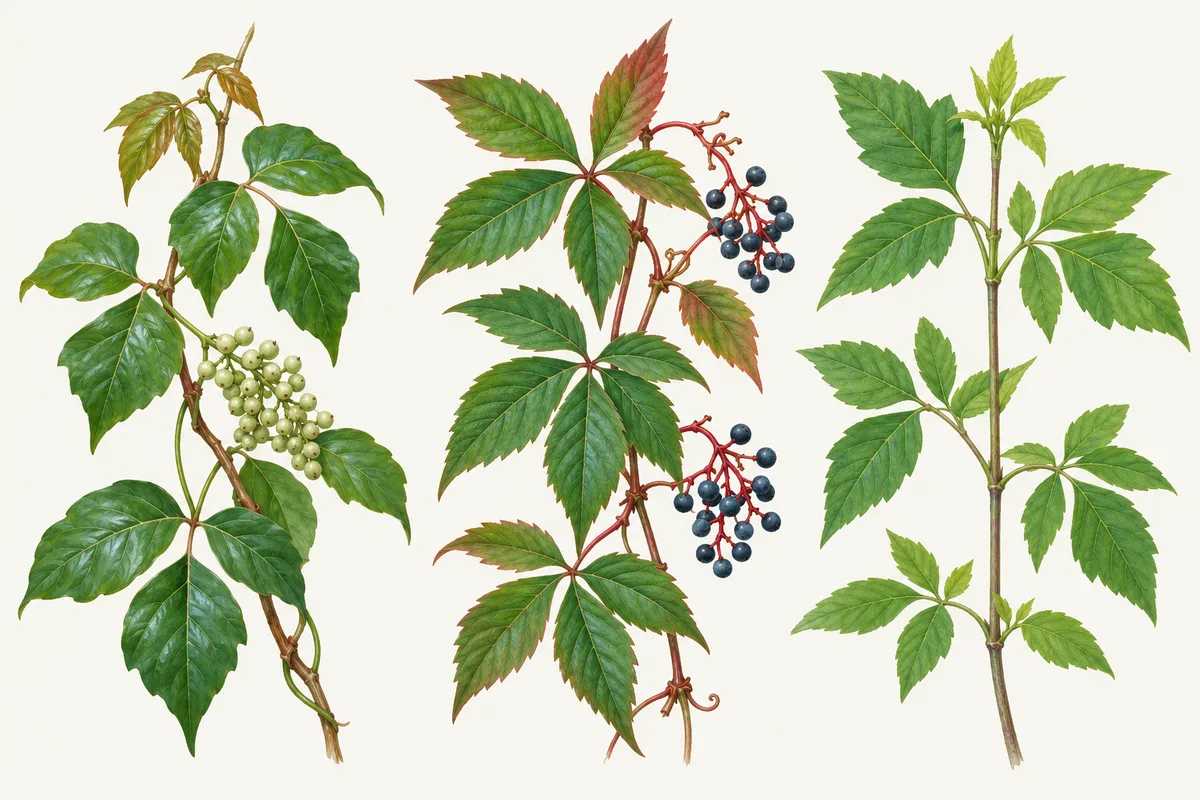 Safety guidePoison ivy identification: leaves, vines, berries and look-alikesHow to identify poison ivy by its leaflet stalks, hairy vines and white berries, poison ivy vs poison oak and sumac, and a field test for six look-alikes.
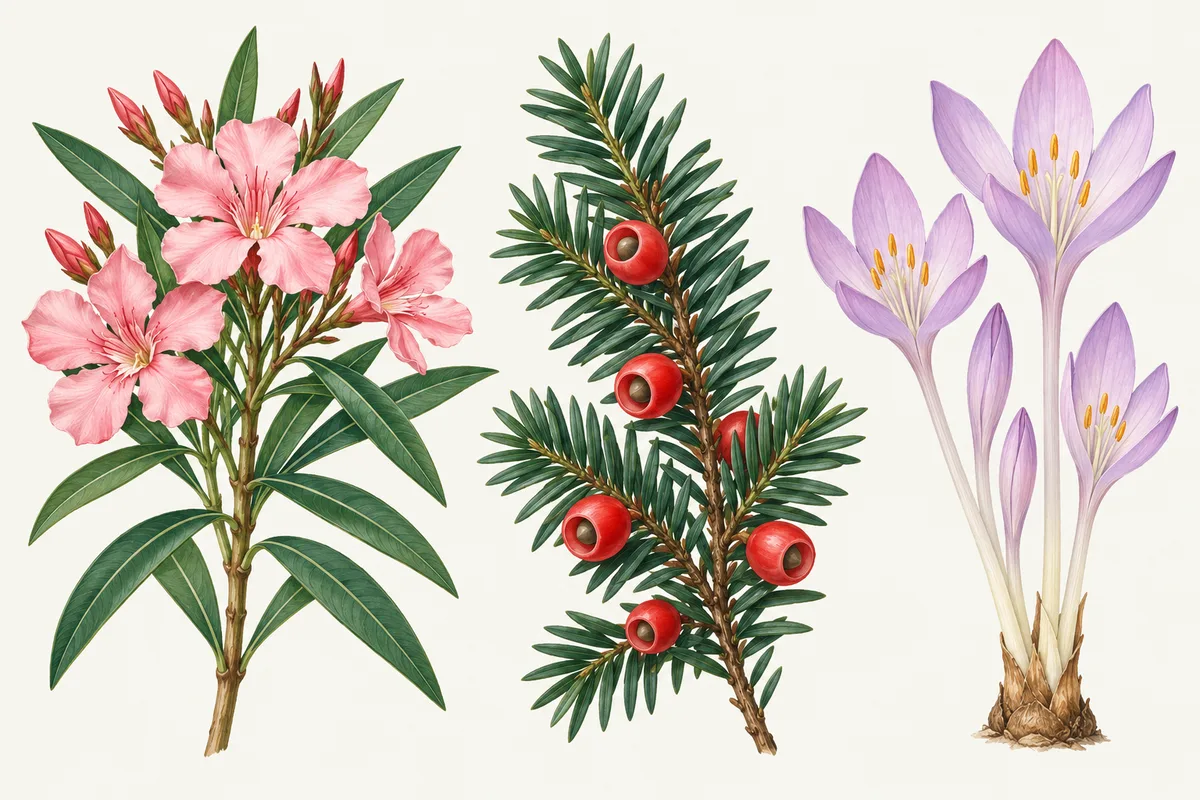 Pet safety guidePoisonous plants for dogs, and what to do if your dog ate oneDog chewed a plant? Who to call, how to name it, and the garden and house plants the ASPCA lists as toxic to dogs, from sago palm and yew to bulbs.