Plant health
Yellow leaves on plants, and what each pattern means
Which leaves turn yellow, and how, narrows the cause before you change anything. Houseplants first, then garden plants.
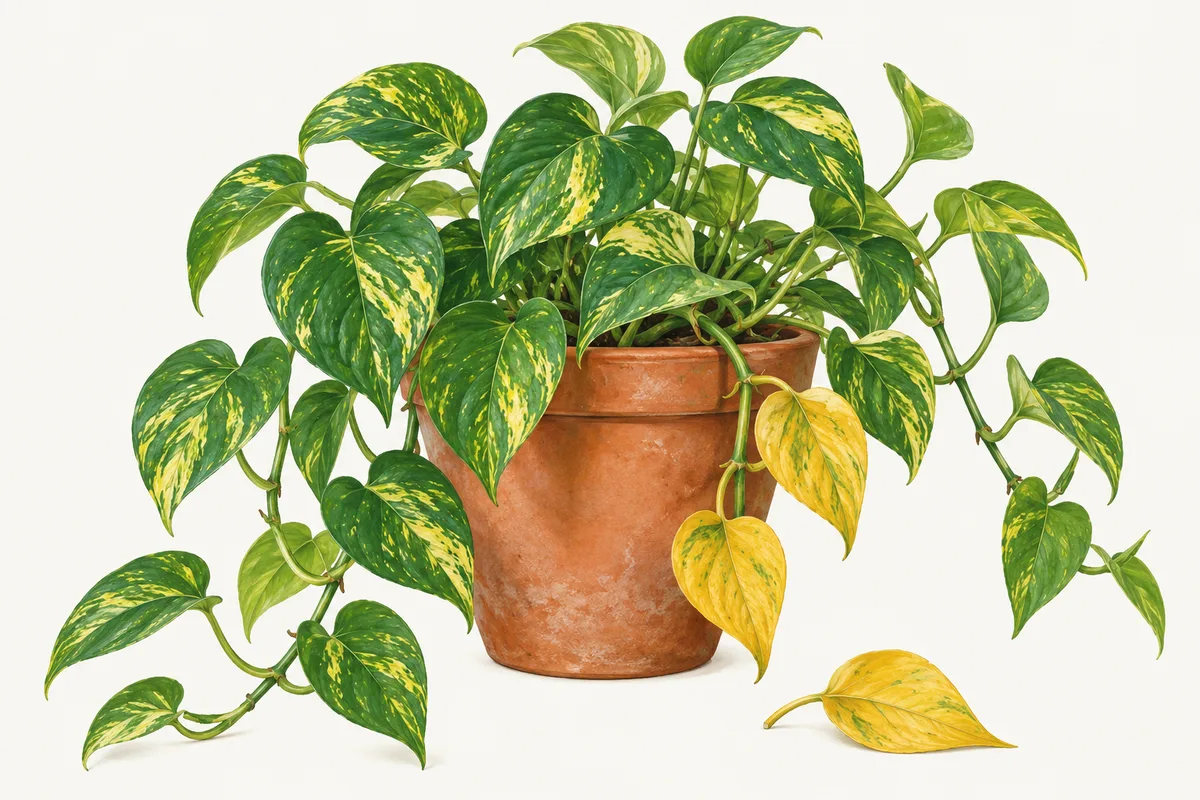
In short
Yellow leaves on a plant point to different causes depending on where they start. Old, lower leaves yellowing one at a time is often normal aging; lower and inner leaves yellowing and wilting in wet soil is the classic sign of overwatering. Yellow between green veins on new leaves suggests iron deficiency, the same pattern on old leaves magnesium. Check watering, then light, cold drafts, pests and feeding.
- Overwatering is the most common cause indoors: University of Maryland Extension names wilting or yellowing of lower and inner leaves as its primary symptom.
- Old leaves or new leaves first is the first fork: nitrogen and magnesium shortages start on older leaves, iron shortage on the youngest, per the RHS.
- A few old bottom leaves yellowing while the rest of the plant grows well is usually leaf senescence, normal aging.
- Leaves that have turned fully yellow do not turn green again; judge any fix by the new growth.
Yellowing is one of the first ways a plant shows stress, and most of the time the cause is how it is watered or where it stands, not a disease. The fastest way to the cause is to read two things before you change anything: which leaves turned yellow first, and what the yellow looks like on each leaf. Then work down the list of causes in the order below, which puts the most common ones first. This guide covers houseplants first and garden plants second; for spots, coatings, webbing and rot, see the plant disease identification guide.
Start with which leaves turn yellow
Look at the whole plant and note where the yellow started. Then match the pattern on a single leaf.
| Where and how | Likely causes | Check |
|---|---|---|
| One or two old, lower leaves at a time, rest of the plant healthy | Normal aging (leaf senescence) | Is new growth green and steady? Then it is probably nothing. |
| Several lower and inner leaves, yellowing and wilting | Overwatering, poor drainage | Is the soil still wet days after watering? Is the pot heavy? |
| Old leaves, whole leaf evenly pale yellow | Nitrogen shortage, underfeeding | When was the plant last fed or repotted? |
| Old leaves, yellow between green veins | Magnesium shortage | Common in light, sandy soils and after heavy potassium feeding |
| New leaves, yellow between green veins | Iron shortage, often from alkaline soil or water | Is it an acid-loving plant such as a gardenia? |
| Edges of mature leaves yellow, then brown | Potassium shortage, salt or fertilizer buildup | White crust on the soil or pot rim? |
| Leaves on all levels yellow and drop at once | Cold or hot drafts, a move, a sudden change in light | Did anything change in the last two weeks? |
| Fine pale speckles merging into yellow | Spider mites | Fine webbing; specks moving on white paper |
The nutrient rows follow the RHS page on nutrient deficiencies: nitrogen shortage shows as pale yellow leaves, older ones first, spreading upward; magnesium shortage as yellowing between the veins of older leaves; iron shortage as yellowing between the veins that affects the youngest leaves most; potassium shortage as yellow or purple tints and browning from the edges of mature leaves. The RHS adds two warnings worth remembering. Very acid or alkaline soils lock up nutrients, so a plant can show a deficiency even when the nutrient is in the soil. And waterlogging and dry soil both stop roots taking up nutrients, so watering problems can look like deficiencies.
Houseplants: check these causes in order
1. Too much water
Overwatering is the first thing to rule out. University of Maryland Extension's page on overwatered indoor plants explains that excess water reduces oxygen in the soil, damages the fine roots and leaves the plant unable to take up water, so an overwatered plant can look thirsty. Its primary symptom is wilting or yellowing of lower and inner leaves; if it goes on, scorch, leaf drop and death follow. The same page gives two simple checks: lift the pot and compare its weight with how it felt just after watering, and for large pots push a stick or dowel to the bottom and see whether moist soil sticks to it. Water thoroughly until it runs out of the drainage hole, then pour off what collects in the saucer.
Clemson HGIC's houseplant diseases and disorders factsheet lists the same signs, yellowing, wilting and leaf drop, and says soft, dark roots mean roots are dying. If you see that, read the root rot row of the disease guide before you water again.
2. Too little water
A plant left dry too long also yellows. The leaves usually feel limp or crisp rather than soft, the soil pulls away from the sides of the pot, and the pot feels light. Maryland Extension notes that a mix this dry may need several waterings in a row before it takes up water again.
3. Light
Clemson notes that foliage may turn yellow from too little light. In low light, a plant also stretches: long gaps between leaves, small new leaves, a lean toward the window. Too much sun does different damage: Maryland Extension's page on excess light describes pale, bleached or faded areas that later turn brown and brittle, worse when strong sun meets dry soil, and on shade plants moved straight outdoors. Iowa State Extension's Yard and Garden answer adds that a sudden change in light, such as moving a plant from a shop to a dim room, also causes leaf drop, and advises changing light levels gradually.
4. Temperature shock
Iowa State lists cold in transport and blasts of cold or warm air from doors, windows and air ducts as reasons leaves yellow and drop. A plant that drops yellow leaves from every level within a few days of arriving home, or after a cold night by a window, is usually reacting to the change, not sick.
5. Pests
Turn leaves over. UC IPM's spider mite Pest Note describes fine light stippling that turns to yellowing and leaf drop on heavy infestations. Sap-feeding insects such as aphids, mealybugs and scale also weaken leaves and leave sticky honeydew behind. The plant disease identification guide covers how to check for each of these pests.
6. Feeding
Iowa State notes that under-fertilized plants often develop yellow leaves, starting with the old ones. Too much fertilizer does the opposite kind of damage: Clemson describes brown tips and margins and a white to gray crust on the soil or pot rim from salt buildup. University of Maryland Extension's page on nutrient deficiency of indoor plants calls iron chlorosis, yellow leaves with green veins, the most common indoor deficiency, with acid-loving plants such as gardenias most prone. If you use any fertilizer or soil product, follow the label and local rules.
7. Age
Last, the cause that needs no fix. Every plant sheds its oldest leaves. One lower leaf turning yellow every few weeks on a plant that keeps putting out new leaves is normal.
Iowa State's specialist makes a point worth keeping in mind for all seven: houseplant problems often come from several factors at once, so check each one before deciding. Plant pages such as pothos and peace lily help you confirm which plant you are dealing with.
Garden plants: what changes outdoors
The same reading applies outside, but the usual suspects shift. University of Maryland Extension's page on yellowing leaves on vegetable plants groups the causes into three: nonliving factors (drought or waterlogged soil, fertilizer or pesticide burn, nutrient deficiency, tipburn, and normal aging of older leaves), diseases (fungal and bacterial diseases, and wilt diseases such as Fusarium wilt and bacterial wilt), and insects (including spider mites and whiteflies). Its note on aging matches what you see indoors: older, lower leaves turn yellow as they age, and the rest of the plant looks healthy and productive.
Points that matter more in the garden:
- Weather first. A week of heavy rain can waterlog clay soil; a dry spell stresses shallow-rooted plants. The RHS notes that rain and watering wash nitrogen out of soil and compost, and that cold, frost and waterlogging can cause poor spring growth that looks like a shortage.
- Soil type. The RHS ties magnesium and potassium shortages to light, sandy soils, and iron and manganese shortages to alkaline or chalky soils. Acid-loving shrubs in alkaline soil are the classic case of yellow new leaves with green veins.
- One plant or many. Yellowing that hits several kinds of plants in the same bed points to the soil or the weather. Yellowing that starts on one plant and moves to its neighbors of the same kind, or a plant that wilts on one side, points to a disease or pest; take a sample to your county extension office.
Fix the cause, then watch the new growth
Once you have a likely cause, change one thing at a time and give it a few weeks before you judge. Water only when the soil and the pot weight tell you to; move the plant to brighter, indirect light or away from the draft; wash pests off the leaf undersides with a water spray, as UC IPM suggests for spider mites; feed a plant that has not been fed in months. Remove leaves that are fully yellow: they will not recover, and new green growth is the only reliable sign that the fix worked.
If you are not sure which plant you have, start with the houseplant identification key: watering and light needs differ widely between a cactus and a fern.
Where Plant Identifier helps
A phone photo of the whole plant and one yellowing leaf is a good place to start when you don't know what you are looking at. Plant Identifier names the plant from one photo; its Diagnose tool then writes an AI suggestion of the likely cause, the affected areas and next steps, with a severity badge, and the Water Calculator gives an AI estimate of how often that plant usually needs water, with signs of over- and under-watering. Treat both as a list of things to check against the patterns above, not a verdict: no photo shows how wet the soil is or what the roots look like. You can ask the follow-up chat under any result what else could cause the same pattern.
What a photo can't settle
- A photo shows the color pattern but not the soil moisture or the roots, so it cannot tell overwatering from root rot or a pot-bound plant on its own.
- Nutrient deficiencies and watering stress look alike on a leaf; the RHS notes that drought and waterlogging can resemble deficiencies, and only a soil or tissue test settles which nutrient is short.
- An AI suggestion, Plant Identifier's included, is a list of things to check, not a confirmed cause.
Questions people ask
Should I cut off yellow leaves?
A leaf that has turned fully yellow will not turn green again, so you can remove it once you have noted where it was and what pattern it showed. Cut or pinch it off at the base of the leaf stalk. Removing yellow leaves tidies the plant but does not fix the cause.
Can a yellow leaf turn green again?
Don't count on it. Clemson HGIC notes that leaves damaged by some disorders will not recover, and a fully yellow leaf is usually on its way out. The reliable sign that a fix worked is new growth coming in green, so watch the next leaves rather than the damaged ones.
Why are the bottom leaves of my plant turning yellow?
Two common reasons. One or two old bottom leaves at a time, with healthy growth above, is normal aging (leaf senescence). Several lower and inner leaves yellowing and wilting together, with soil that stays wet, is the main symptom of overwatering named by University of Maryland Extension.
Does too much sun make leaves yellow?
It can. Iowa State Extension lists light that is too high or too low, and sudden changes in light, among the causes of yellowing and leaf drop. Maryland Extension describes sun damage as pale, bleached or faded areas that later turn brown; too little light gives yellowing foliage and spindly growth.
Sources
- Overwatered Indoor Plants — University of Maryland Extension, Home and Garden Information Center
- Excess Light on Indoor Plants — University of Maryland Extension, Home and Garden Information Center
- Nutrient Deficiency of Indoor Plants — University of Maryland Extension, Home and Garden Information Center
- Yellowing Leaves on Vegetable Plants — University of Maryland Extension, Home and Garden Information Center
- What causes leaves on my houseplant to turn yellow or brown and drop off? — Iowa State University Extension and Outreach, Yard and Garden (Aaron Steil)
- Houseplant Diseases & Disorders (HGIC 2251) — Clemson Cooperative Extension, Home & Garden Information Center
- Nutrient deficiencies — Royal Horticultural Society (RHS)
- Spider Mites (Pest Notes, Publication 7405) — UC Statewide IPM Program, University of California Agriculture and Natural Resources